Visual summary
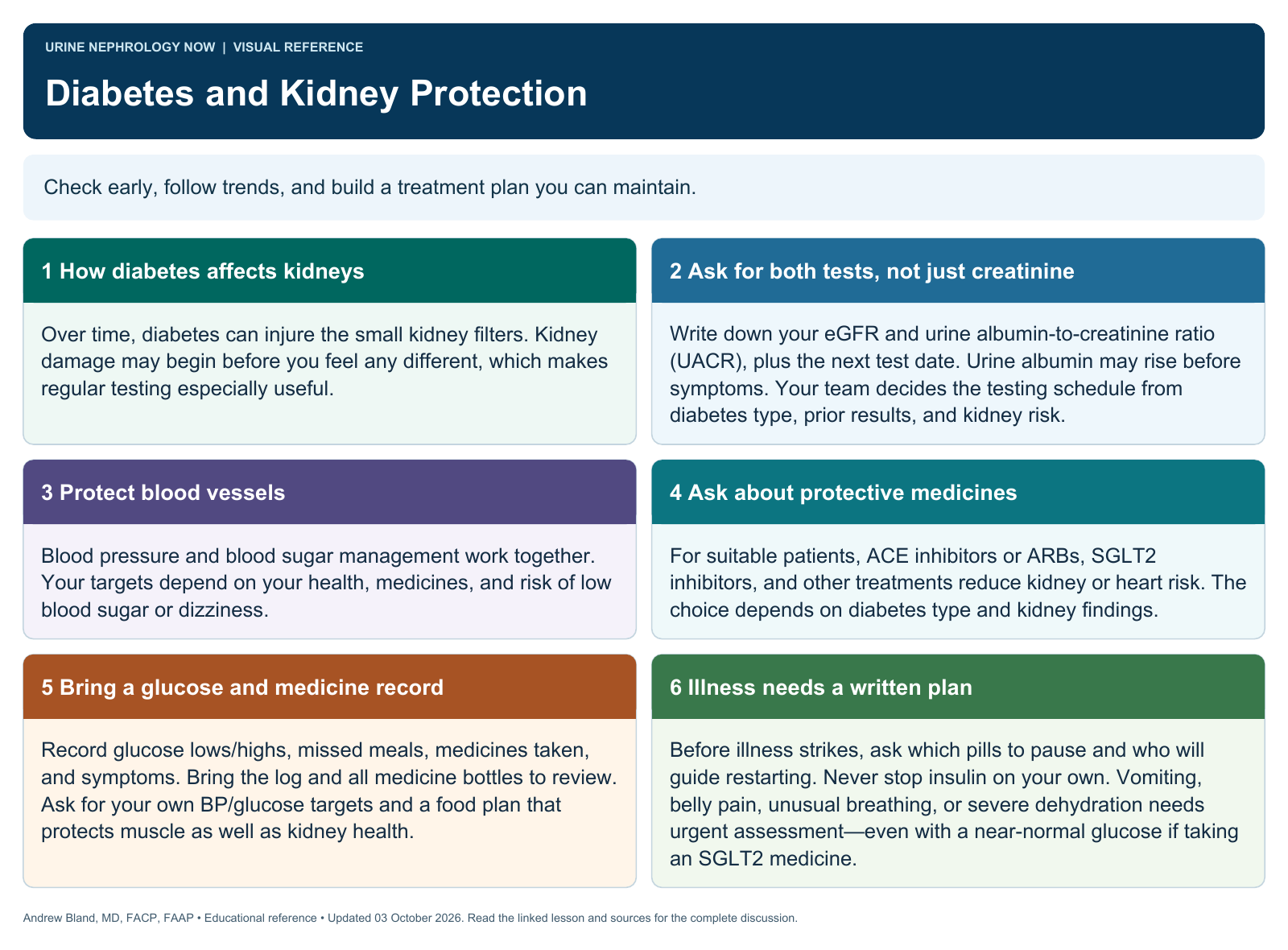
Check early, follow trends, and build a treatment plan you can maintain.
Text version
How diabetes affects kidneys
Over time, diabetes can injure the small kidney filters. Kidney damage may begin before you feel any different, which makes regular testing especially useful.
Ask for both tests, not just creatinine
Write down your eGFR and urine albumin-to-creatinine ratio (UACR), plus the next test date. Urine albumin may rise before symptoms. Your team decides the testing schedule from diabetes type, prior results, and kidney risk.
Protect blood vessels
Blood pressure and blood sugar management work together. Your targets depend on your health, medicines, and risk of low blood sugar or dizziness.
Ask about protective medicines
For suitable patients, ACE inhibitors or ARBs, SGLT2 inhibitors, and other treatments reduce kidney or heart risk. The choice depends on diabetes type and kidney findings.
Bring a glucose and medicine record
Record glucose lows/highs, missed meals, medicines taken, and symptoms. Bring the log and all medicine bottles to review. Ask for your own BP/glucose targets and a food plan that protects muscle as well as kidney health.
Illness needs a written plan
Before illness strikes, ask which pills to pause and who will guide restarting. Never stop insulin on your own. Vomiting, belly pain, unusual breathing, or severe dehydration needs urgent assessment—even with a near-normal glucose if taking an SGLT2 medicine.