Visual summary
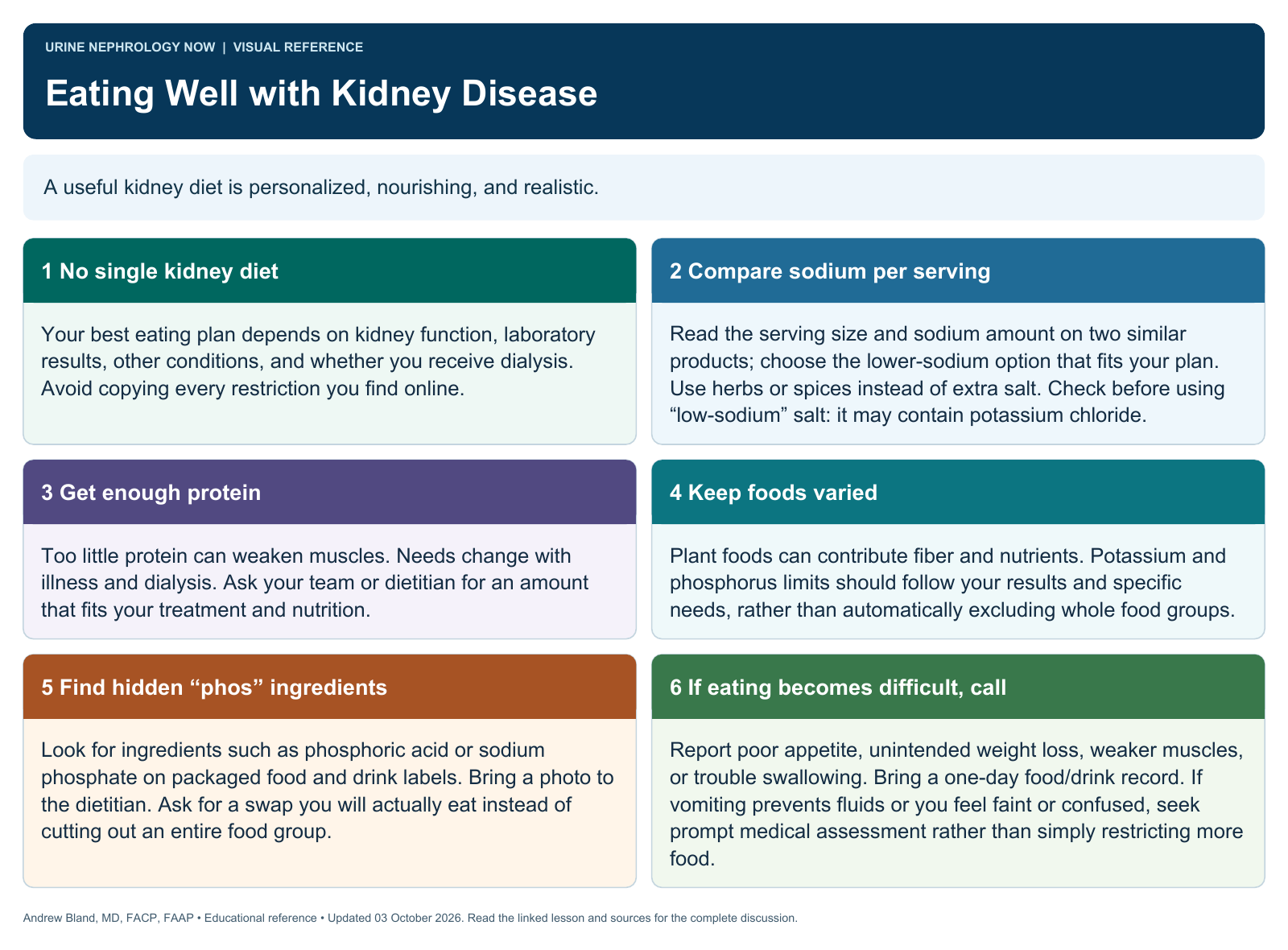
A useful kidney diet is personalized, nourishing, and realistic.
Text version
No single kidney diet
Your best eating plan depends on kidney function, laboratory results, other conditions, and whether you receive dialysis. Avoid copying every restriction you find online.
Compare sodium per serving
Read the serving size and sodium amount on two similar products; choose the lower-sodium option that fits your plan. Use herbs or spices instead of extra salt. Check before using “low-sodium” salt: it may contain potassium chloride.
Get enough protein
Too little protein can weaken muscles. Needs change with illness and dialysis. Ask your team or dietitian for an amount that fits your treatment and nutrition.
Keep foods varied
Plant foods can contribute fiber and nutrients. Potassium and phosphorus limits should follow your results and specific needs, rather than automatically excluding whole food groups.
Find hidden “phos” ingredients
Look for ingredients such as phosphoric acid or sodium phosphate on packaged food and drink labels. Bring a photo to the dietitian. Ask for a swap you will actually eat instead of cutting out an entire food group.
If eating becomes difficult, call
Report poor appetite, unintended weight loss, weaker muscles, or trouble swallowing. Bring a one-day food/drink record. If vomiting prevents fluids or you feel faint or confused, seek prompt medical assessment rather than simply restricting more food.