Visual summary
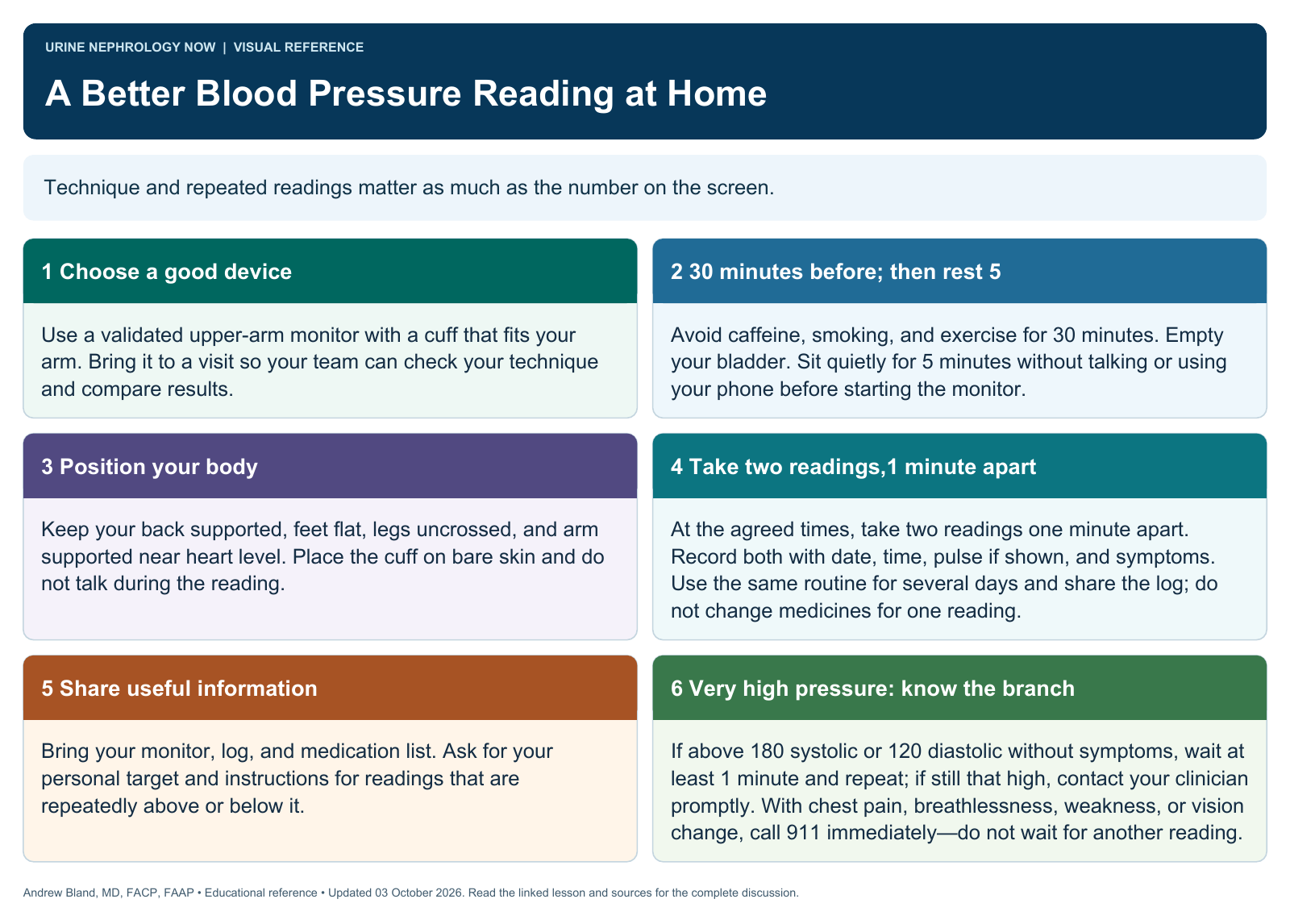
Technique and repeated readings matter as much as the number on the screen.
Text version
Choose a good device
Use a validated upper-arm monitor with a cuff that fits your arm. Bring it to a visit so your team can check your technique and compare results.
30 minutes before; then rest 5
Avoid caffeine, smoking, and exercise for 30 minutes. Empty your bladder. Sit quietly for 5 minutes without talking or using your phone before starting the monitor.
Position your body
Keep your back supported, feet flat, legs uncrossed, and arm supported near heart level. Place the cuff on bare skin and do not talk during the reading.
Take two readings,1 minute apart
At the agreed times, take two readings one minute apart. Record both with date, time, pulse if shown, and symptoms. Use the same routine for several days and share the log; do not change medicines for one reading.
Share useful information
Bring your monitor, log, and medication list. Ask for your personal target and instructions for readings that are repeatedly above or below it.
Very high pressure: know the branch
If above 180 systolic or 120 diastolic without symptoms, wait at least 1 minute and repeat; if still that high, contact your clinician promptly. With chest pain, breathlessness, weakness, or vision change, call 911 immediately—do not wait for another reading.