Visual summary
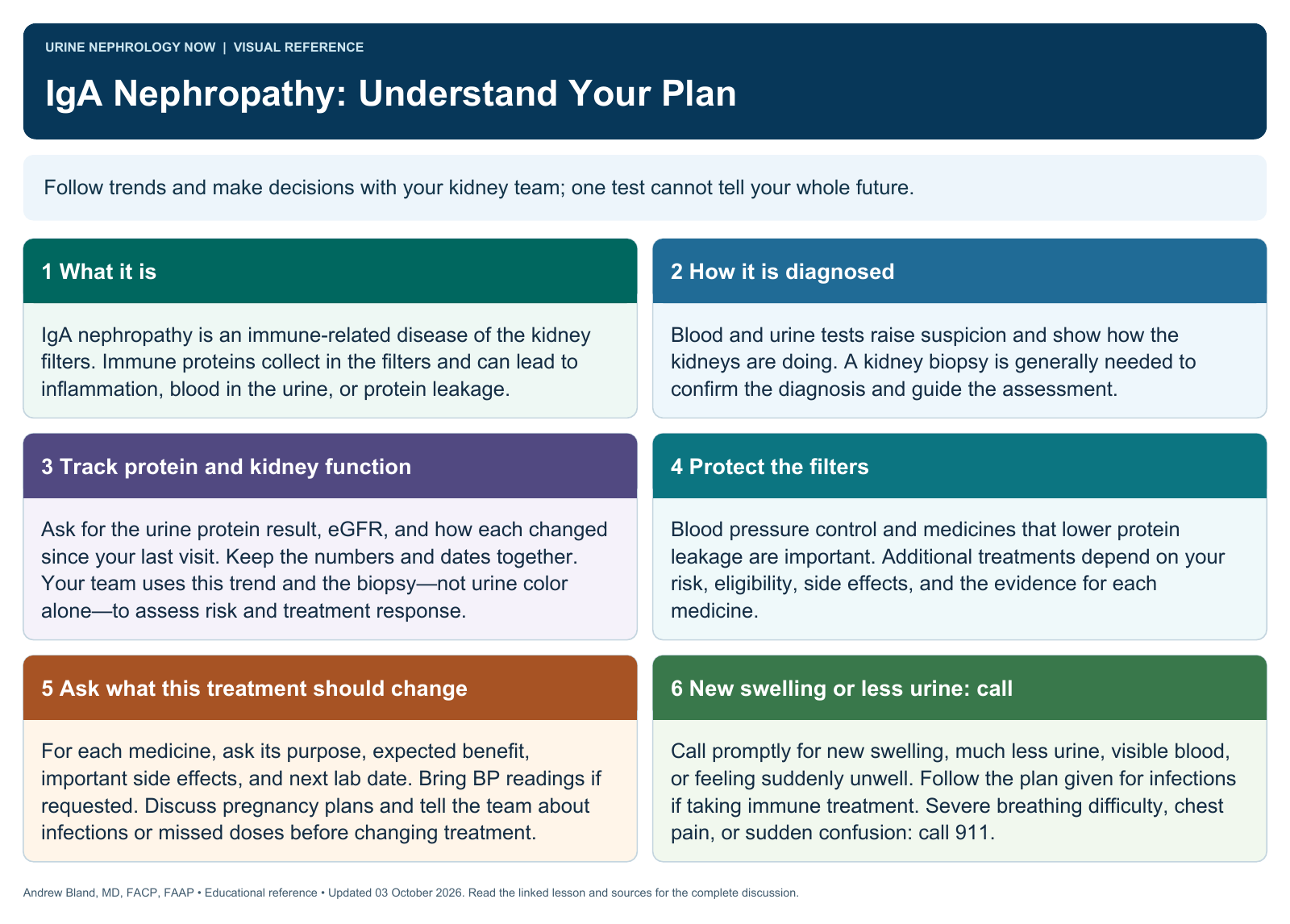
Follow trends and make decisions with your kidney team; one test cannot tell your whole future.
Text version
What it is
IgA nephropathy is an immune-related disease of the kidney filters. Immune proteins collect in the filters and can lead to inflammation, blood in the urine, or protein leakage.
How it is diagnosed
Blood and urine tests raise suspicion and show how the kidneys are doing. A kidney biopsy is generally needed to confirm the diagnosis and guide the assessment.
Track protein and kidney function
Ask for the urine protein result, eGFR, and how each changed since your last visit. Keep the numbers and dates together. Your team uses this trend and the biopsy—not urine color alone—to assess risk and treatment response.
Protect the filters
Blood pressure control and medicines that lower protein leakage are important. Additional treatments depend on your risk, eligibility, side effects, and the evidence for each medicine.
Ask what this treatment should change
For each medicine, ask its purpose, expected benefit, important side effects, and next lab date. Bring BP readings if requested. Discuss pregnancy plans and tell the team about infections or missed doses before changing treatment.
New swelling or less urine: call
Call promptly for new swelling, much less urine, visible blood, or feeling suddenly unwell. Follow the plan given for infections if taking immune treatment. Severe breathing difficulty, chest pain, or sudden confusion: call 911.