Visual summary
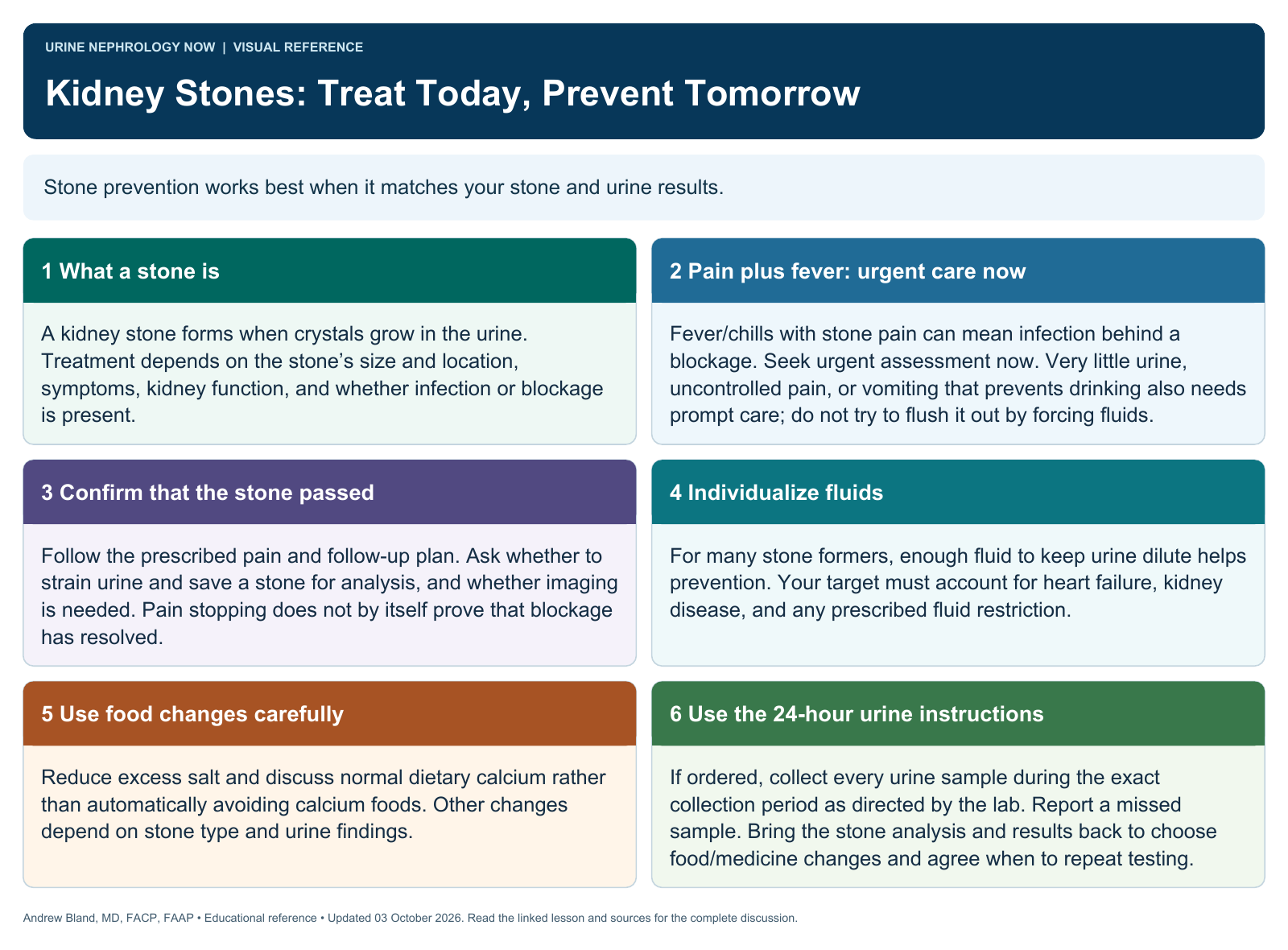
Stone prevention works best when it matches your stone and urine results.
Text version
What a stone is
A kidney stone forms when crystals grow in the urine. Treatment depends on the stone’s size and location, symptoms, kidney function, and whether infection or blockage is present.
Pain plus fever: urgent care now
Fever/chills with stone pain can mean infection behind a blockage. Seek urgent assessment now. Very little urine, uncontrolled pain, or vomiting that prevents drinking also needs prompt care; do not try to flush it out by forcing fluids.
Confirm that the stone passed
Follow the prescribed pain and follow-up plan. Ask whether to strain urine and save a stone for analysis, and whether imaging is needed. Pain stopping does not by itself prove that blockage has resolved.
Individualize fluids
For many stone formers, enough fluid to keep urine dilute helps prevention. Your target must account for heart failure, kidney disease, and any prescribed fluid restriction.
Use food changes carefully
Reduce excess salt and discuss normal dietary calcium rather than automatically avoiding calcium foods. Other changes depend on stone type and urine findings.
Use the 24-hour urine instructions
If ordered, collect every urine sample during the exact collection period as directed by the lab. Report a missed sample. Bring the stone analysis and results back to choose food/medicine changes and agree when to repeat testing.