Visual summary
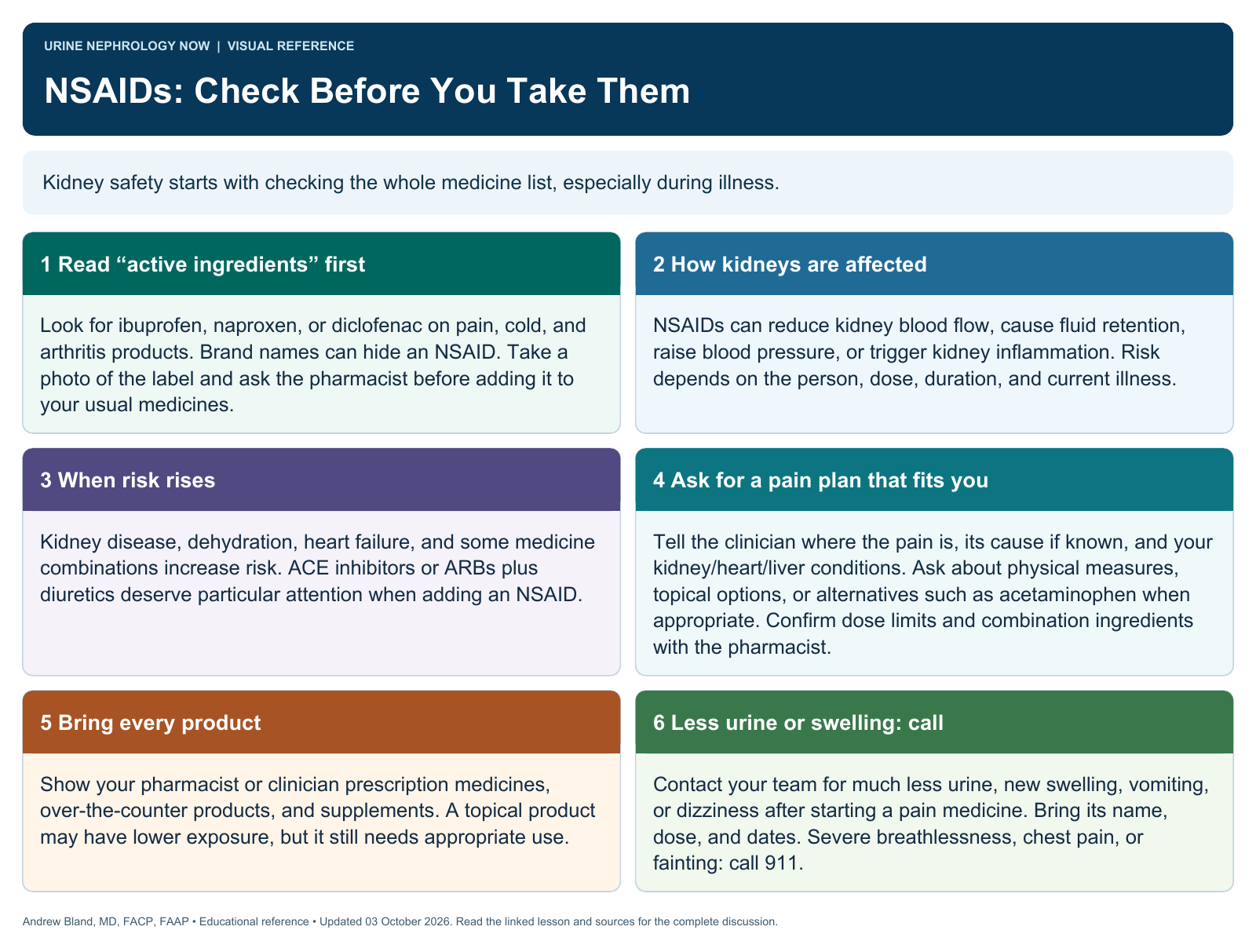
Kidney safety starts with checking the whole medicine list, especially during illness.
Text version
Read “active ingredients” first
Look for ibuprofen, naproxen, or diclofenac on pain, cold, and arthritis products. Brand names can hide an NSAID. Take a photo of the label and ask the pharmacist before adding it to your usual medicines.
How kidneys are affected
NSAIDs can reduce kidney blood flow, cause fluid retention, raise blood pressure, or trigger kidney inflammation. Risk depends on the person, dose, duration, and current illness.
When risk rises
Kidney disease, dehydration, heart failure, and some medicine combinations increase risk. ACE inhibitors or ARBs plus diuretics deserve particular attention when adding an NSAID.
Ask for a pain plan that fits you
Tell the clinician where the pain is, its cause if known, and your kidney/heart/liver conditions. Ask about physical measures, topical options, or alternatives such as acetaminophen when appropriate. Confirm dose limits and combination ingredients with the pharmacist.
Bring every product
Show your pharmacist or clinician prescription medicines, over-the-counter products, and supplements. A topical product may have lower exposure, but it still needs appropriate use.
Less urine or swelling: call
Contact your team for much less urine, new swelling, vomiting, or dizziness after starting a pain medicine. Bring its name, dose, and dates. Severe breathlessness, chest pain, or fainting: call 911.