Visual summary
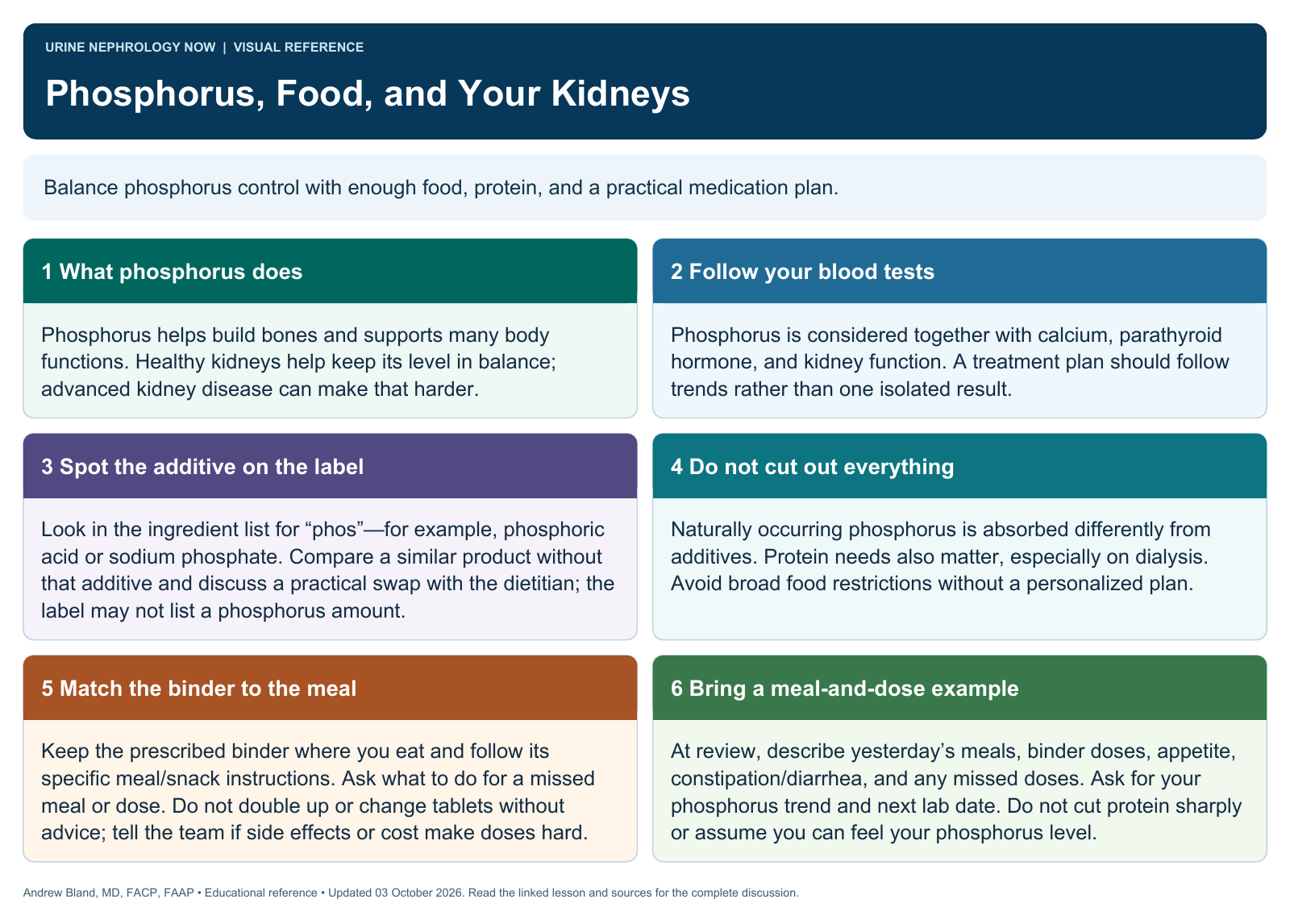
Balance phosphorus control with enough food, protein, and a practical medication plan.
Text version
What phosphorus does
Phosphorus helps build bones and supports many body functions. Healthy kidneys help keep its level in balance; advanced kidney disease can make that harder.
Follow your blood tests
Phosphorus is considered together with calcium, parathyroid hormone, and kidney function. A treatment plan should follow trends rather than one isolated result.
Look for additives
Processed foods may contain added phosphorus. Ingredients with “phos” in the name are a useful clue. A dietitian can help compare products without sacrificing nutrition.
Do not cut out everything
Naturally occurring phosphorus is absorbed differently from additives. Protein needs also matter, especially on dialysis. Avoid broad food restrictions without a personalized plan.
Use binders as directed
If prescribed, phosphate binders work with food in the gut. Ask how to time them with meals or snacks and what to do if side effects interfere.
Discuss persistent problems
Tell your team about missed doses, constipation, appetite loss, weakness, or difficulty affording medicines. Severe symptoms need assessment; you cannot reliably feel your phosphorus level.
Continue learning
This graphic summarizes a topic. The full educational pages provide the broader discussion and references.