Visual summary
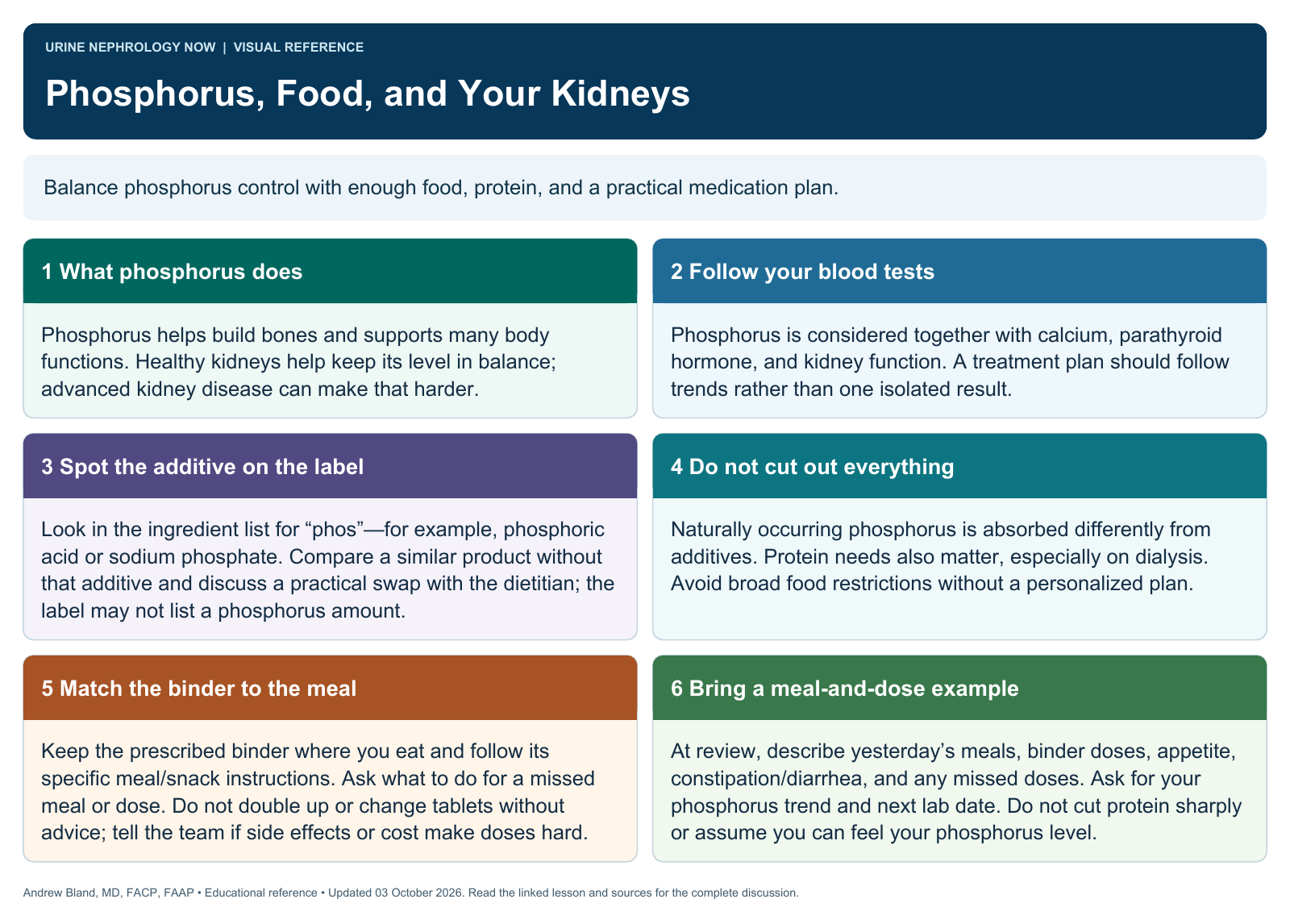
Balance phosphorus control with enough food, protein, and a practical medication plan.
Text version
What phosphorus does
Phosphorus helps build bones and supports many body functions. Healthy kidneys help keep its level in balance; advanced kidney disease can make that harder.
Follow your blood tests
Phosphorus is considered together with calcium, parathyroid hormone, and kidney function. A treatment plan should follow trends rather than one isolated result.
Spot the additive on the label
Look in the ingredient list for “phos”—for example, phosphoric acid or sodium phosphate. Compare a similar product without that additive and discuss a practical swap with the dietitian; the label may not list a phosphorus amount.
Do not cut out everything
Naturally occurring phosphorus is absorbed differently from additives. Protein needs also matter, especially on dialysis. Avoid broad food restrictions without a personalized plan.
Match the binder to the meal
Keep the prescribed binder where you eat and follow its specific meal/snack instructions. Ask what to do for a missed meal or dose. Do not double up or change tablets without advice; tell the team if side effects or cost make doses hard.
Bring a meal-and-dose example
At review, describe yesterday’s meals, binder doses, appetite, constipation/diarrhea, and any missed doses. Ask for your phosphorus trend and next lab date. Do not cut protein sharply or assume you can feel your phosphorus level.