Visual summary
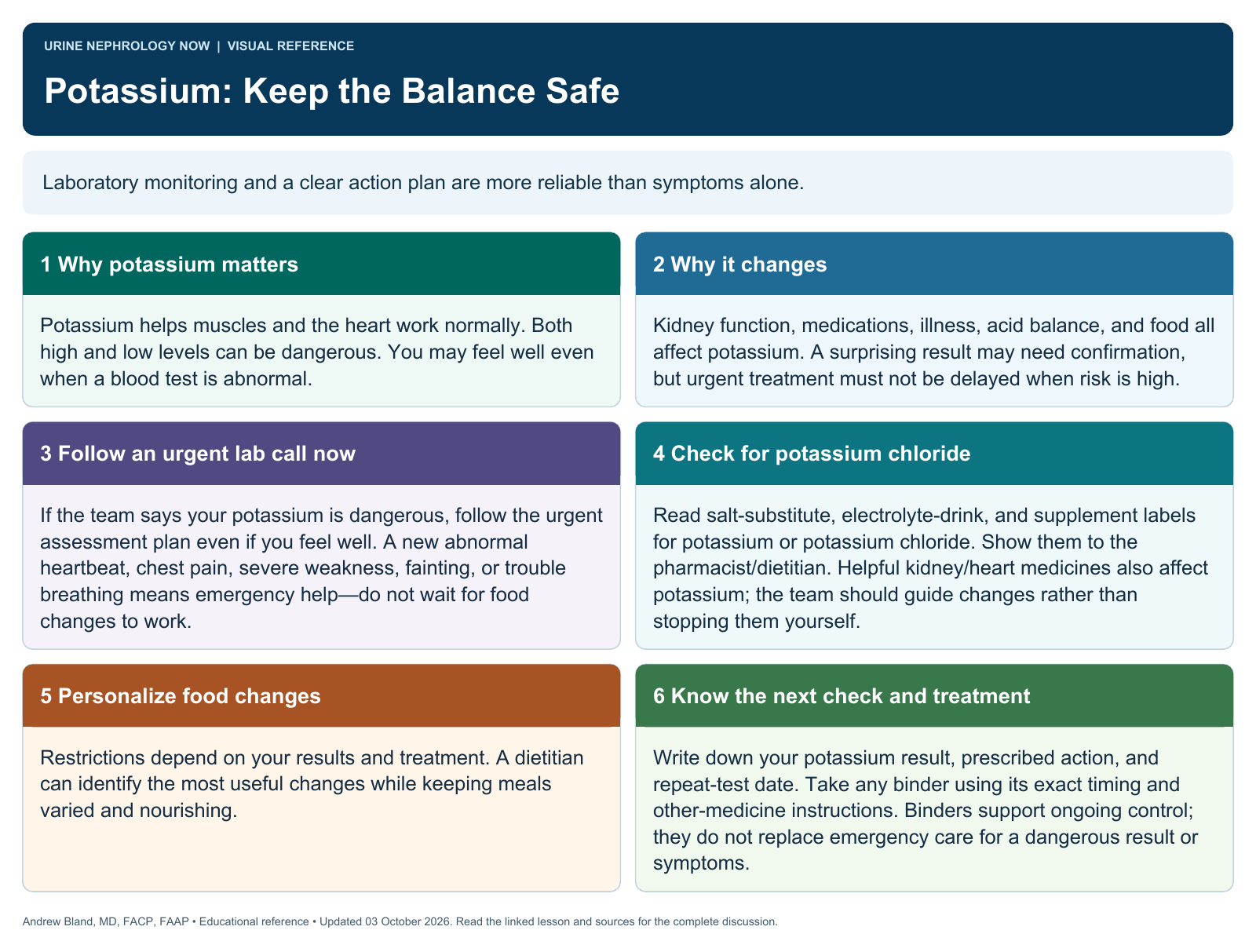
Laboratory monitoring and a clear action plan are more reliable than symptoms alone.
Text version
Why potassium matters
Potassium helps muscles and the heart work normally. Both high and low levels can be dangerous. You may feel well even when a blood test is abnormal.
Why it changes
Kidney function, medications, illness, acid balance, and food all affect potassium. A surprising result may need confirmation, but urgent treatment must not be delayed when risk is high.
Follow an urgent lab call now
If the team says your potassium is dangerous, follow the urgent assessment plan even if you feel well. A new abnormal heartbeat, chest pain, severe weakness, fainting, or trouble breathing means emergency help—do not wait for food changes to work.
Check for potassium chloride
Read salt-substitute, electrolyte-drink, and supplement labels for potassium or potassium chloride. Show them to the pharmacist/dietitian. Helpful kidney/heart medicines also affect potassium; the team should guide changes rather than stopping them yourself.
Personalize food changes
Restrictions depend on your results and treatment. A dietitian can identify the most useful changes while keeping meals varied and nourishing.
Know the next check and treatment
Write down your potassium result, prescribed action, and repeat-test date. Take any binder using its exact timing and other-medicine instructions. Binders support ongoing control; they do not replace emergency care for a dangerous result or symptoms.