Visual summary
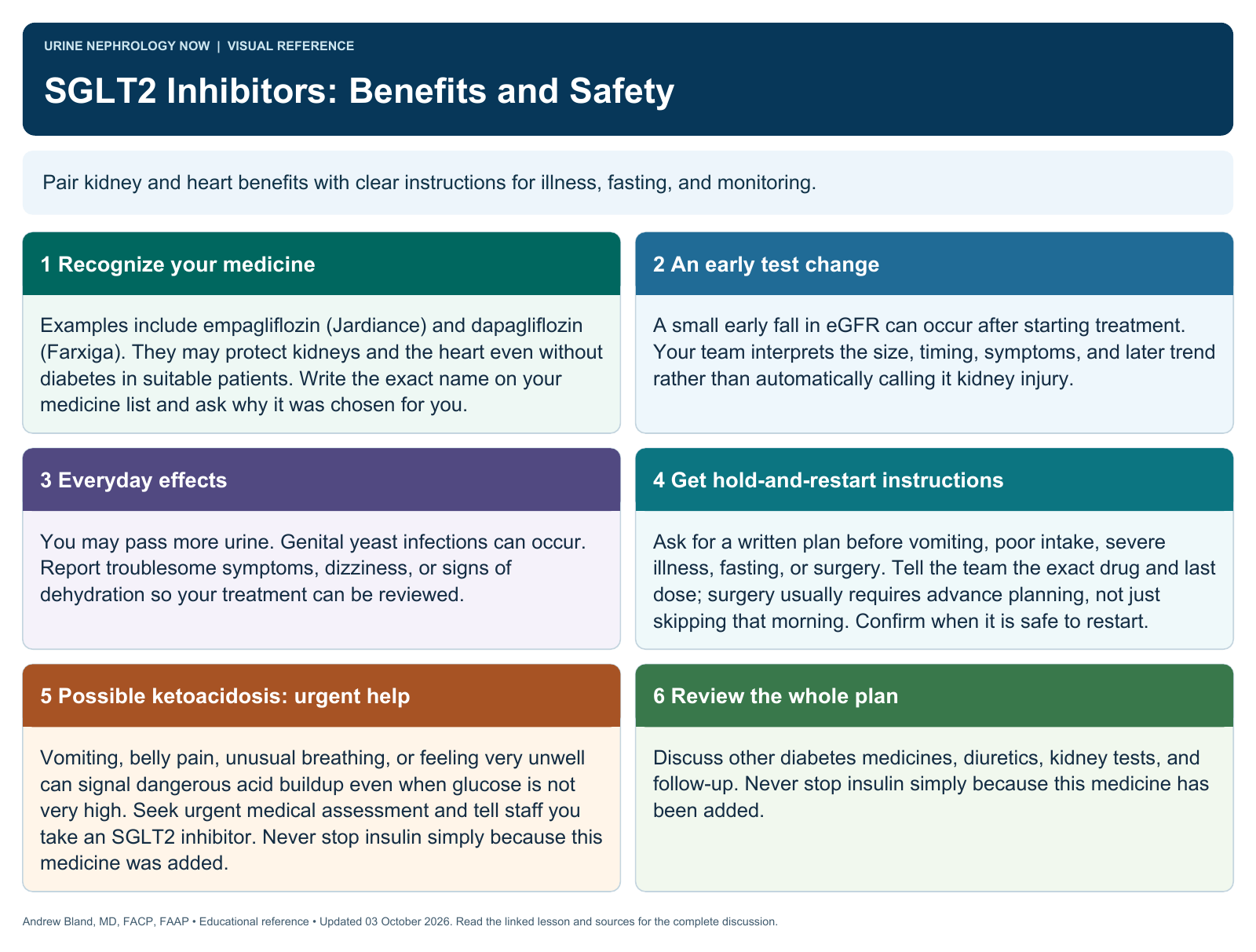
Pair kidney and heart benefits with clear instructions for illness, fasting, and monitoring.
Text version
Recognize your medicine
Examples include empagliflozin (Jardiance) and dapagliflozin (Farxiga). They may protect kidneys and the heart even without diabetes in suitable patients. Write the exact name on your medicine list and ask why it was chosen for you.
An early test change
A small early fall in eGFR can occur after starting treatment. Your team interprets the size, timing, symptoms, and later trend rather than automatically calling it kidney injury.
Everyday effects
You may pass more urine. Genital yeast infections can occur. Report troublesome symptoms, dizziness, or signs of dehydration so your treatment can be reviewed.
Get hold-and-restart instructions
Ask for a written plan before vomiting, poor intake, severe illness, fasting, or surgery. Tell the team the exact drug and last dose; surgery usually requires advance planning, not just skipping that morning. Confirm when it is safe to restart.
Possible ketoacidosis: urgent help
Vomiting, belly pain, unusual breathing, or feeling very unwell can signal dangerous acid buildup even when glucose is not very high. Seek urgent medical assessment and tell staff you take an SGLT2 inhibitor. Never stop insulin simply because this medicine was added.
Review the whole plan
Discuss other diabetes medicines, diuretics, kidney tests, and follow-up. Never stop insulin simply because this medicine has been added.