Visual summary
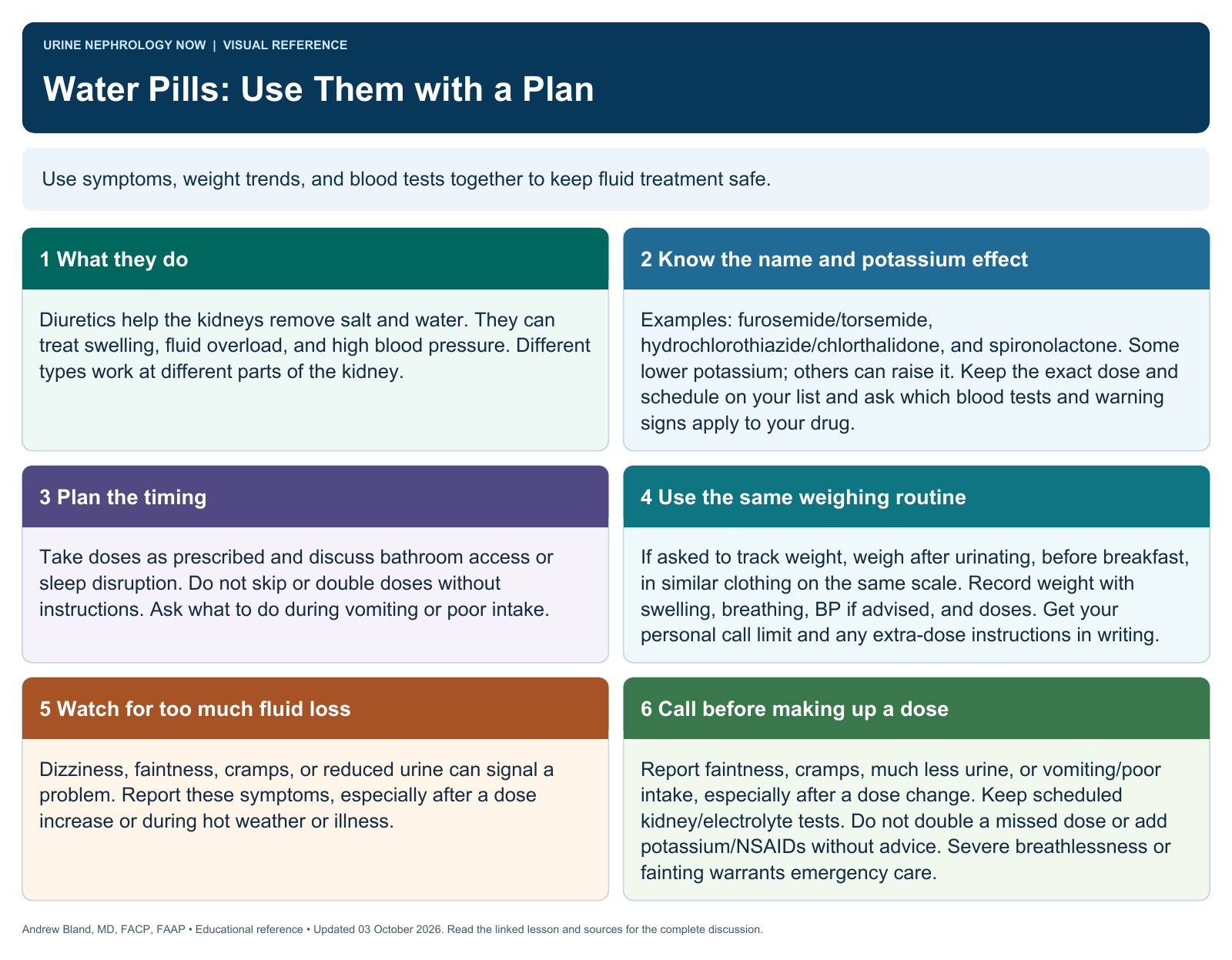
Use symptoms, weight trends, and blood tests together to keep fluid treatment safe.
Text version
What they do
Diuretics help the kidneys remove salt and water. They can treat swelling, fluid overload, and high blood pressure. Different types work at different parts of the kidney.
Know the name and potassium effect
Examples: furosemide/torsemide, hydrochlorothiazide/chlorthalidone, and spironolactone. Some lower potassium; others can raise it. Keep the exact dose and schedule on your list and ask which blood tests and warning signs apply to your drug.
Plan the timing
Take doses as prescribed and discuss bathroom access or sleep disruption. Do not skip or double doses without instructions. Ask what to do during vomiting or poor intake.
Use the same weighing routine
If asked to track weight, weigh after urinating, before breakfast, in similar clothing on the same scale. Record weight with swelling, breathing, BP if advised, and doses. Get your personal call limit and any extra-dose instructions in writing.
Watch for too much fluid loss
Dizziness, faintness, cramps, or reduced urine can signal a problem. Report these symptoms, especially after a dose increase or during hot weather or illness.
Call before making up a dose
Report faintness, cramps, much less urine, or vomiting/poor intake, especially after a dose change. Keep scheduled kidney/electrolyte tests. Do not double a missed dose or add potassium/NSAIDs without advice. Severe breathlessness or fainting warrants emergency care.