Visual summary
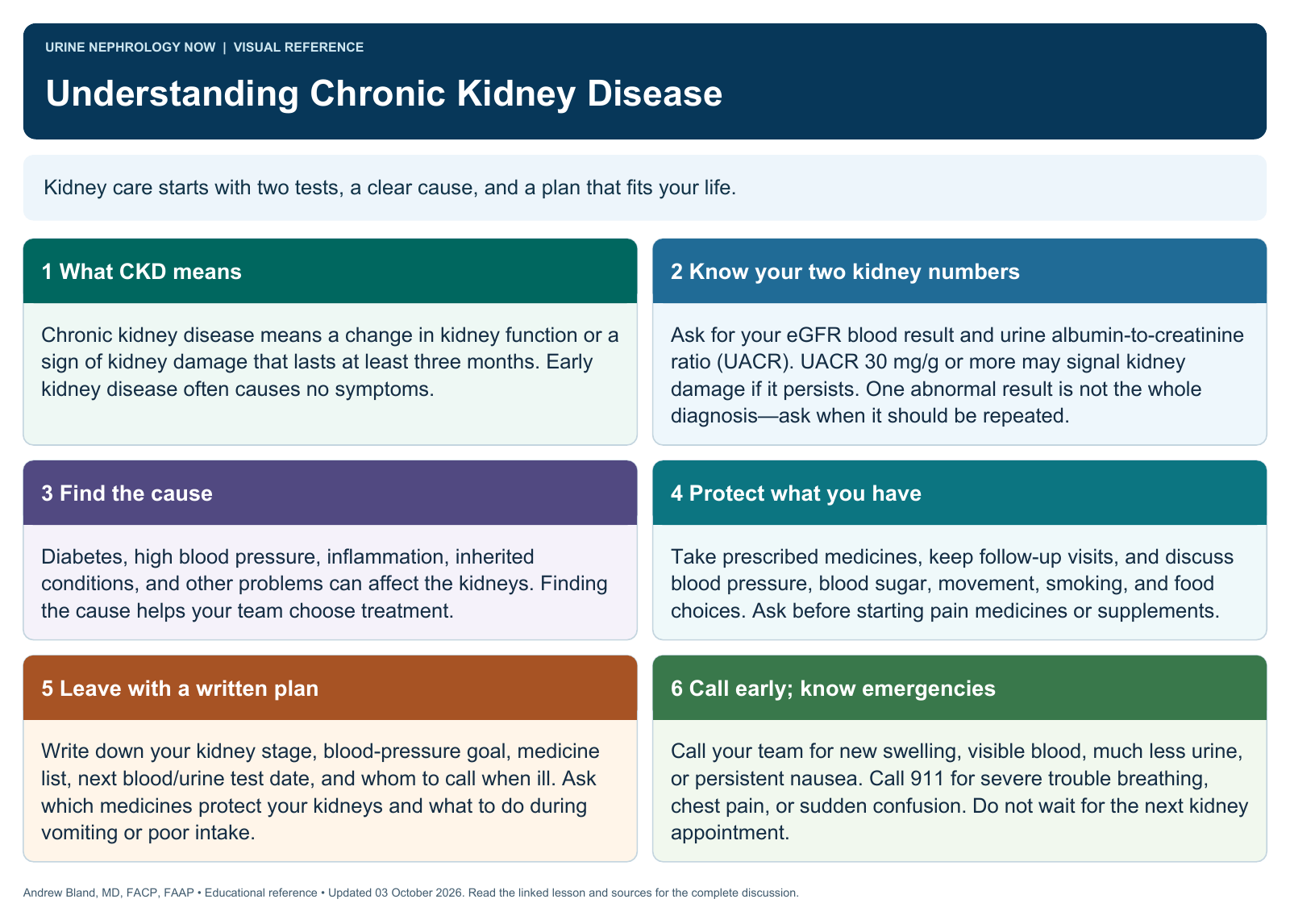
Kidney care starts with two tests, a clear cause, and a plan that fits your life.
Text version
What CKD means
Chronic kidney disease means a change in kidney function or a sign of kidney damage that lasts at least three months. Early kidney disease often causes no symptoms.
Know both kidney tests
The blood test called eGFR estimates filtering function. A urine albumin test checks for leaking protein. Your team reads them together and follows changes over time.
Find the cause
Diabetes, high blood pressure, inflammation, inherited conditions, and other problems can affect the kidneys. Finding the cause helps your team choose treatment.
Protect what you have
Take prescribed medicines, keep follow-up visits, and discuss blood pressure, blood sugar, movement, smoking, and food choices. Ask before starting pain medicines or supplements.
Plan with your team
Ask how often to repeat blood and urine tests, whether your medicines protect the kidneys, and what to do during vomiting, diarrhea, or poor food intake.
Know when to call
Report new swelling, blood in the urine, a major change in urination, or persistent nausea. Severe breathlessness, chest pain, or confusion needs urgent evaluation.
Continue learning
This graphic summarizes a topic. The full educational pages provide the broader discussion and references.