Visual summary
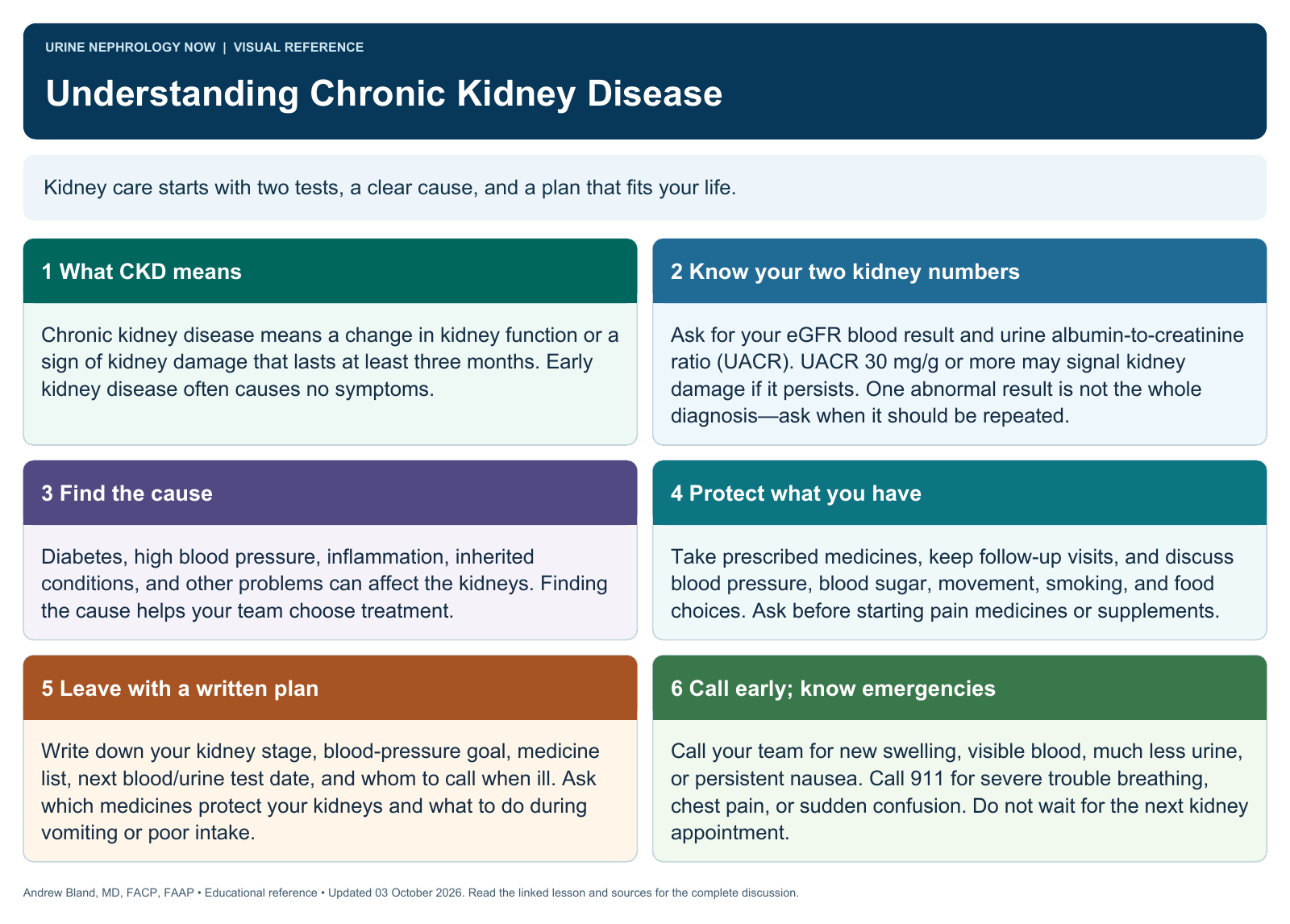
Kidney care starts with two tests, a clear cause, and a plan that fits your life.
Text version
What CKD means
Chronic kidney disease means a change in kidney function or a sign of kidney damage that lasts at least three months. Early kidney disease often causes no symptoms.
Know your two kidney numbers
Ask for your eGFR blood result and urine albumin-to-creatinine ratio (UACR). UACR 30 mg/g or more may signal kidney damage if it persists. One abnormal result is not the whole diagnosis—ask when it should be repeated.
Find the cause
Diabetes, high blood pressure, inflammation, inherited conditions, and other problems can affect the kidneys. Finding the cause helps your team choose treatment.
Protect what you have
Take prescribed medicines, keep follow-up visits, and discuss blood pressure, blood sugar, movement, smoking, and food choices. Ask before starting pain medicines or supplements.
Leave with a written plan
Write down your kidney stage, blood-pressure goal, medicine list, next blood/urine test date, and whom to call when ill. Ask which medicines protect your kidneys and what to do during vomiting or poor intake.
Call early; know emergencies
Call your team for new swelling, visible blood, much less urine, or persistent nausea. Call 911 for severe trouble breathing, chest pain, or sudden confusion. Do not wait for the next kidney appointment.