Visual summary
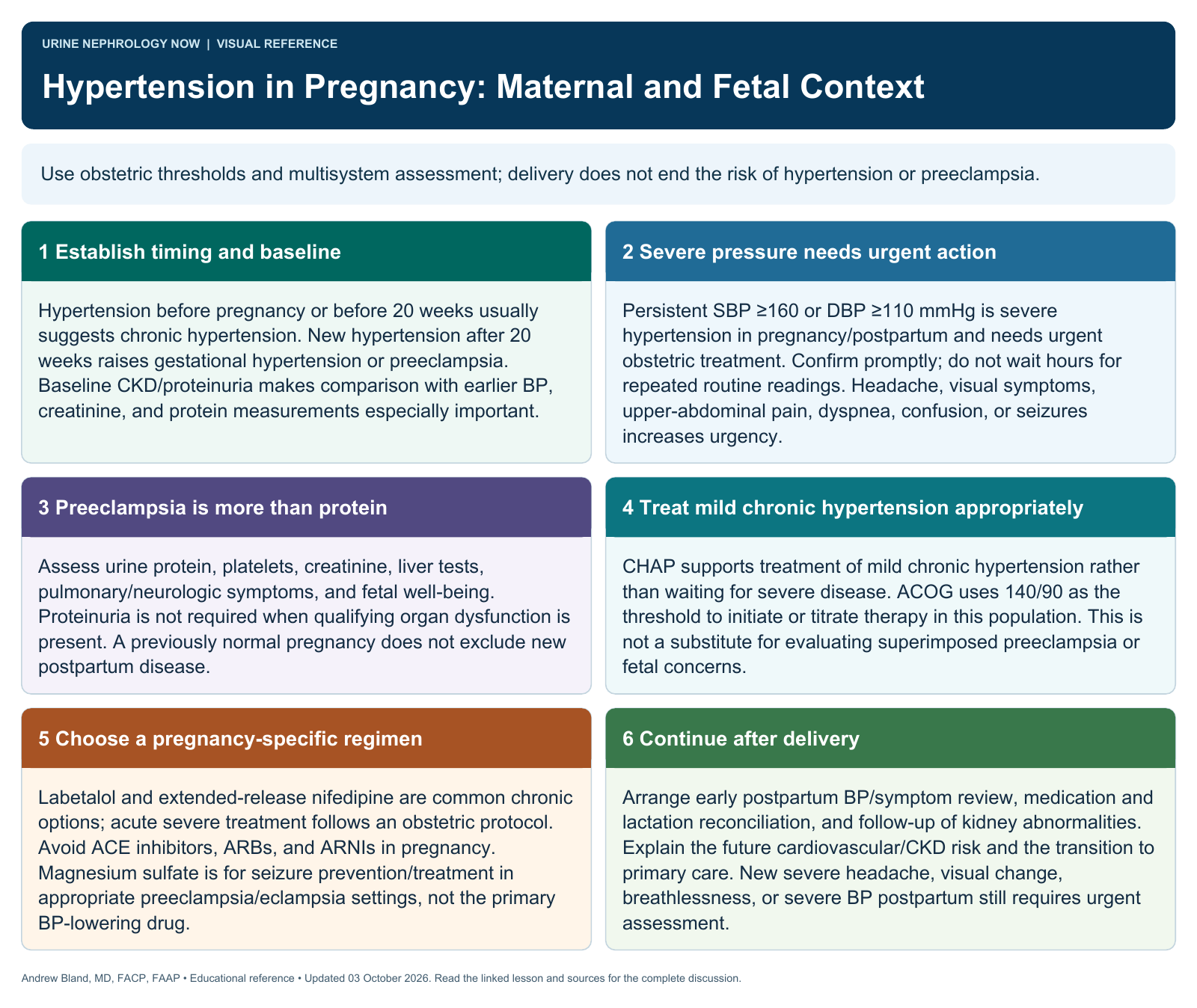
Pregnancy hypertension needs coordinated obstetric care, medication safety review, and surveillance that continues into the postpartum period.
Text version
Pregnancy changes the differential
Chronic hypertension, gestational hypertension, and preeclampsia are related but distinct conditions. Preeclampsia can involve multiple organs, and kidney findings must be interpreted within the pregnancy and postpartum clinical context.
Recognize urgent symptoms
Severe BP elevation, headache, visual symptoms, upper abdominal pain, dyspnea, neurologic changes, or rapidly evolving laboratory abnormalities require prompt obstetric assessment. Postpartum disease can present after delivery and should not be dismissed.
Evaluate mother and fetus
Confirm BP appropriately and assess symptoms, proteinuria, blood counts, kidney and liver tests, and fetal well-being as indicated. Compare with baseline CKD and chronic hypertension when interpreting new abnormalities.
Choose pregnancy-compatible therapy
Use agents supported by current obstetric guidance and review all medications for pregnancy safety. RAAS-pathway agents require particular attention. Treatment targets, monitoring, and delivery decisions depend on the diagnosed condition and severity.
Interpret CHAP appropriately
Evidence for treatment of mild chronic hypertension informs care within the studied population. It does not make every hypertensive pregnancy identical or eliminate the need to assess preeclampsia, fetal status, and treatment tolerance.
Continue postpartum follow-up
Review BP, symptoms, renal recovery, medication compatibility with lactation, and longer-term cardiovascular risk. Establish a clear contact plan and transition to primary care or specialists so that pregnancy-associated risk remains visible after delivery.
Continue learning
This graphic summarizes a topic. The full educational pages provide the broader discussion and references.