Visual summary
Use obstetric thresholds and multisystem assessment; delivery does not end the risk of hypertension or preeclampsia.
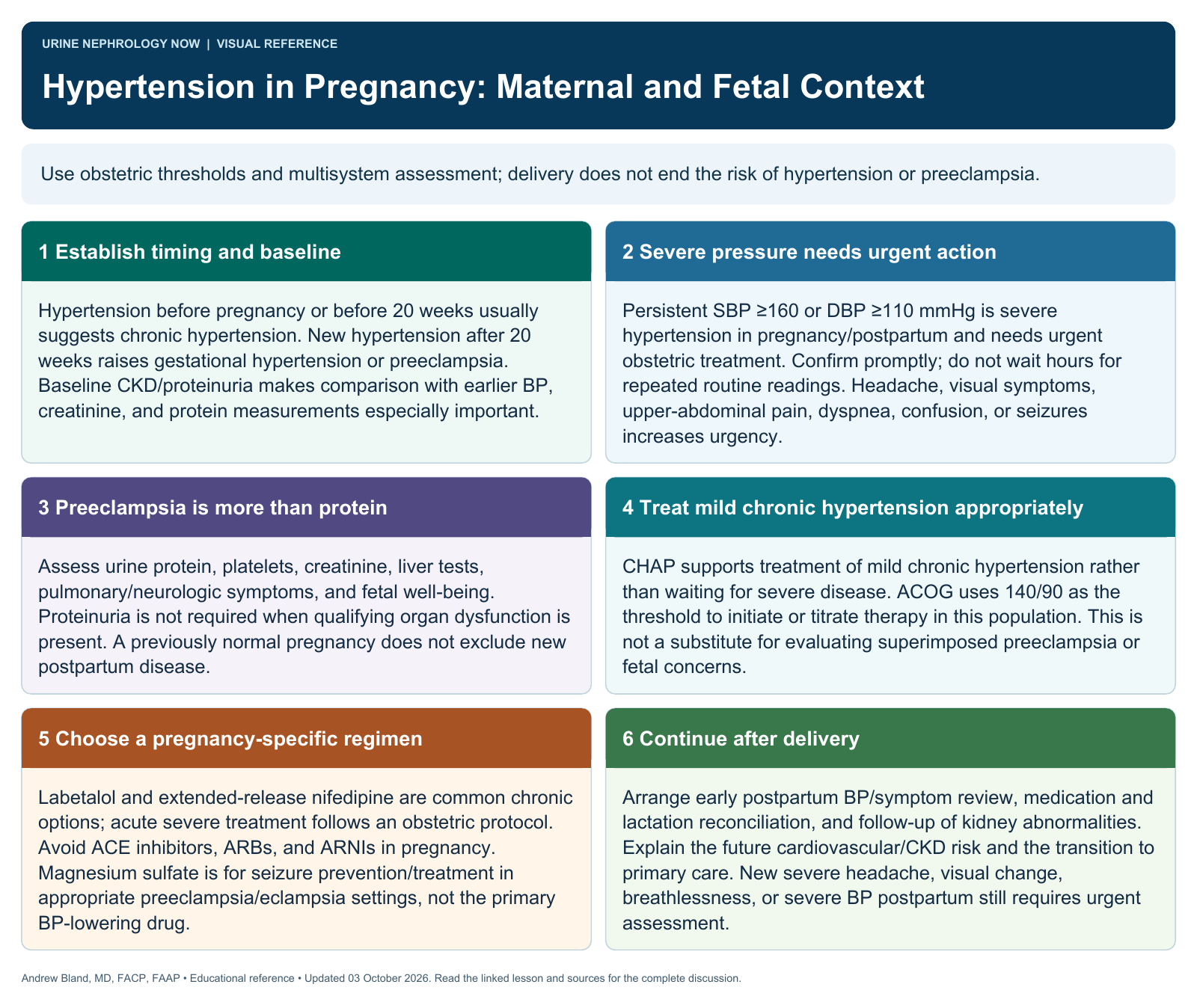
Text version
Establish timing and baseline
Hypertension before pregnancy or before 20 weeks usually suggests chronic hypertension. New hypertension after 20 weeks raises gestational hypertension or preeclampsia. Baseline CKD/proteinuria makes comparison with earlier BP, creatinine, and protein measurements especially important.
Severe pressure needs urgent action
Persistent SBP ≥160 or DBP ≥110 mmHg is severe hypertension in pregnancy/postpartum and needs urgent obstetric treatment. Confirm promptly; do not wait hours for repeated routine readings. Headache, visual symptoms, upper-abdominal pain, dyspnea, confusion, or seizures increases urgency.
Preeclampsia is more than protein
Assess urine protein, platelets, creatinine, liver tests, pulmonary/neurologic symptoms, and fetal well-being. Proteinuria is not required when qualifying organ dysfunction is present. A previously normal pregnancy does not exclude new postpartum disease.
Treat mild chronic hypertension appropriately
CHAP supports treatment of mild chronic hypertension rather than waiting for severe disease. ACOG uses 140/90 as the threshold to initiate or titrate therapy in this population. This is not a substitute for evaluating superimposed preeclampsia or fetal concerns.
Choose a pregnancy-specific regimen
Labetalol and extended-release nifedipine are common chronic options; acute severe treatment follows an obstetric protocol. Avoid ACE inhibitors, ARBs, and ARNIs in pregnancy. Magnesium sulfate is for seizure prevention/treatment in appropriate preeclampsia/eclampsia settings, not the primary BP-lowering drug.
Continue after delivery
Arrange early postpartum BP/symptom review, medication and lactation reconciliation, and follow-up of kidney abnormalities. Explain the future cardiovascular/CKD risk and the transition to primary care. New severe headache, visual change, breathlessness, or severe BP postpartum still requires urgent assessment.