Visual summary
A fluid response can inform the diagnosis, but careful reassessment matters more than a single textbook urine value.
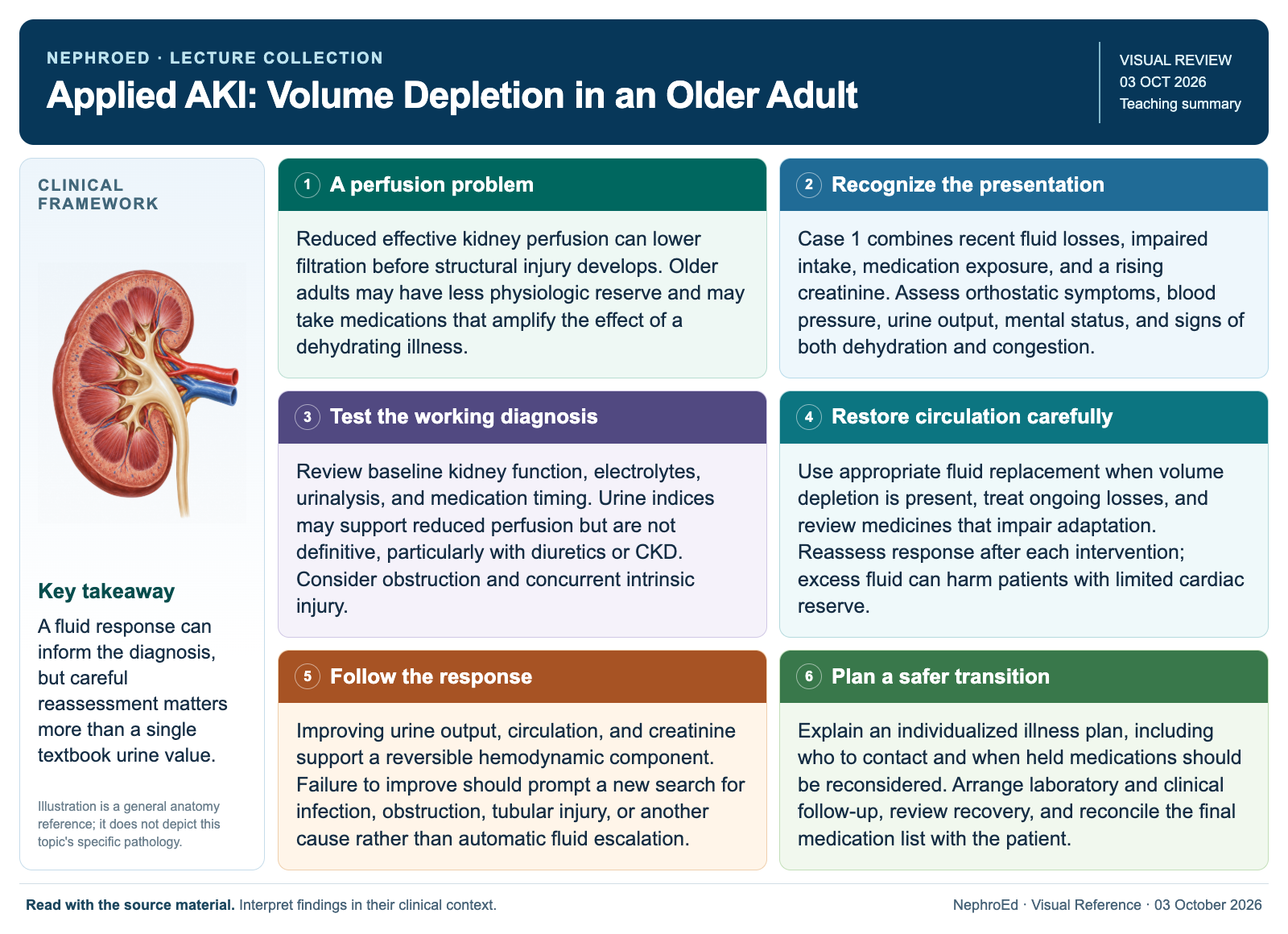
Text version
A perfusion problem
Reduced effective kidney perfusion can lower filtration before structural injury develops. Older adults may have less physiologic reserve and may take medications that amplify the effect of a dehydrating illness.
Recognize the presentation
Case 1 combines recent fluid losses, impaired intake, medication exposure, and a rising creatinine. Assess orthostatic symptoms, blood pressure, urine output, mental status, and signs of both dehydration and congestion.
Test the working diagnosis
Review baseline kidney function, electrolytes, urinalysis, and medication timing. Urine indices may support reduced perfusion but are not definitive, particularly with diuretics or CKD. Consider obstruction and concurrent intrinsic injury.
Restore circulation carefully
Use appropriate fluid replacement when volume depletion is present, treat ongoing losses, and review medicines that impair adaptation. Reassess response after each intervention; excess fluid can harm patients with limited cardiac reserve.
Follow the response
Improving urine output, circulation, and creatinine support a reversible hemodynamic component. Failure to improve should prompt a new search for infection, obstruction, tubular injury, or another cause rather than automatic fluid escalation.
Plan a safer transition
Explain an individualized illness plan, including who to contact and when held medications should be reconsidered. Arrange laboratory and clinical follow-up, review recovery, and reconcile the final medication list with the patient.
Continue learning
This graphic summarizes a topic. The full educational pages provide the broader discussion and references.