Visual summary
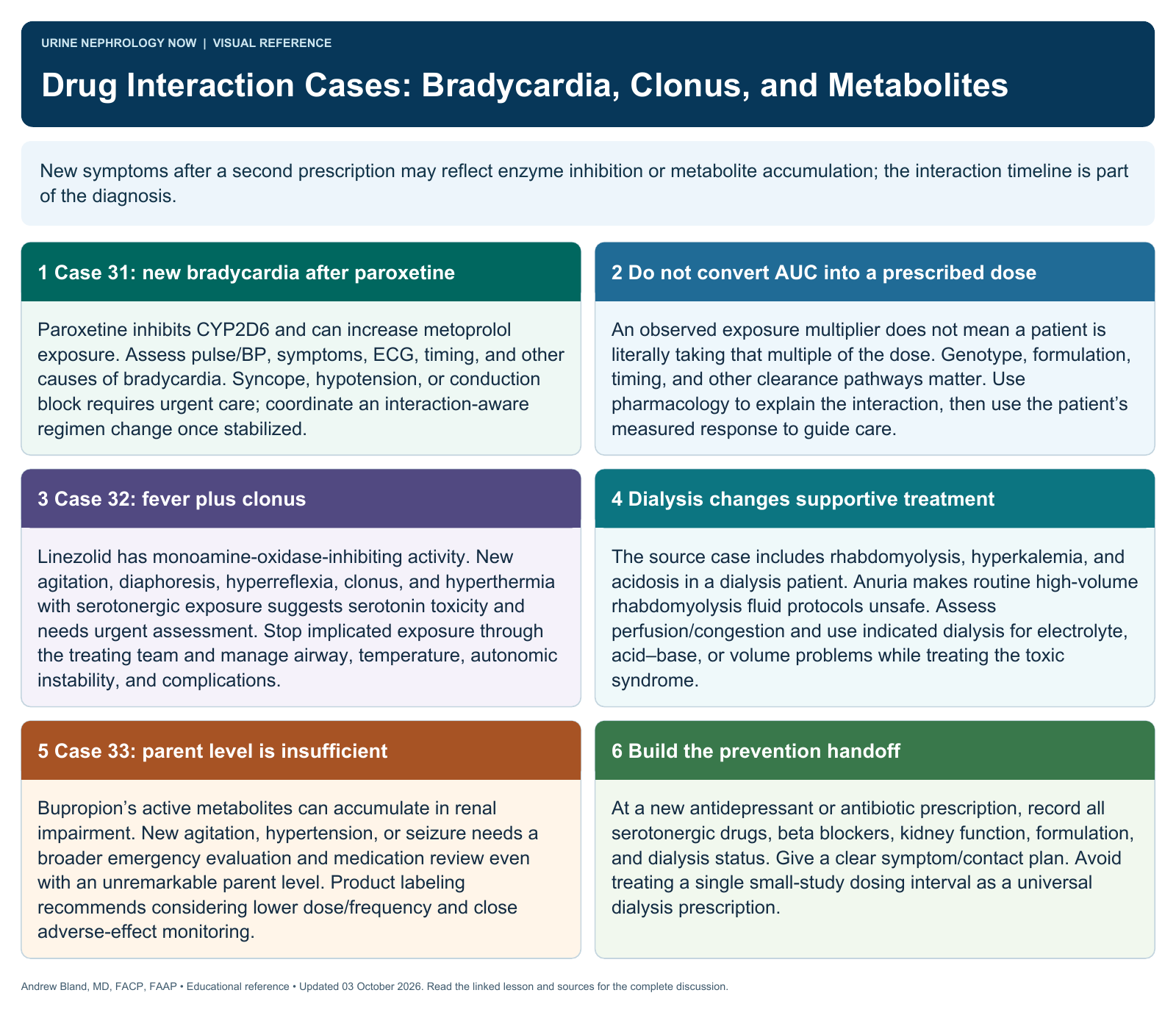
New symptoms after a second prescription may reflect enzyme inhibition or metabolite accumulation; the interaction timeline is part of the diagnosis.
Text version
Case 31: new bradycardia after paroxetine
Paroxetine inhibits CYP2D6 and can increase metoprolol exposure. Assess pulse/BP, symptoms, ECG, timing, and other causes of bradycardia. Syncope, hypotension, or conduction block requires urgent care; coordinate an interaction-aware regimen change once stabilized.
Do not convert AUC into a prescribed dose
An observed exposure multiplier does not mean a patient is literally taking that multiple of the dose. Genotype, formulation, timing, and other clearance pathways matter. Use pharmacology to explain the interaction, then use the patient’s measured response to guide care.
Case 32: fever plus clonus
Linezolid has monoamine-oxidase-inhibiting activity. New agitation, diaphoresis, hyperreflexia, clonus, and hyperthermia with serotonergic exposure suggests serotonin toxicity and needs urgent assessment. Stop implicated exposure through the treating team and manage airway, temperature, autonomic instability, and complications.
Dialysis changes supportive treatment
The source case includes rhabdomyolysis, hyperkalemia, and acidosis in a dialysis patient. Anuria makes routine high-volume rhabdomyolysis fluid protocols unsafe. Assess perfusion/congestion and use indicated dialysis for electrolyte, acid–base, or volume problems while treating the toxic syndrome.
Case 33: parent level is insufficient
Bupropion’s active metabolites can accumulate in renal impairment. New agitation, hypertension, or seizure needs a broader emergency evaluation and medication review even with an unremarkable parent level. Product labeling recommends considering lower dose/frequency and close adverse-effect monitoring.
Build the prevention handoff
At a new antidepressant or antibiotic prescription, record all serotonergic drugs, beta blockers, kidney function, formulation, and dialysis status. Give a clear symptom/contact plan. Avoid treating a single small-study dosing interval as a universal dialysis prescription.