Visual summary
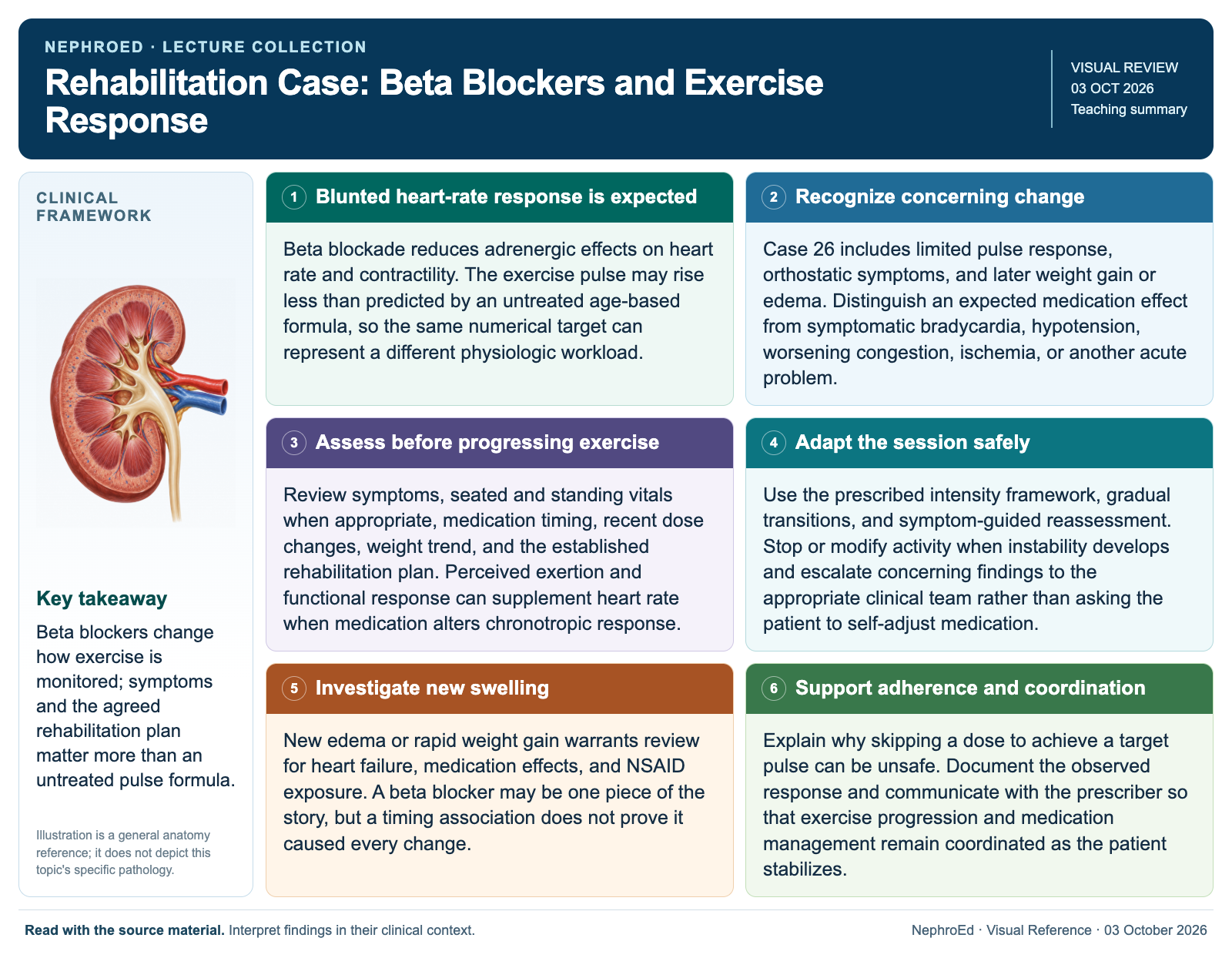
Beta blockers change how exercise is monitored; symptoms and the agreed rehabilitation plan matter more than an untreated pulse formula.
Text version
Blunted heart-rate response is expected
Beta blockade reduces adrenergic effects on heart rate and contractility. The exercise pulse may rise less than predicted by an untreated age-based formula, so the same numerical target can represent a different physiologic workload.
Recognize concerning change
Case 26 includes limited pulse response, orthostatic symptoms, and later weight gain or edema. Distinguish an expected medication effect from symptomatic bradycardia, hypotension, worsening congestion, ischemia, or another acute problem.
Assess before progressing exercise
Review symptoms, seated and standing vitals when appropriate, medication timing, recent dose changes, weight trend, and the established rehabilitation plan. Perceived exertion and functional response can supplement heart rate when medication alters chronotropic response.
Adapt the session safely
Use the prescribed intensity framework, gradual transitions, and symptom-guided reassessment. Stop or modify activity when instability develops and escalate concerning findings to the appropriate clinical team rather than asking the patient to self-adjust medication.
Investigate new swelling
New edema or rapid weight gain warrants review for heart failure, medication effects, and NSAID exposure. A beta blocker may be one piece of the story, but a timing association does not prove it caused every change.
Support adherence and coordination
Explain why skipping a dose to achieve a target pulse can be unsafe. Document the observed response and communicate with the prescriber so that exercise progression and medication management remain coordinated as the patient stabilizes.
Continue learning
This graphic summarizes a topic. The full educational pages provide the broader discussion and references.