Visual summary
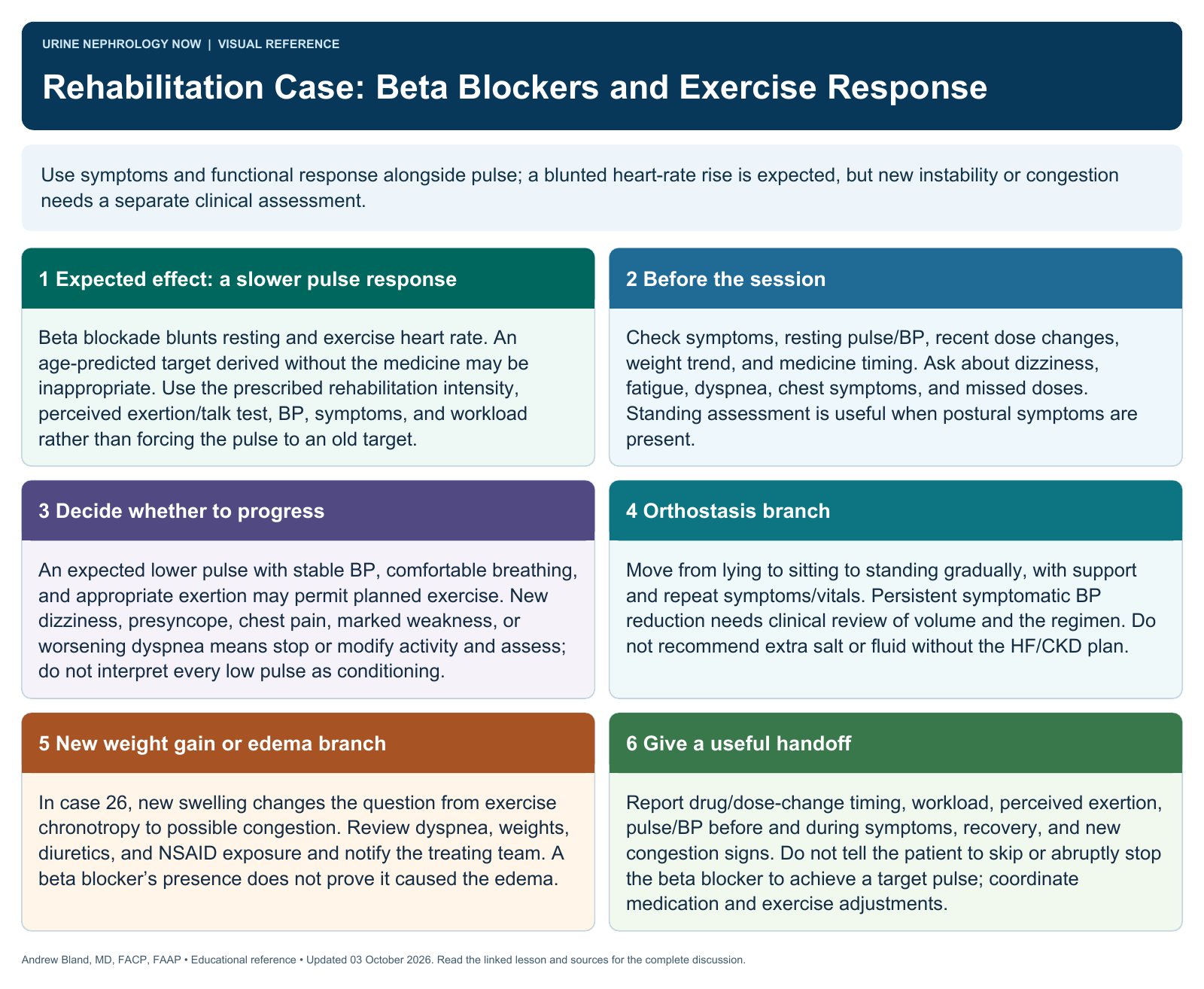
Use symptoms and functional response alongside pulse; a blunted heart-rate rise is expected, but new instability or congestion needs a separate clinical assessment.
Text version
Expected effect: a slower pulse response
Beta blockade blunts resting and exercise heart rate. An age-predicted target derived without the medicine may be inappropriate. Use the prescribed rehabilitation intensity, perceived exertion/talk test, BP, symptoms, and workload rather than forcing the pulse to an old target.
Before the session
Check symptoms, resting pulse/BP, recent dose changes, weight trend, and medicine timing. Ask about dizziness, fatigue, dyspnea, chest symptoms, and missed doses. Standing assessment is useful when postural symptoms are present.
Decide whether to progress
An expected lower pulse with stable BP, comfortable breathing, and appropriate exertion may permit planned exercise. New dizziness, presyncope, chest pain, marked weakness, or worsening dyspnea means stop or modify activity and assess; do not interpret every low pulse as conditioning.
Orthostasis branch
Move from lying to sitting to standing gradually, with support and repeat symptoms/vitals. Persistent symptomatic BP reduction needs clinical review of volume and the regimen. Do not recommend extra salt or fluid without the HF/CKD plan.
New weight gain or edema branch
In case 26, new swelling changes the question from exercise chronotropy to possible congestion. Review dyspnea, weights, diuretics, and NSAID exposure and notify the treating team. A beta blocker’s presence does not prove it caused the edema.
Give a useful handoff
Report drug/dose-change timing, workload, perceived exertion, pulse/BP before and during symptoms, recovery, and new congestion signs. Do not tell the patient to skip or abruptly stop the beta blocker to achieve a target pulse; coordinate medication and exercise adjustments.