Visual summary
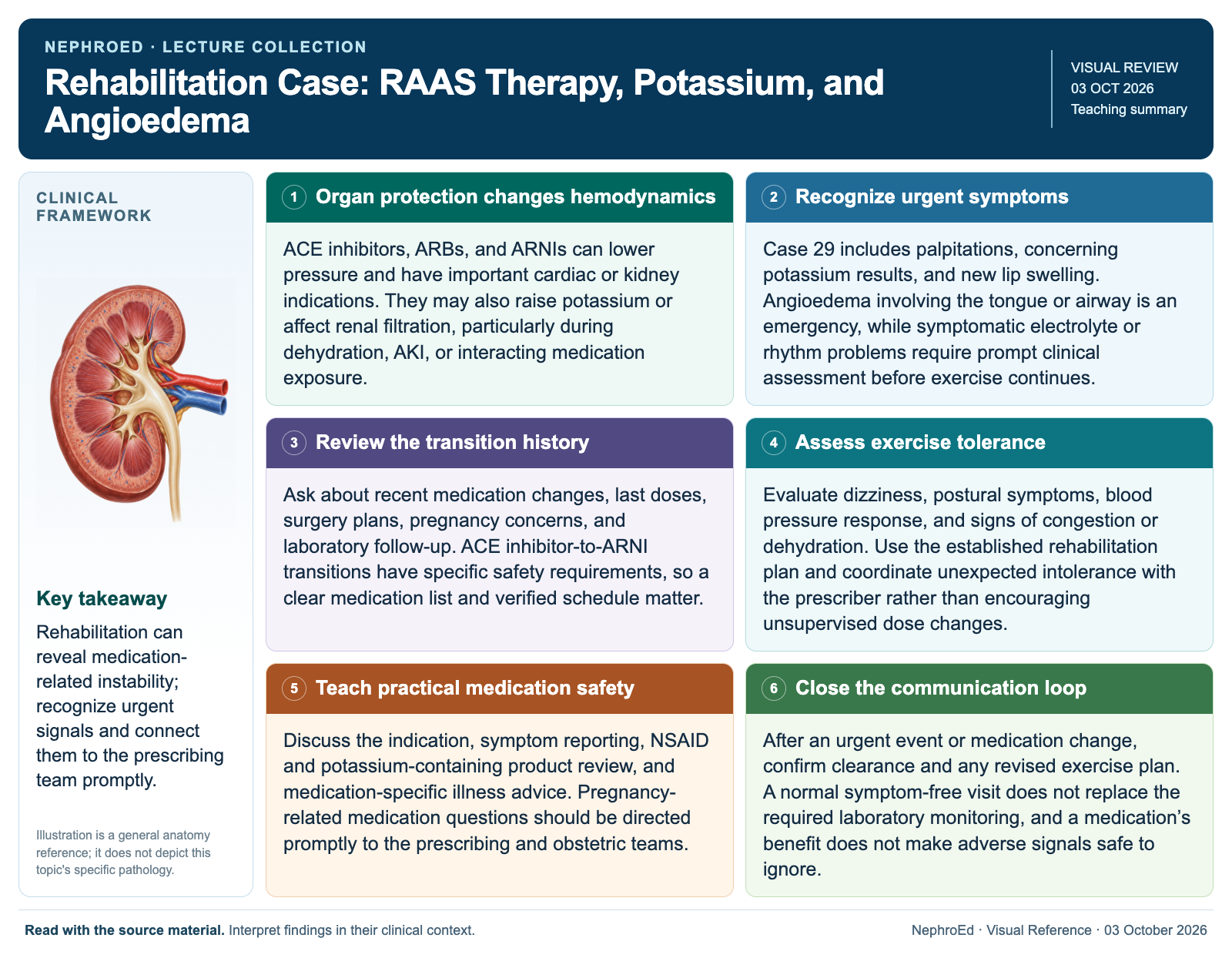
Rehabilitation can reveal medication-related instability; recognize urgent signals and connect them to the prescribing team promptly.
Text version
Organ protection changes hemodynamics
ACE inhibitors, ARBs, and ARNIs can lower pressure and have important cardiac or kidney indications. They may also raise potassium or affect renal filtration, particularly during dehydration, AKI, or interacting medication exposure.
Recognize urgent symptoms
Case 29 includes palpitations, concerning potassium results, and new lip swelling. Angioedema involving the tongue or airway is an emergency, while symptomatic electrolyte or rhythm problems require prompt clinical assessment before exercise continues.
Review the transition history
Ask about recent medication changes, last doses, surgery plans, pregnancy concerns, and laboratory follow-up. ACE inhibitor-to-ARNI transitions have specific safety requirements, so a clear medication list and verified schedule matter.
Assess exercise tolerance
Evaluate dizziness, postural symptoms, blood pressure response, and signs of congestion or dehydration. Use the established rehabilitation plan and coordinate unexpected intolerance with the prescriber rather than encouraging unsupervised dose changes.
Teach practical medication safety
Discuss the indication, symptom reporting, NSAID and potassium-containing product review, and medication-specific illness advice. Pregnancy-related medication questions should be directed promptly to the prescribing and obstetric teams.
Close the communication loop
After an urgent event or medication change, confirm clearance and any revised exercise plan. A normal symptom-free visit does not replace the required laboratory monitoring, and a medication’s benefit does not make adverse signals safe to ignore.
Continue learning
This graphic summarizes a topic. The full educational pages provide the broader discussion and references.