Visual summary
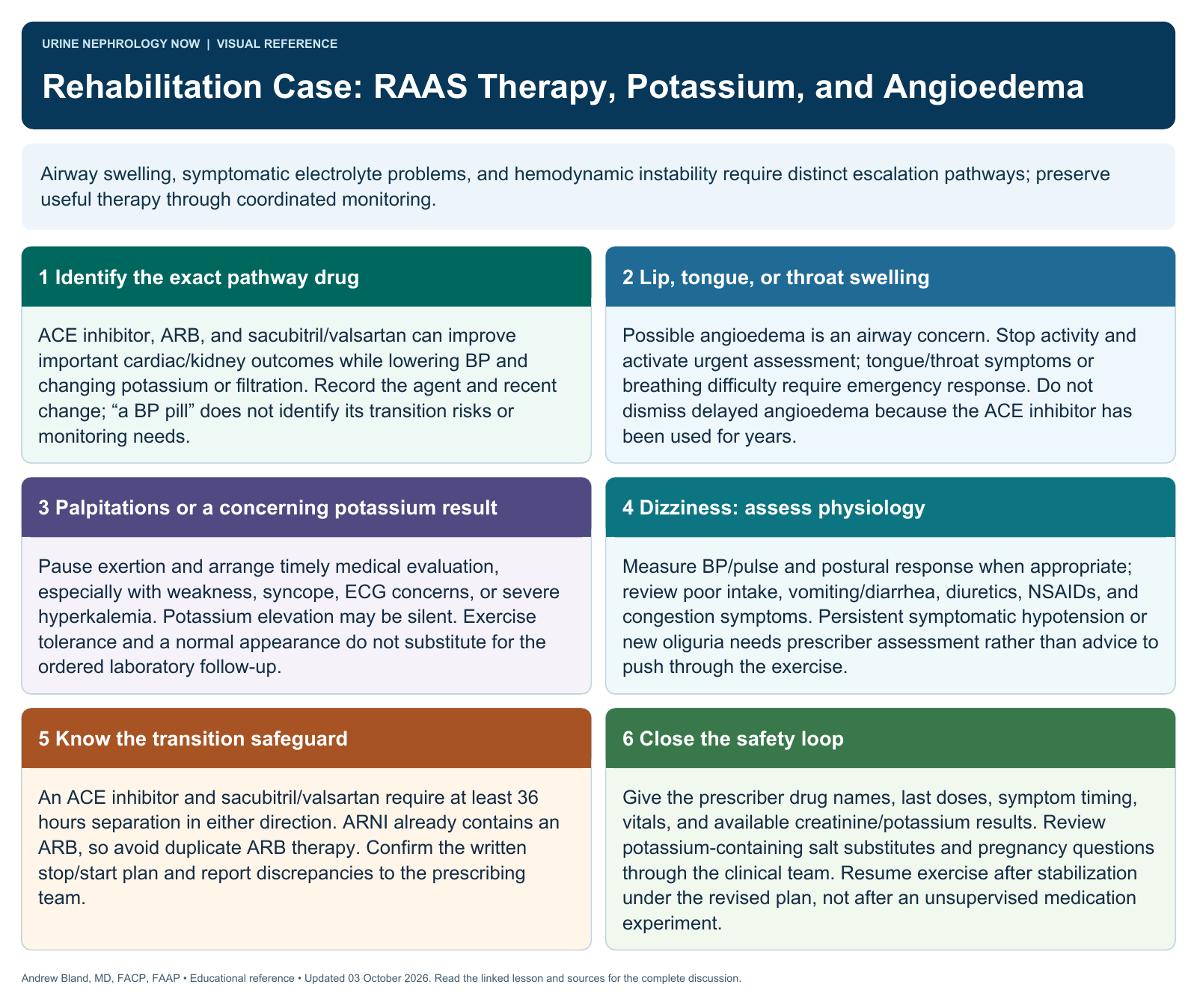
Airway swelling, symptomatic electrolyte problems, and hemodynamic instability require distinct escalation pathways; preserve useful therapy through coordinated monitoring.
Text version
Identify the exact pathway drug
ACE inhibitor, ARB, and sacubitril/valsartan can improve important cardiac/kidney outcomes while lowering BP and changing potassium or filtration. Record the agent and recent change; “a BP pill” does not identify its transition risks or monitoring needs.
Lip, tongue, or throat swelling
Possible angioedema is an airway concern. Stop activity and activate urgent assessment; tongue/throat symptoms or breathing difficulty require emergency response. Do not dismiss delayed angioedema because the ACE inhibitor has been used for years.
Palpitations or a concerning potassium result
Pause exertion and arrange timely medical evaluation, especially with weakness, syncope, ECG concerns, or severe hyperkalemia. Potassium elevation may be silent. Exercise tolerance and a normal appearance do not substitute for the ordered laboratory follow-up.
Dizziness: assess physiology
Measure BP/pulse and postural response when appropriate; review poor intake, vomiting/diarrhea, diuretics, NSAIDs, and congestion symptoms. Persistent symptomatic hypotension or new oliguria needs prescriber assessment rather than advice to push through the exercise.
Know the transition safeguard
An ACE inhibitor and sacubitril/valsartan require at least 36 hours separation in either direction. ARNI already contains an ARB, so avoid duplicate ARB therapy. Confirm the written stop/start plan and report discrepancies to the prescribing team.
Close the safety loop
Give the prescriber drug names, last doses, symptom timing, vitals, and available creatinine/potassium results. Review potassium-containing salt substitutes and pregnancy questions through the clinical team. Resume exercise after stabilization under the revised plan, not after an unsupervised medication experiment.