Visual summary
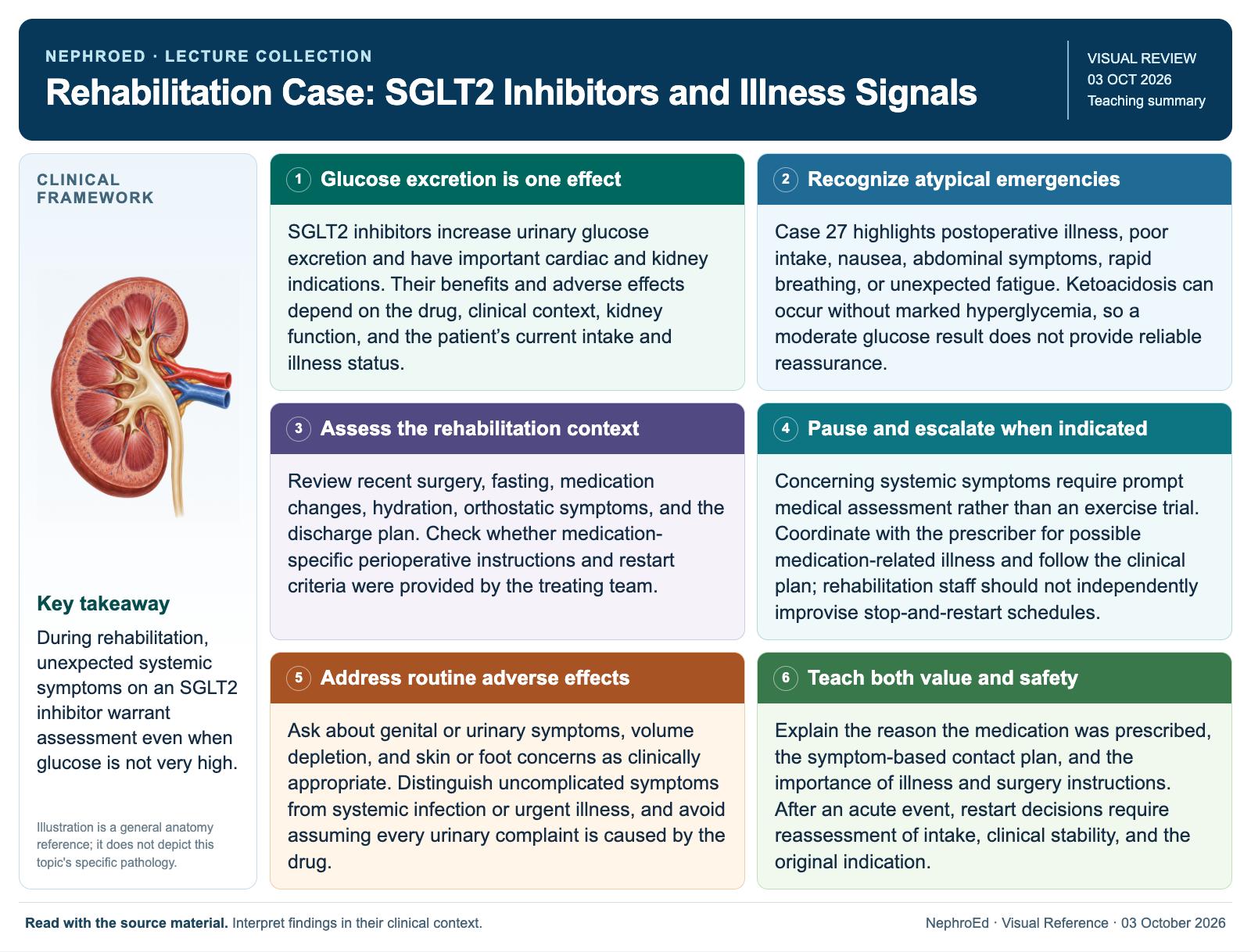
During rehabilitation, unexpected systemic symptoms on an SGLT2 inhibitor warrant assessment even when glucose is not very high.
Text version
Glucose excretion is one effect
SGLT2 inhibitors increase urinary glucose excretion and have important cardiac and kidney indications. Their benefits and adverse effects depend on the drug, clinical context, kidney function, and the patient’s current intake and illness status.
Recognize atypical emergencies
Case 27 highlights postoperative illness, poor intake, nausea, abdominal symptoms, rapid breathing, or unexpected fatigue. Ketoacidosis can occur without marked hyperglycemia, so a moderate glucose result does not provide reliable reassurance.
Assess the rehabilitation context
Review recent surgery, fasting, medication changes, hydration, orthostatic symptoms, and the discharge plan. Check whether medication-specific perioperative instructions and restart criteria were provided by the treating team.
Pause and escalate when indicated
Concerning systemic symptoms require prompt medical assessment rather than an exercise trial. Coordinate with the prescriber for possible medication-related illness and follow the clinical plan; rehabilitation staff should not independently improvise stop-and-restart schedules.
Address routine adverse effects
Ask about genital or urinary symptoms, volume depletion, and skin or foot concerns as clinically appropriate. Distinguish uncomplicated symptoms from systemic infection or urgent illness, and avoid assuming every urinary complaint is caused by the drug.
Teach both value and safety
Explain the reason the medication was prescribed, the symptom-based contact plan, and the importance of illness and surgery instructions. After an acute event, restart decisions require reassessment of intake, clinical stability, and the original indication.
Continue learning
This graphic summarizes a topic. The full educational pages provide the broader discussion and references.