Visual summary
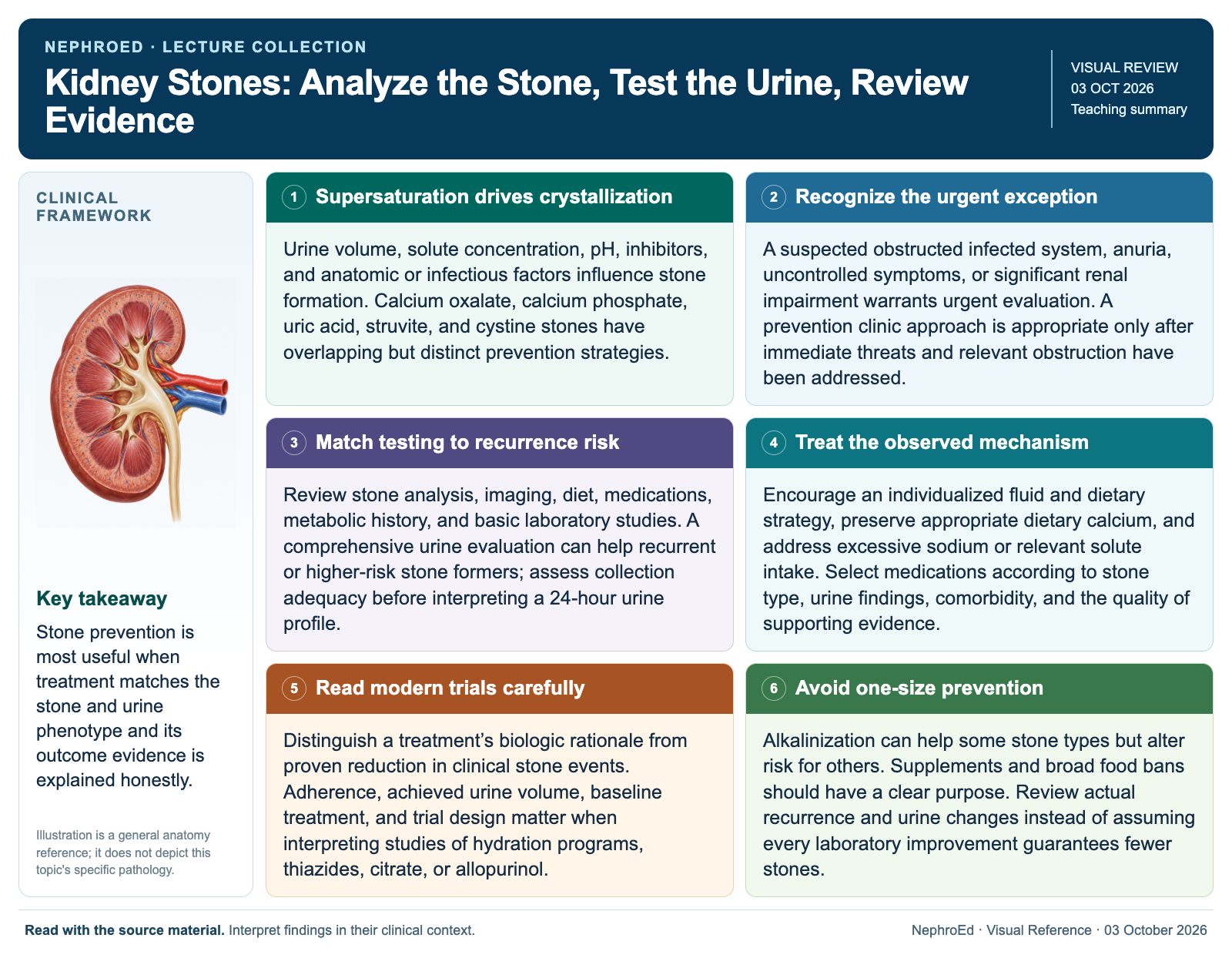
Stone prevention is most useful when treatment matches the stone and urine phenotype and its outcome evidence is explained honestly.
Text version
Supersaturation drives crystallization
Urine volume, solute concentration, pH, inhibitors, and anatomic or infectious factors influence stone formation. Calcium oxalate, calcium phosphate, uric acid, struvite, and cystine stones have overlapping but distinct prevention strategies.
Recognize the urgent exception
A suspected obstructed infected system, anuria, uncontrolled symptoms, or significant renal impairment warrants urgent evaluation. A prevention clinic approach is appropriate only after immediate threats and relevant obstruction have been addressed.
Match testing to recurrence risk
Review stone analysis, imaging, diet, medications, metabolic history, and basic laboratory studies. A comprehensive urine evaluation can help recurrent or higher-risk stone formers; assess collection adequacy before interpreting a 24-hour urine profile.
Treat the observed mechanism
Encourage an individualized fluid and dietary strategy, preserve appropriate dietary calcium, and address excessive sodium or relevant solute intake. Select medications according to stone type, urine findings, comorbidity, and the quality of supporting evidence.
Read modern trials carefully
Distinguish a treatment’s biologic rationale from proven reduction in clinical stone events. Adherence, achieved urine volume, baseline treatment, and trial design matter when interpreting studies of hydration programs, thiazides, citrate, or allopurinol.
Avoid one-size prevention
Alkalinization can help some stone types but alter risk for others. Supplements and broad food bans should have a clear purpose. Review actual recurrence and urine changes instead of assuming every laboratory improvement guarantees fewer stones.
Continue learning
This graphic summarizes a topic. The full educational pages provide the broader discussion and references.