Visual summary
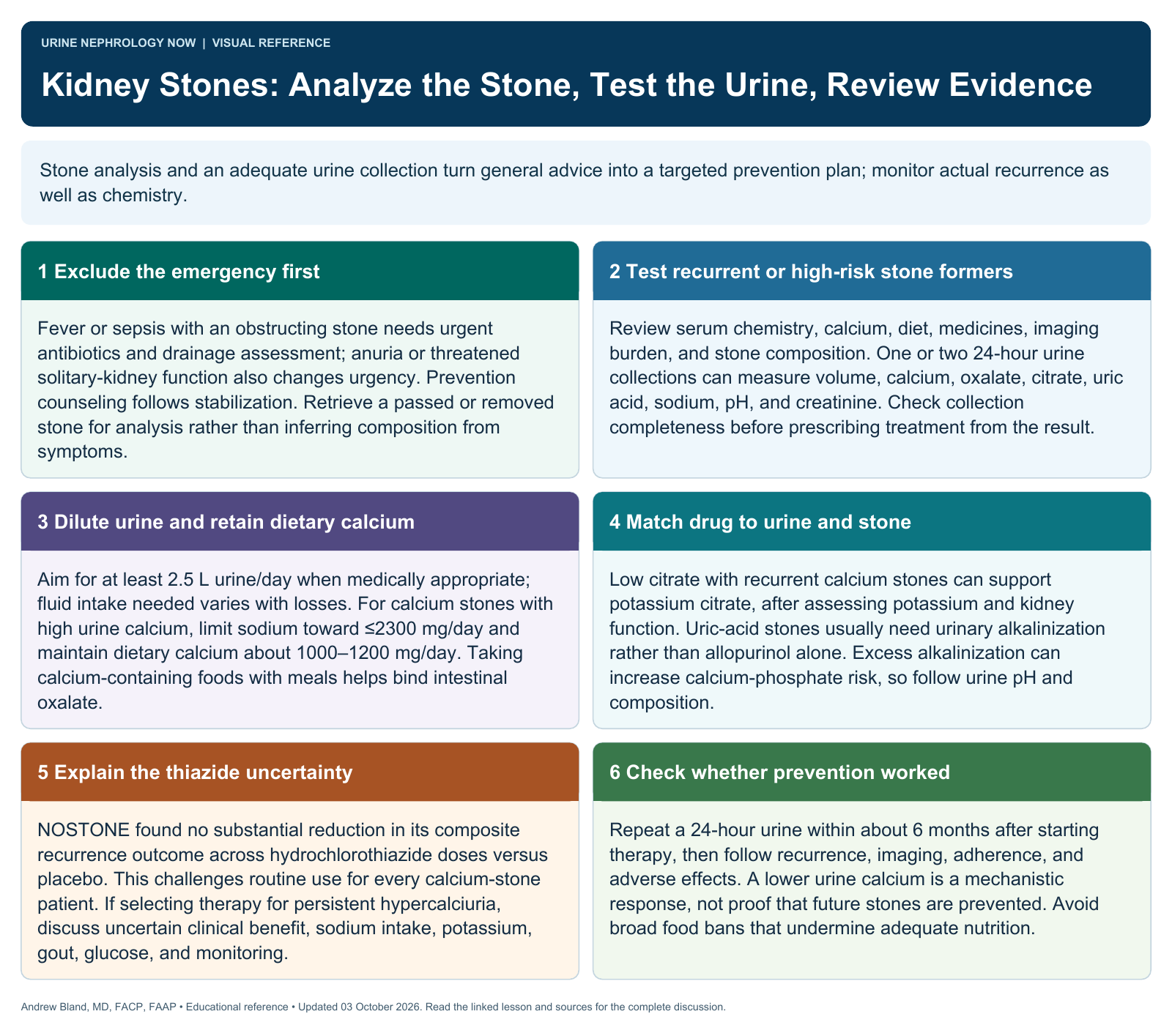
Stone analysis and an adequate urine collection turn general advice into a targeted prevention plan; monitor actual recurrence as well as chemistry.
Text version
Exclude the emergency first
Fever or sepsis with an obstructing stone needs urgent antibiotics and drainage assessment; anuria or threatened solitary-kidney function also changes urgency. Prevention counseling follows stabilization. Retrieve a passed or removed stone for analysis rather than inferring composition from symptoms.
Test recurrent or high-risk stone formers
Review serum chemistry, calcium, diet, medicines, imaging burden, and stone composition. One or two 24-hour urine collections can measure volume, calcium, oxalate, citrate, uric acid, sodium, pH, and creatinine. Check collection completeness before prescribing treatment from the result.
Dilute urine and retain dietary calcium
Aim for at least 2.5 L urine/day when medically appropriate; fluid intake needed varies with losses. For calcium stones with high urine calcium, limit sodium toward ≤2300 mg/day and maintain dietary calcium about 1000–1200 mg/day. Taking calcium-containing foods with meals helps bind intestinal oxalate.
Match drug to urine and stone
Low citrate with recurrent calcium stones can support potassium citrate, after assessing potassium and kidney function. Uric-acid stones usually need urinary alkalinization rather than allopurinol alone. Excess alkalinization can increase calcium-phosphate risk, so follow urine pH and composition.
Explain the thiazide uncertainty
NOSTONE found no substantial reduction in its composite recurrence outcome across hydrochlorothiazide doses versus placebo. This challenges routine use for every calcium-stone patient. If selecting therapy for persistent hypercalciuria, discuss uncertain clinical benefit, sodium intake, potassium, gout, glucose, and monitoring.
Check whether prevention worked
Repeat a 24-hour urine within about 6 months after starting therapy, then follow recurrence, imaging, adherence, and adverse effects. A lower urine calcium is a mechanistic response, not proof that future stones are prevented. Avoid broad food bans that undermine adequate nutrition.