Visual summary
Immunotherapy needs a disease-specific rationale, a measurable response plan, and prevention of predictable treatment harms.
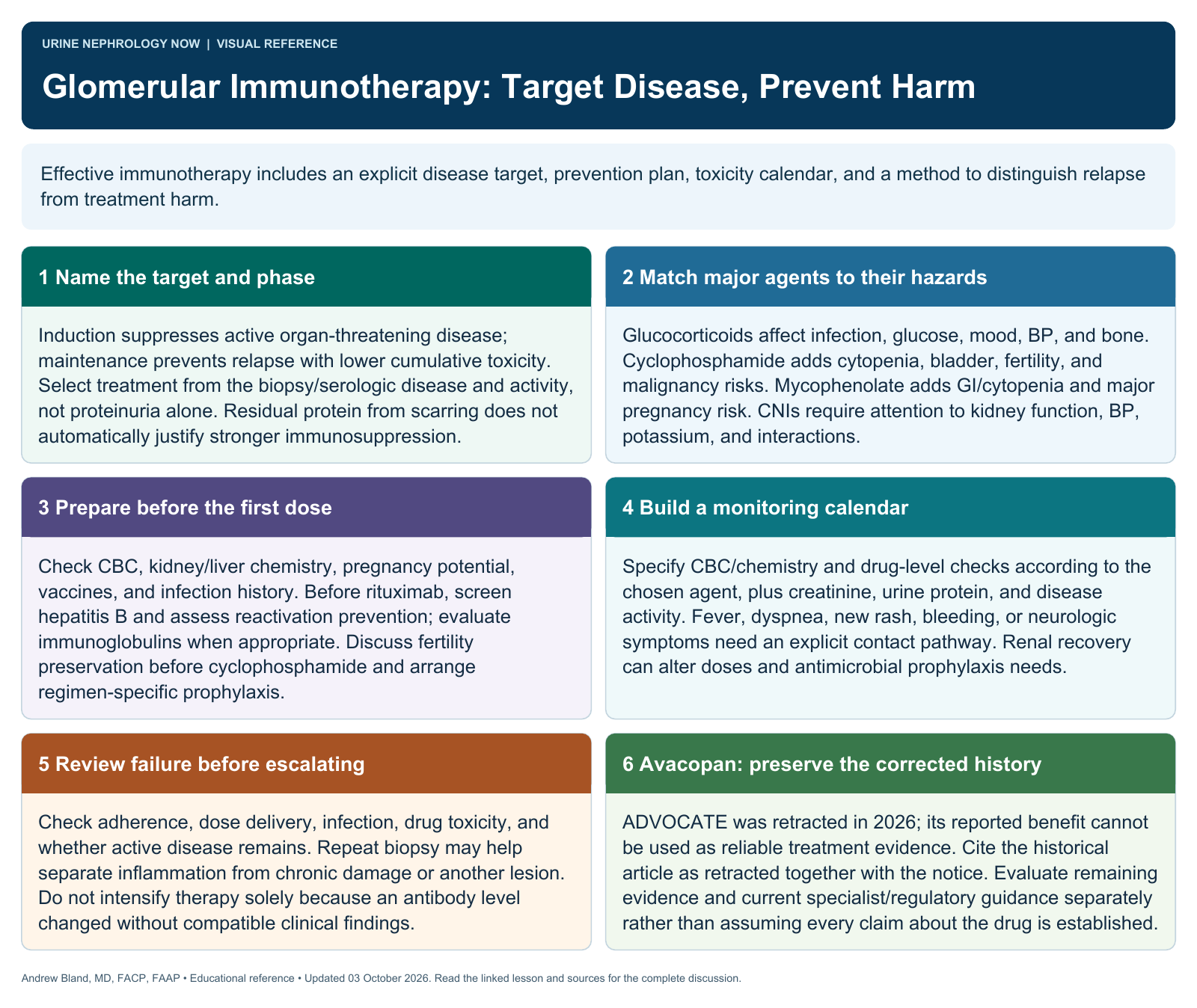
Text version
Treatment follows the mechanism
Glucocorticoids, B-cell therapy, cytotoxic agents, antimetabolites, calcineurin inhibitors, and complement-directed approaches affect different immune pathways. Selection depends on diagnosis, activity, prior treatment, kidney function, and the evidence for that disease.
Recognize treatment vulnerability
Infection, cytopenias, diabetes, hypertension, bone disease, fertility concerns, pregnancy potential, and medication interactions shape risk. Severe active disease can justify intensive therapy, but the prevention plan must begin before complications emerge.
Establish a baseline
Review infection screening, vaccination status, blood counts, chemistry, liver tests, medication interactions, and reproductive plans as appropriate to the regimen. Coordinate prophylaxis and monitoring with the specific agents and cumulative immunosuppressive burden.
Plan induction and maintenance
State the therapeutic objective, expected response markers, taper or transition strategy, and reassessment schedule. Distinguish persistent active disease from residual scarring or medication toxicity before intensifying immunosuppression.
Monitor efficacy and burden
Follow proteinuria, kidney function, disease activity, infection, blood counts, and agent-specific adverse effects. Support bone health, discuss fertility preservation when relevant, and make the patient’s warning-sign and contact plan explicit.
Evidence update: ADVOCATE
The historical ADVOCATE avacopan trial was retracted in 2026. Its reported benefit is not reliable supporting evidence. Cite the trial as retracted with the retraction notice, and assess other evidence separately using current specialist guidance.
Self-check: Name the response measure, infection-prevention plan, and toxicity monitoring that should accompany a disease-specific immunosuppressive regimen.
Continue learning
This graphic summarizes a topic. The full educational pages provide the broader discussion and references.