Visual summary
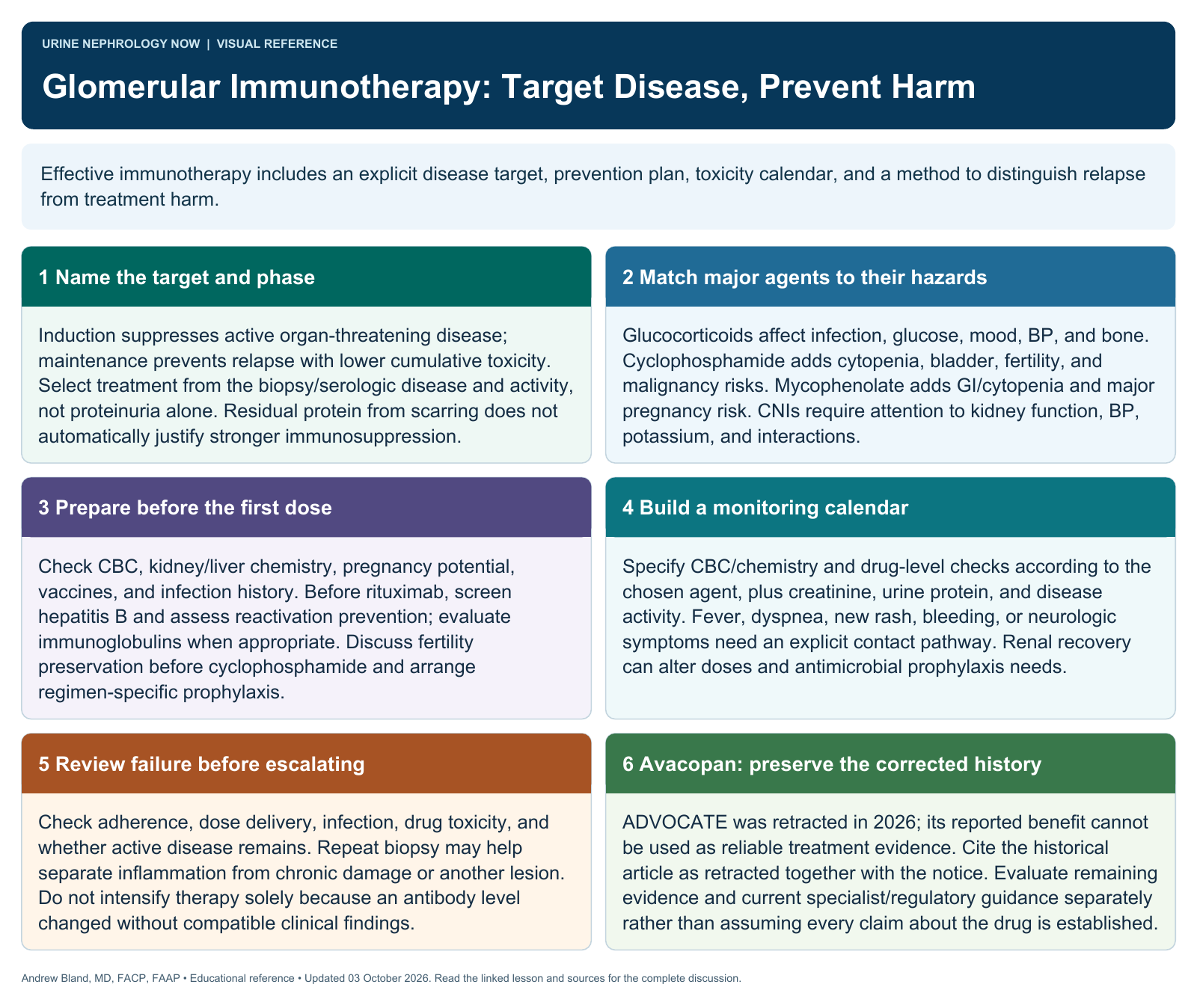
Effective immunotherapy includes an explicit disease target, prevention plan, toxicity calendar, and a method to distinguish relapse from treatment harm.
Text version
Name the target and phase
Induction suppresses active organ-threatening disease; maintenance prevents relapse with lower cumulative toxicity. Select treatment from the biopsy/serologic disease and activity, not proteinuria alone. Residual protein from scarring does not automatically justify stronger immunosuppression.
Match major agents to their hazards
Glucocorticoids affect infection, glucose, mood, BP, and bone. Cyclophosphamide adds cytopenia, bladder, fertility, and malignancy risks. Mycophenolate adds GI/cytopenia and major pregnancy risk. CNIs require attention to kidney function, BP, potassium, and interactions.
Prepare before the first dose
Check CBC, kidney/liver chemistry, pregnancy potential, vaccines, and infection history. Before rituximab, screen hepatitis B and assess reactivation prevention; evaluate immunoglobulins when appropriate. Discuss fertility preservation before cyclophosphamide and arrange regimen-specific prophylaxis.
Build a monitoring calendar
Specify CBC/chemistry and drug-level checks according to the chosen agent, plus creatinine, urine protein, and disease activity. Fever, dyspnea, new rash, bleeding, or neurologic symptoms need an explicit contact pathway. Renal recovery can alter doses and antimicrobial prophylaxis needs.
Review failure before escalating
Check adherence, dose delivery, infection, drug toxicity, and whether active disease remains. Repeat biopsy may help separate inflammation from chronic damage or another lesion. Do not intensify therapy solely because an antibody level changed without compatible clinical findings.
Avacopan: preserve the corrected history
ADVOCATE was retracted in 2026; its reported benefit cannot be used as reliable treatment evidence. Cite the historical article as retracted together with the notice. Evaluate remaining evidence and current specialist/regulatory guidance separately rather than assuming every claim about the drug is established.