Visual summary
The goal is improved health with preserved nutrition and function, supported by a coordinated medication and rehabilitation plan.
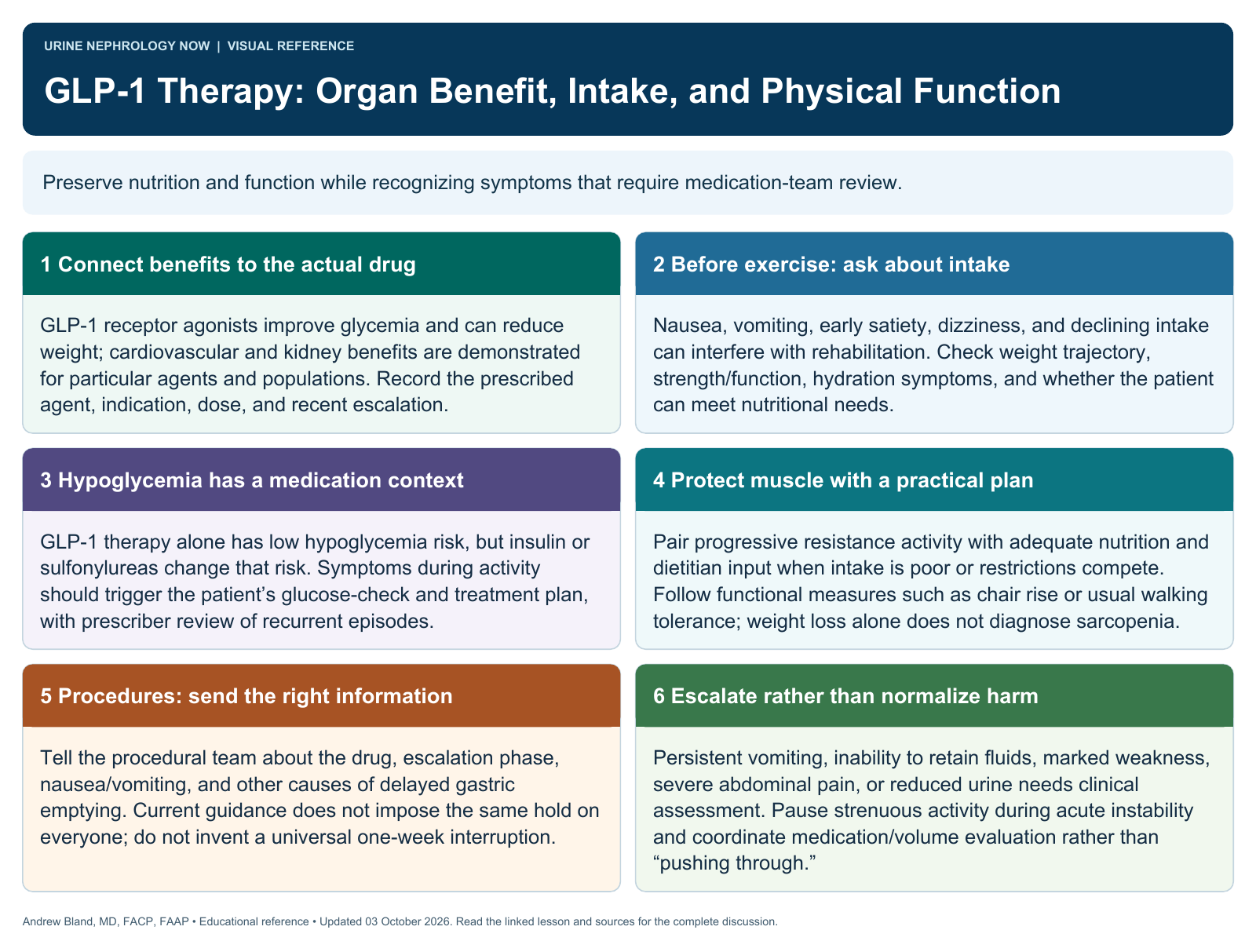
Text version
Metabolic effects extend beyond glucose
GLP-1 receptor agonists influence glycemic regulation, appetite, and weight, with organ-outcome evidence for specific agents and populations. Effects and indications should not be assumed identical across every medication in the class.
Recognize rehabilitation concerns
Nausea, vomiting, reduced intake, dizziness, and unintended functional decline may interfere with activity. Weight loss can include lean tissue, but a body-composition change alone does not establish clinically meaningful sarcopenia.
Assess nutrition and function
Review recent titration, intake, hydration, weight trajectory, strength, comedications, and symptoms. Insulin or sulfonylurea use can alter hypoglycemia risk, while poor intake or illness may increase vulnerability to kidney dysfunction.
Support a sustainable plan
Coordinate appropriate resistance activity, adequate nutrition, and gradual progression with the patient’s medical and dietary teams. Modify or pause exercise for acute instability rather than assuming every adverse symptom is a normal treatment effect.
Handle procedures individually
Perioperative guidance has evolved and depends on symptoms, dose escalation, procedure, and aspiration risk. The procedural and prescribing teams should provide a current plan; rehabilitation staff should not invent a universal hold period.
Keep benefits and risks specific
Discuss trial outcomes, eligibility, and follow-up for the prescribed agent. Escalate persistent gastrointestinal symptoms or impaired function and avoid claiming a fixed supplement or exercise prescription prevents all treatment-associated muscle loss.
Continue learning
This graphic summarizes a topic. The full educational pages provide the broader discussion and references.