Visual summary
Preserve nutrition and function while recognizing symptoms that require medication-team review.
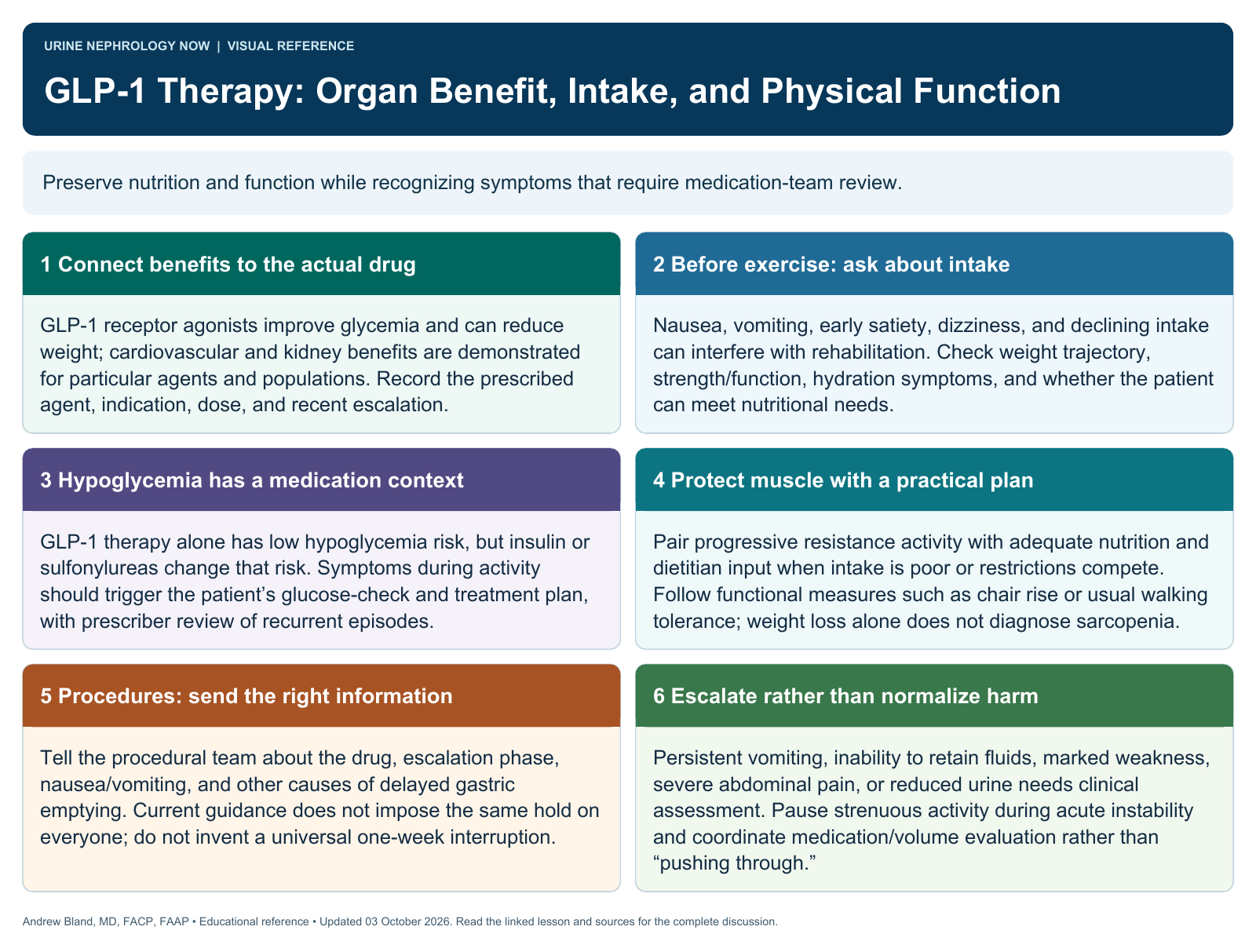
Text version
Connect benefits to the actual drug
GLP-1 receptor agonists improve glycemia and can reduce weight; cardiovascular and kidney benefits are demonstrated for particular agents and populations. Record the prescribed agent, indication, dose, and recent escalation.
Before exercise: ask about intake
Nausea, vomiting, early satiety, dizziness, and declining intake can interfere with rehabilitation. Check weight trajectory, strength/function, hydration symptoms, and whether the patient can meet nutritional needs.
Hypoglycemia has a medication context
GLP-1 therapy alone has low hypoglycemia risk, but insulin or sulfonylureas change that risk. Symptoms during activity should trigger the patient’s glucose-check and treatment plan, with prescriber review of recurrent episodes.
Protect muscle with a practical plan
Pair progressive resistance activity with adequate nutrition and dietitian input when intake is poor or restrictions compete. Follow functional measures such as chair rise or usual walking tolerance; weight loss alone does not diagnose sarcopenia.
Procedures: send the right information
Tell the procedural team about the drug, escalation phase, nausea/vomiting, and other causes of delayed gastric emptying. Current guidance does not impose the same hold on everyone; do not invent a universal one-week interruption.
Escalate rather than normalize harm
Persistent vomiting, inability to retain fluids, marked weakness, severe abdominal pain, or reduced urine needs clinical assessment. Pause strenuous activity during acute instability and coordinate medication/volume evaluation rather than “pushing through.”