Visual summary
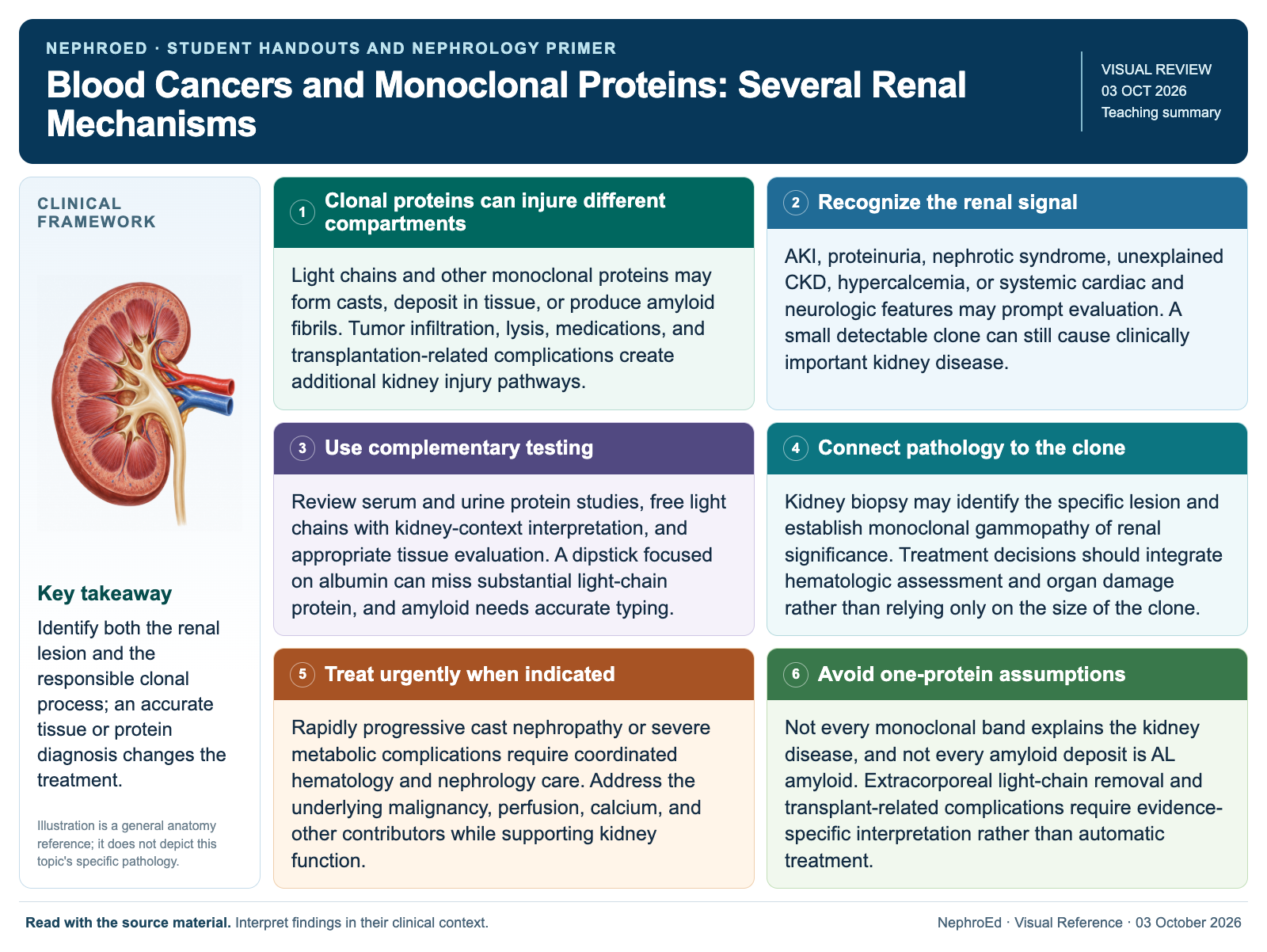
Identify both the renal lesion and the responsible clonal process; an accurate tissue or protein diagnosis changes the treatment.
Text version
Clonal proteins can injure different compartments
Light chains and other monoclonal proteins may form casts, deposit in tissue, or produce amyloid fibrils. Tumor infiltration, lysis, medications, and transplantation-related complications create additional kidney injury pathways.
Recognize the renal signal
AKI, proteinuria, nephrotic syndrome, unexplained CKD, hypercalcemia, or systemic cardiac and neurologic features may prompt evaluation. A small detectable clone can still cause clinically important kidney disease.
Use complementary testing
Review serum and urine protein studies, free light chains with kidney-context interpretation, and appropriate tissue evaluation. A dipstick focused on albumin can miss substantial light-chain protein, and amyloid needs accurate typing.
Connect pathology to the clone
Kidney biopsy may identify the specific lesion and establish monoclonal gammopathy of renal significance. Treatment decisions should integrate hematologic assessment and organ damage rather than relying only on the size of the clone.
Treat urgently when indicated
Rapidly progressive cast nephropathy or severe metabolic complications require coordinated hematology and nephrology care. Address the underlying malignancy, perfusion, calcium, and other contributors while supporting kidney function.
Avoid one-protein assumptions
Not every monoclonal band explains the kidney disease, and not every amyloid deposit is AL amyloid. Extracorporeal light-chain removal and transplant-related complications require evidence-specific interpretation rather than automatic treatment.
Continue learning
This graphic summarizes a topic. The full educational pages provide the broader discussion and references.