Visual summary
Liver transplant assessment, kidney replacement decisions, and supportive care should reflect reversibility, overall illness, and patient priorities.
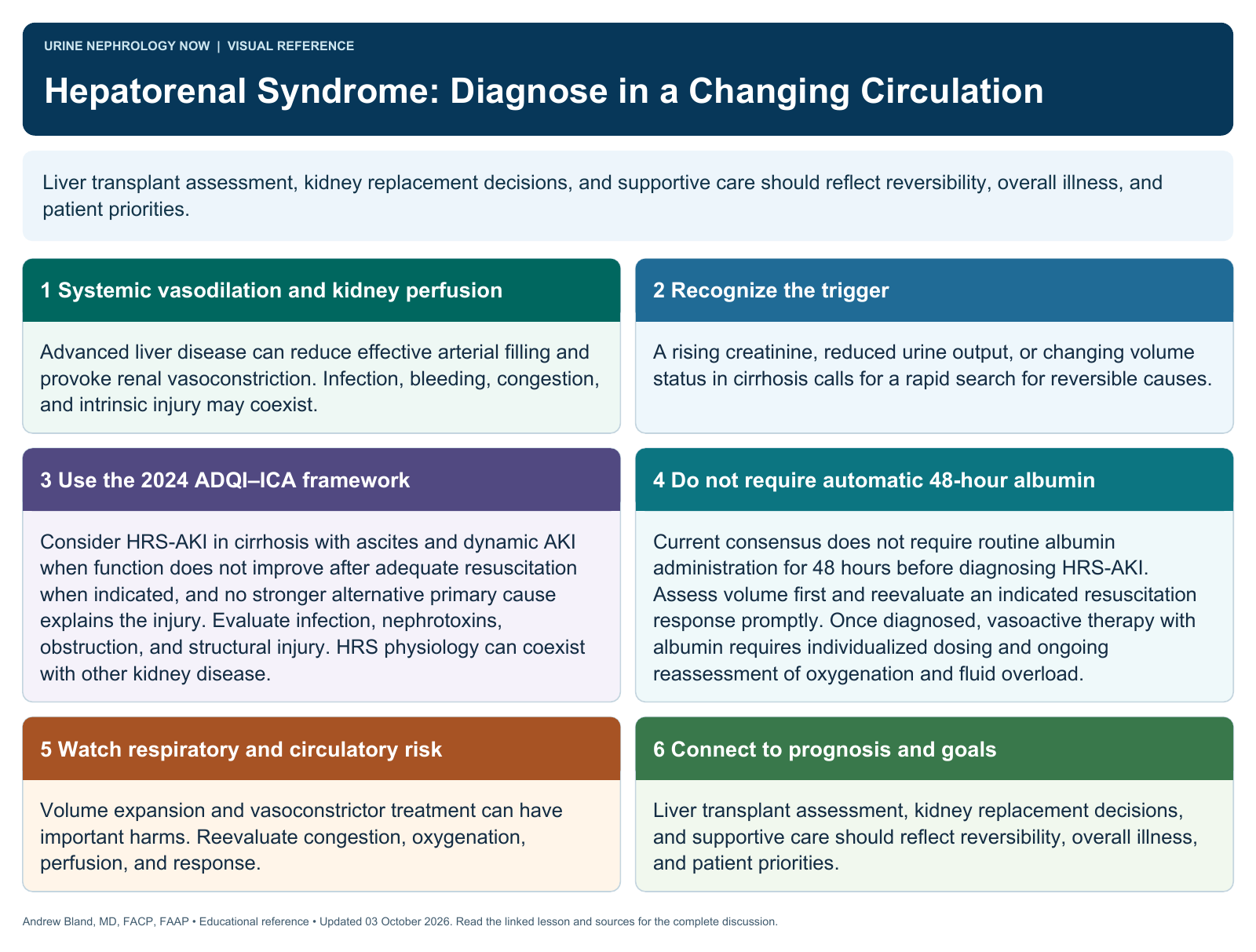
Text version
Systemic vasodilation and kidney perfusion
Advanced liver disease can reduce effective arterial filling and provoke renal vasoconstriction. Infection, bleeding, congestion, and intrinsic injury may coexist.
Recognize the trigger
A rising creatinine, reduced urine output, or changing volume status in cirrhosis calls for a rapid search for reversible causes.
Use the 2024 ADQI–ICA framework
Consider HRS-AKI in cirrhosis with ascites and dynamic AKI when function does not improve after adequate resuscitation when indicated, and no stronger alternative primary cause explains the injury. Evaluate infection, nephrotoxins, obstruction, and structural injury. HRS physiology can coexist with other kidney disease.
Do not require automatic 48-hour albumin
Current consensus does not require routine albumin administration for 48 hours before diagnosing HRS-AKI. Assess volume first and reevaluate an indicated resuscitation response promptly. Once diagnosed, vasoactive therapy with albumin requires individualized dosing and ongoing reassessment of oxygenation and fluid overload.
Watch respiratory and circulatory risk
Volume expansion and vasoconstrictor treatment can have important harms. Reevaluate congestion, oxygenation, perfusion, and response.
Connect to prognosis and goals
Liver transplant assessment, kidney replacement decisions, and supportive care should reflect reversibility, overall illness, and patient priorities.