Visual summary
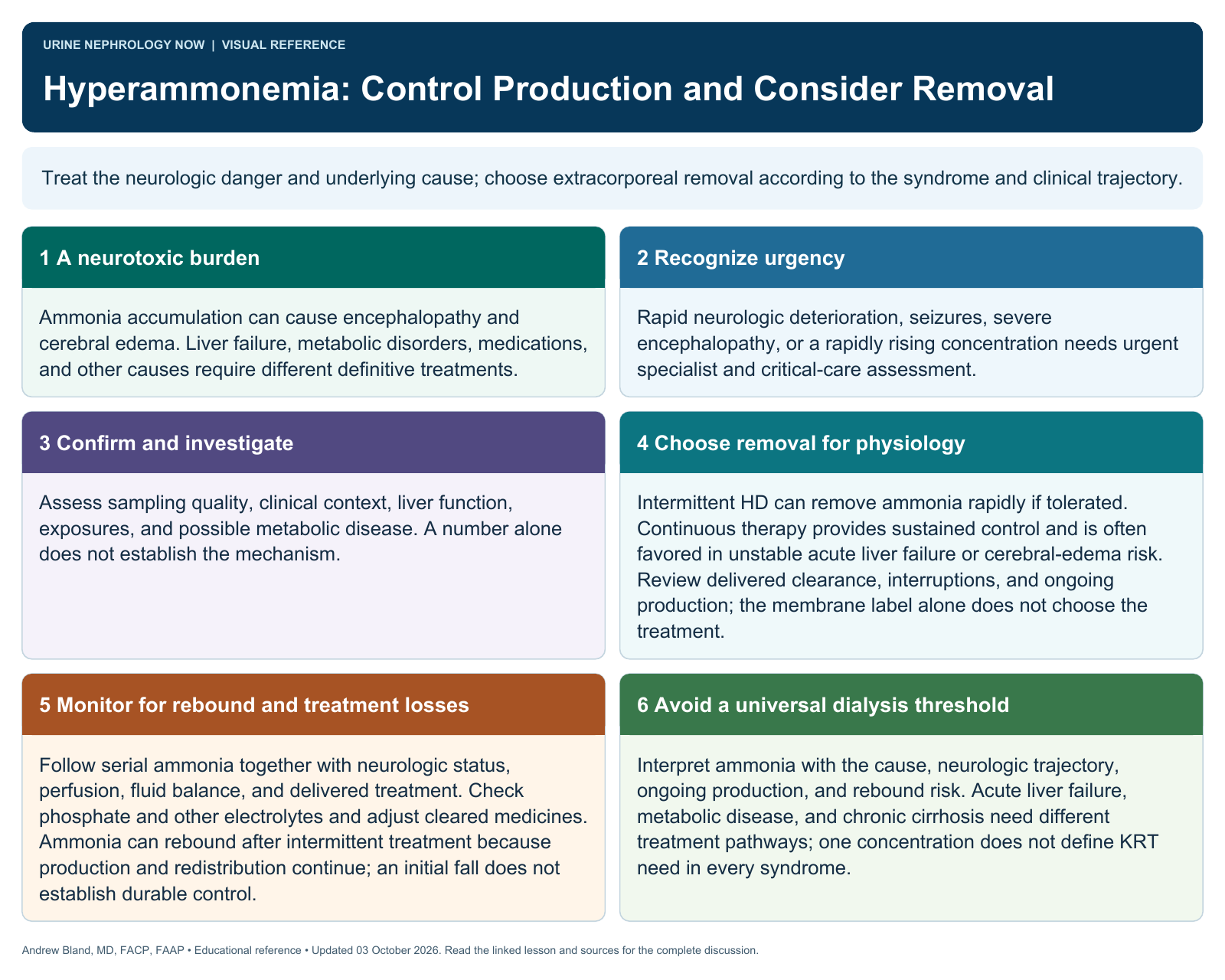
Treat the neurologic danger and underlying cause; choose extracorporeal removal according to the syndrome and clinical trajectory.
Text version
A neurotoxic burden
Ammonia accumulation can cause encephalopathy and cerebral edema. Liver failure, metabolic disorders, medications, and other causes require different definitive treatments.
Recognize urgency
Rapid neurologic deterioration, seizures, severe encephalopathy, or a rapidly rising concentration needs urgent specialist and critical-care assessment.
Confirm and investigate
Assess sampling quality, clinical context, liver function, exposures, and possible metabolic disease. A number alone does not establish the mechanism.
Choose removal for physiology
Intermittent HD can remove ammonia rapidly if tolerated. Continuous therapy provides sustained control and is often favored in unstable acute liver failure or cerebral-edema risk. Review delivered clearance, interruptions, and ongoing production; the membrane label alone does not choose the treatment.
Monitor for rebound and treatment losses
Follow serial ammonia together with neurologic status, perfusion, fluid balance, and delivered treatment. Check phosphate and other electrolytes and adjust cleared medicines. Ammonia can rebound after intermittent treatment because production and redistribution continue; an initial fall does not establish durable control.
Avoid a universal dialysis threshold
Interpret ammonia with the cause, neurologic trajectory, ongoing production, and rebound risk. Acute liver failure, metabolic disease, and chronic cirrhosis need different treatment pathways; one concentration does not define KRT need in every syndrome.