Visual summary
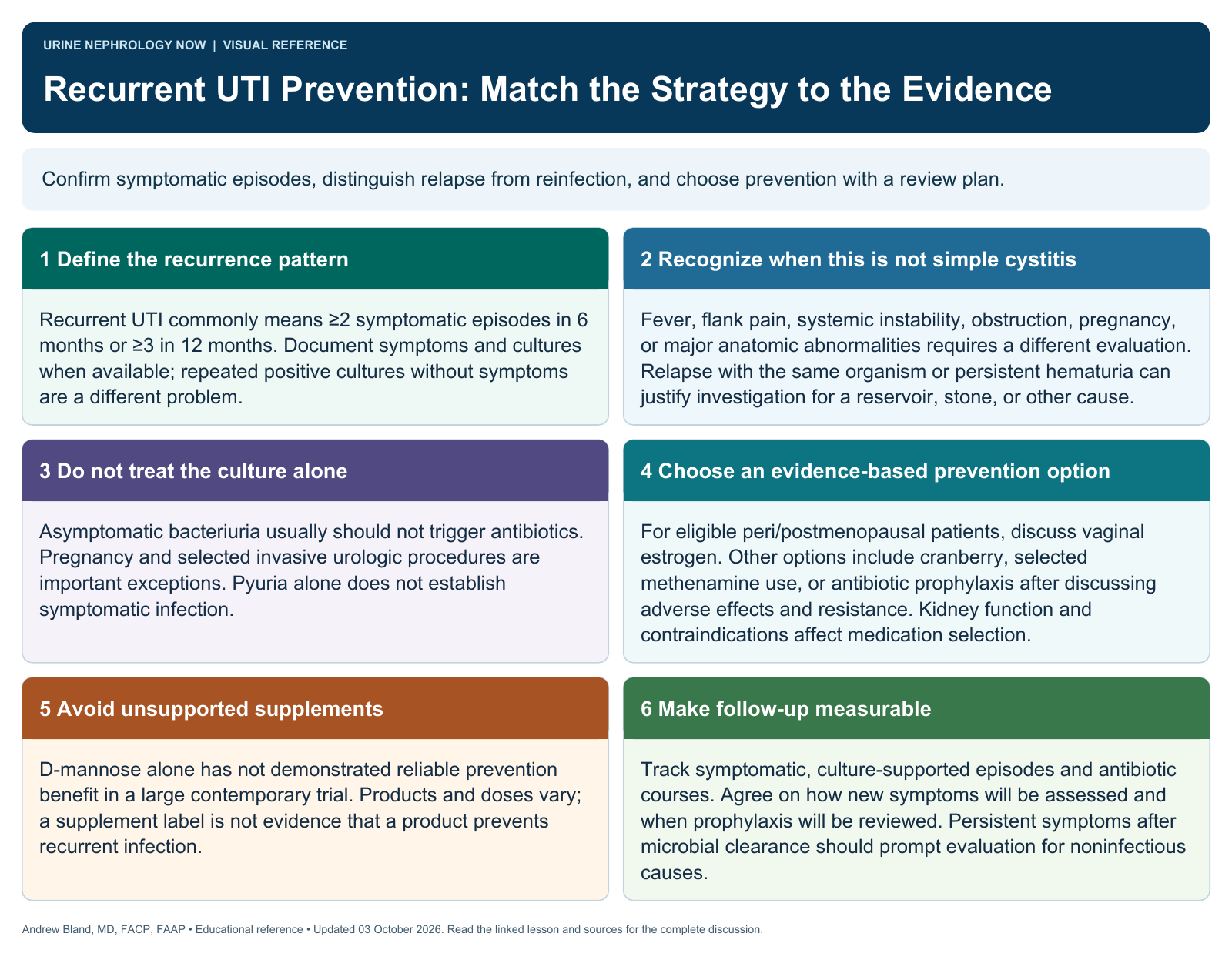
Confirm symptomatic episodes, distinguish relapse from reinfection, and choose prevention with a review plan.
Text version
Define the recurrence pattern
Recurrent UTI commonly means ≥2 symptomatic episodes in 6 months or ≥3 in 12 months. Document symptoms and cultures when available; repeated positive cultures without symptoms are a different problem.
Recognize when this is not simple cystitis
Fever, flank pain, systemic instability, obstruction, pregnancy, or major anatomic abnormalities requires a different evaluation. Relapse with the same organism or persistent hematuria can justify investigation for a reservoir, stone, or other cause.
Do not treat the culture alone
Asymptomatic bacteriuria usually should not trigger antibiotics. Pregnancy and selected invasive urologic procedures are important exceptions. Pyuria alone does not establish symptomatic infection.
Choose an evidence-based prevention option
For eligible peri/postmenopausal patients, discuss vaginal estrogen. Other options include cranberry, selected methenamine use, or antibiotic prophylaxis after discussing adverse effects and resistance. Kidney function and contraindications affect medication selection.
Avoid unsupported supplements
D-mannose alone has not demonstrated reliable prevention benefit in a large contemporary trial. Products and doses vary; a supplement label is not evidence that a product prevents recurrent infection.
Make follow-up measurable
Track symptomatic, culture-supported episodes and antibiotic courses. Agree on how new symptoms will be assessed and when prophylaxis will be reviewed. Persistent symptoms after microbial clearance should prompt evaluation for noninfectious causes.