Visual summary
A successful renal procedure includes a justified indication, individualized preparation, and reliable follow-up—not only technical completion.
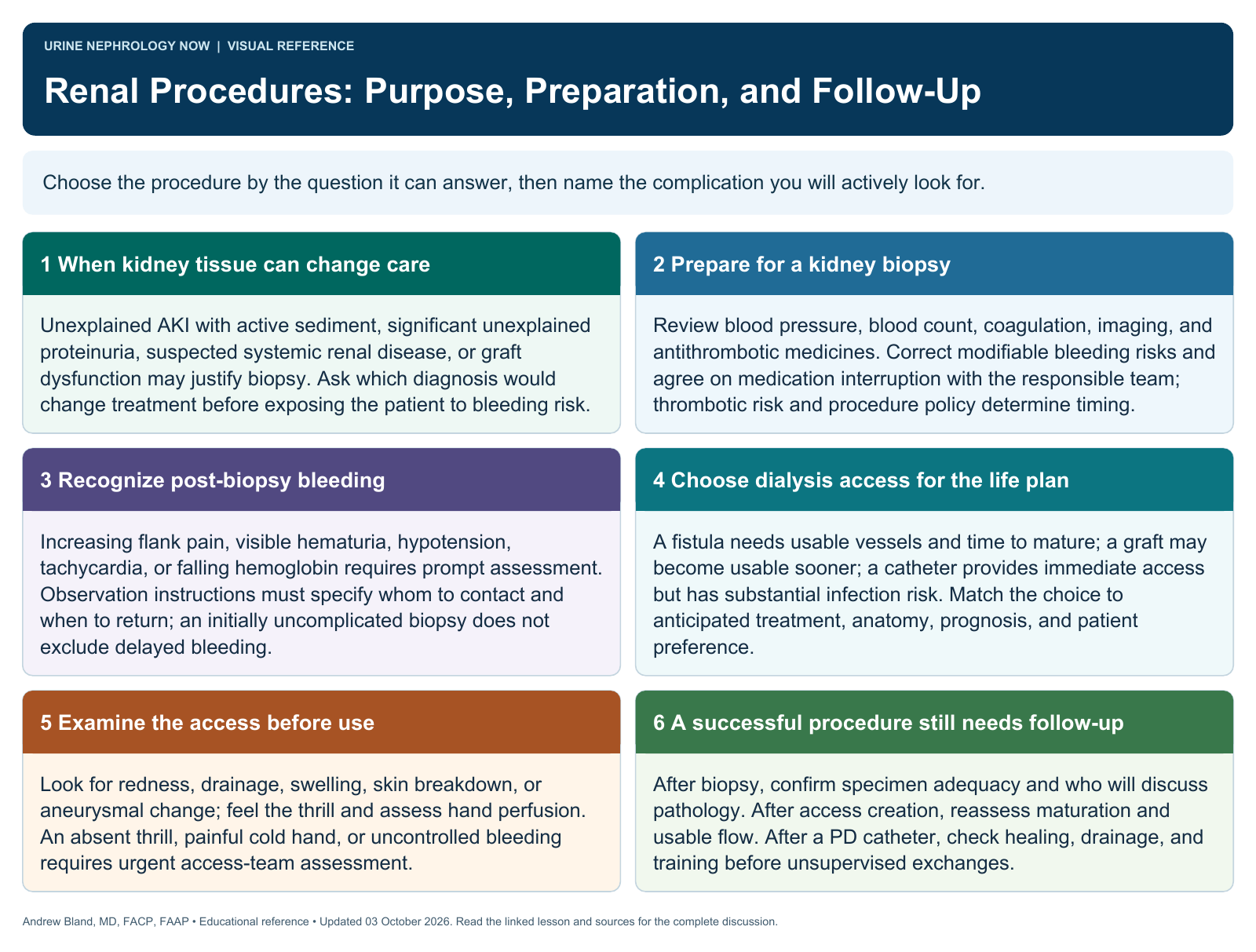
Text version
A procedure answers a clinical need
Kidney biopsy obtains tissue; vascular access enables hemodialysis; a peritoneal catheter enables peritoneal dialysis. Each procedure has a distinct indication, preparation process, complication profile, and expected benefit.
Recognize selection constraints
Bleeding risk, infection, anatomy, hemodynamic stability, and the likelihood that a result will change care affect planning. A biopsy is not automatically helpful when tissue will not alter diagnosis, prognosis, or treatment.
Prepare with the responsible team
Review the indication, consent, medications, laboratory results, imaging, and postprocedure logistics. Anticoagulant or antiplatelet decisions require an individualized plan balancing bleeding and thrombosis risk.
Plan access as a pathway
Fistula, graft, catheter, and peritoneal approaches should fit the patient’s modality and life plan. Consider maturation, catheter exposure, expected treatment duration, functional ability, and the possibility of future changes.
Monitor after the procedure
Watch for bleeding, pain, infection, impaired flow, ischemic symptoms, or catheter problems as appropriate. Clear instructions should identify expected recovery, warning signs, whom to contact, and responsibility for reviewing results.
Interpret technical success cautiously
Obtaining tissue does not guarantee adequate sampling, and creating an access does not guarantee durable usability. Reassess whether the procedure achieved its original clinical goal and discuss residual uncertainty or further steps.
Continue learning
This graphic summarizes a topic. The full educational pages provide the broader discussion and references.