Visual summary
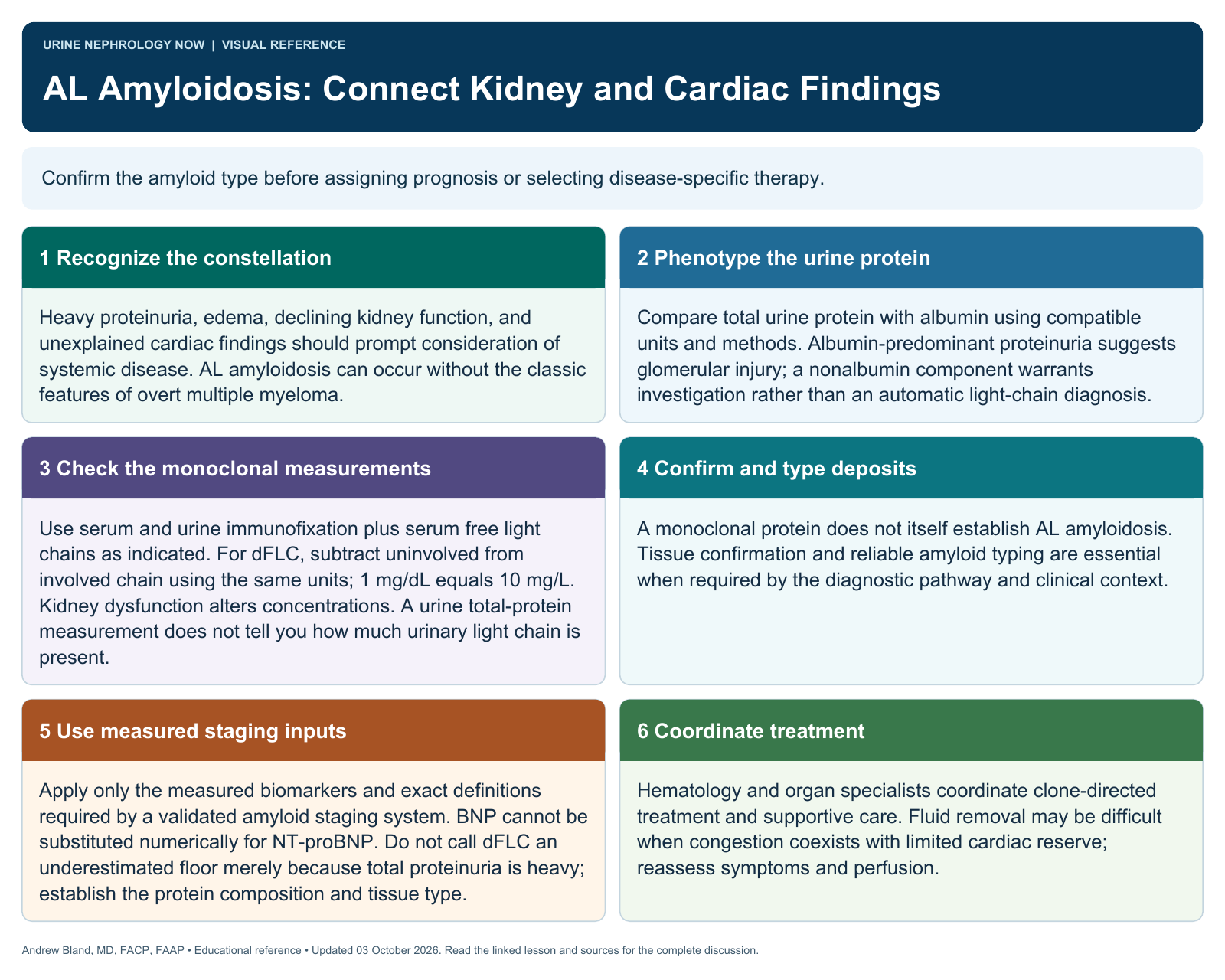
Confirm the amyloid type before assigning prognosis or selecting disease-specific therapy.
Text version
Recognize the constellation
Heavy proteinuria, edema, declining kidney function, and unexplained cardiac findings should prompt consideration of systemic disease. AL amyloidosis can occur without the classic features of overt multiple myeloma.
Phenotype the urine protein
Compare total urine protein with albumin using compatible units and methods. Albumin-predominant proteinuria suggests glomerular injury; a nonalbumin component warrants investigation rather than an automatic light-chain diagnosis.
Check the monoclonal measurements
Use serum and urine immunofixation plus serum free light chains as indicated. For dFLC, subtract uninvolved from involved chain using the same units; 1 mg/dL equals 10 mg/L. Kidney dysfunction alters concentrations. A urine total-protein measurement does not tell you how much urinary light chain is present.
Confirm and type deposits
A monoclonal protein does not itself establish AL amyloidosis. Tissue confirmation and reliable amyloid typing are essential when required by the diagnostic pathway and clinical context.
Use measured staging inputs
Apply only the measured biomarkers and exact definitions required by a validated amyloid staging system. BNP cannot be substituted numerically for NT-proBNP. Do not call dFLC an underestimated floor merely because total proteinuria is heavy; establish the protein composition and tissue type.
Coordinate treatment
Hematology and organ specialists coordinate clone-directed treatment and supportive care. Fluid removal may be difficult when congestion coexists with limited cardiac reserve; reassess symptoms and perfusion.