KDIGO 2025 ADPKD, corrected April 2026
Read diagram text and evidence
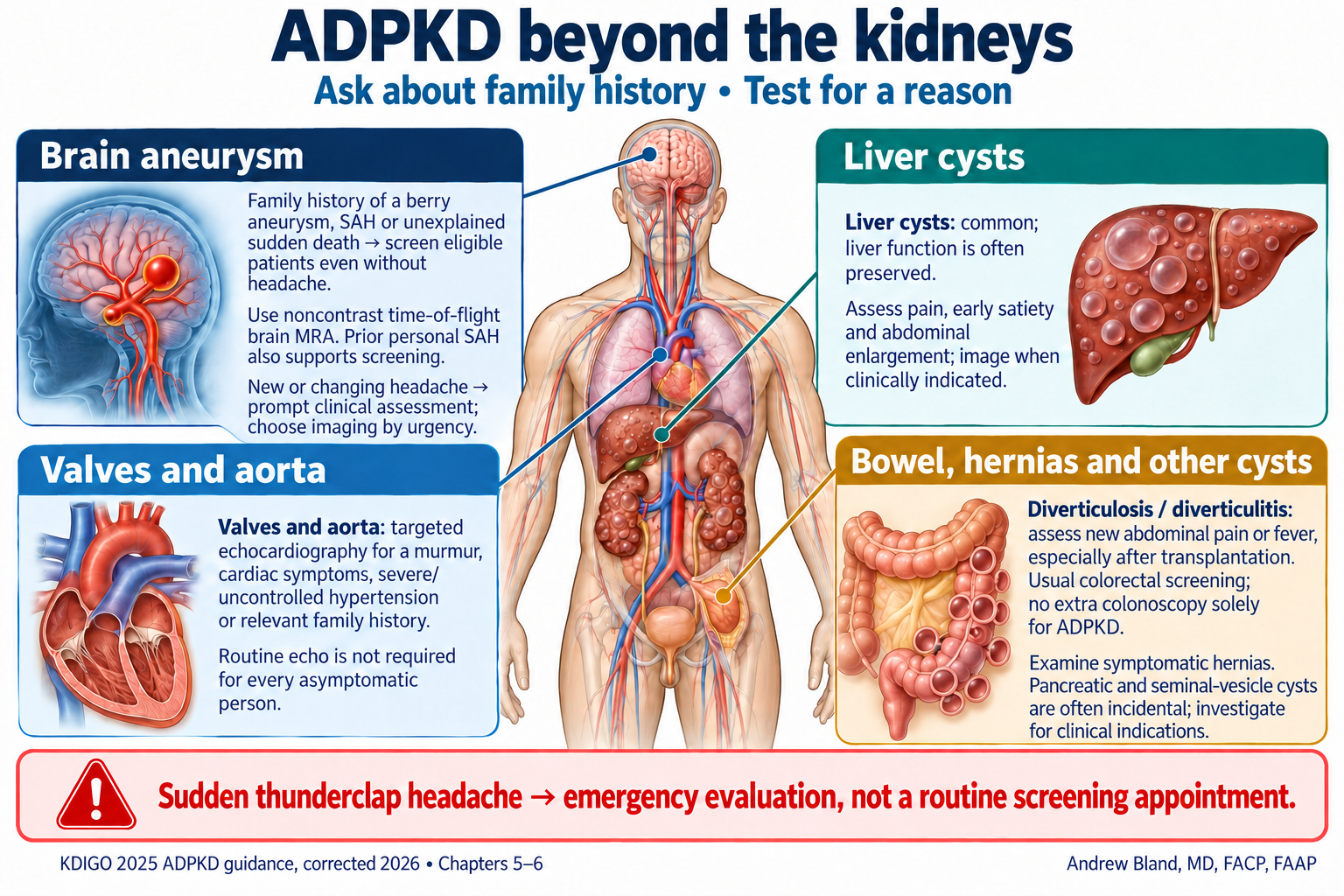
A family history of intracranial (berry) aneurysm, subarachnoid hemorrhage or unexplained sudden death, or personal prior SAH, supports aneurysm screening in people eligible for treatment with reasonable life expectancy—even without headache. Noncontrast time-of-flight brain MRA is preferred for screening. New or changing headache needs prompt clinical assessment; thunderclap headache needs emergency evaluation rather than an outpatient screening appointment. Discuss screening requests in other patients; repeat screening after a negative study is individualized, often 5–10 years in higher-risk people.
Liver cysts are common and liver function is often preserved; assess pain, early satiety and abdominal enlargement. Target echocardiography to cardiac symptoms, murmur, severe/uncontrolled hypertension or relevant family history. Include diverticulosis/diverticulitis: investigate new abdominal pain or fever, especially after transplantation, but use usual colorectal-screening indications rather than additional colonoscopy solely for ADPKD. Examine symptomatic hernias; investigate pancreatic or seminal-vesicle cysts according to clinical findings.
Andrew Bland, MD, FACP, FAAP