KDIGO glomerular disease guidance · Ellison, 2019 — PubMed
Read diagram text and evidence
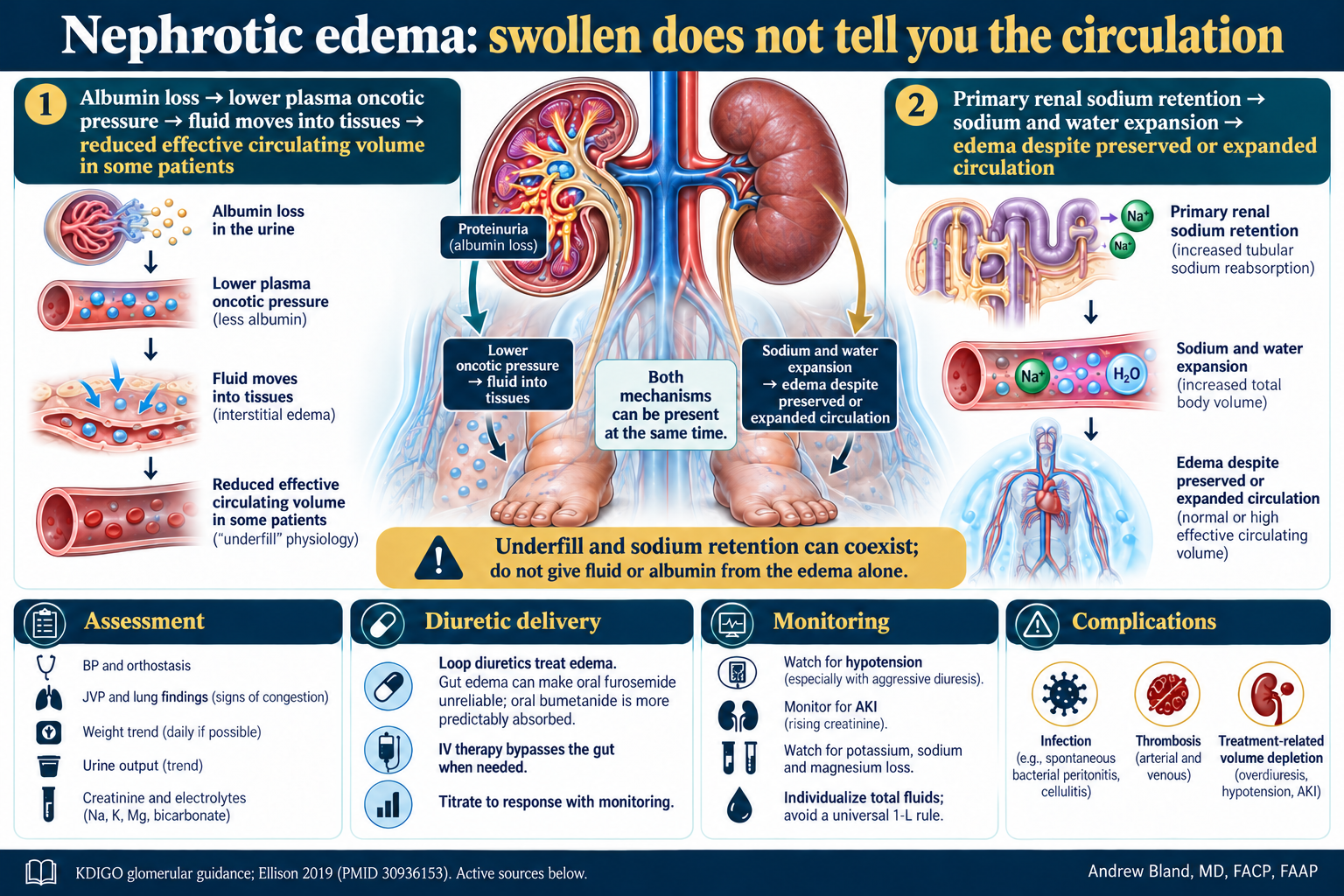
Albumin loss can reduce plasma oncotic pressure and effective circulation; primary renal sodium retention can produce edema with preserved or expanded circulation. Both mechanisms can coexist. Edema alone does not justify saline or albumin. Assess BP, orthostasis, JVP, lungs, weight, urine output, creatinine and electrolytes. Gut edema can impair oral furosemide delivery; oral bumetanide is more predictably absorbed, while IV therapy bypasses the gut. Dose and route must be titrated to response. Monitor hypotension, AKI and electrolyte losses; individualize total fluid intake. Watch for infection, thrombosis and treatment-related depletion.
Andrew Bland, MD, FACP, FAAP