Visual summary
Treat a clinical infection, not a urine result in isolation, and tailor antibiotics to the patient’s renal function and syndrome.
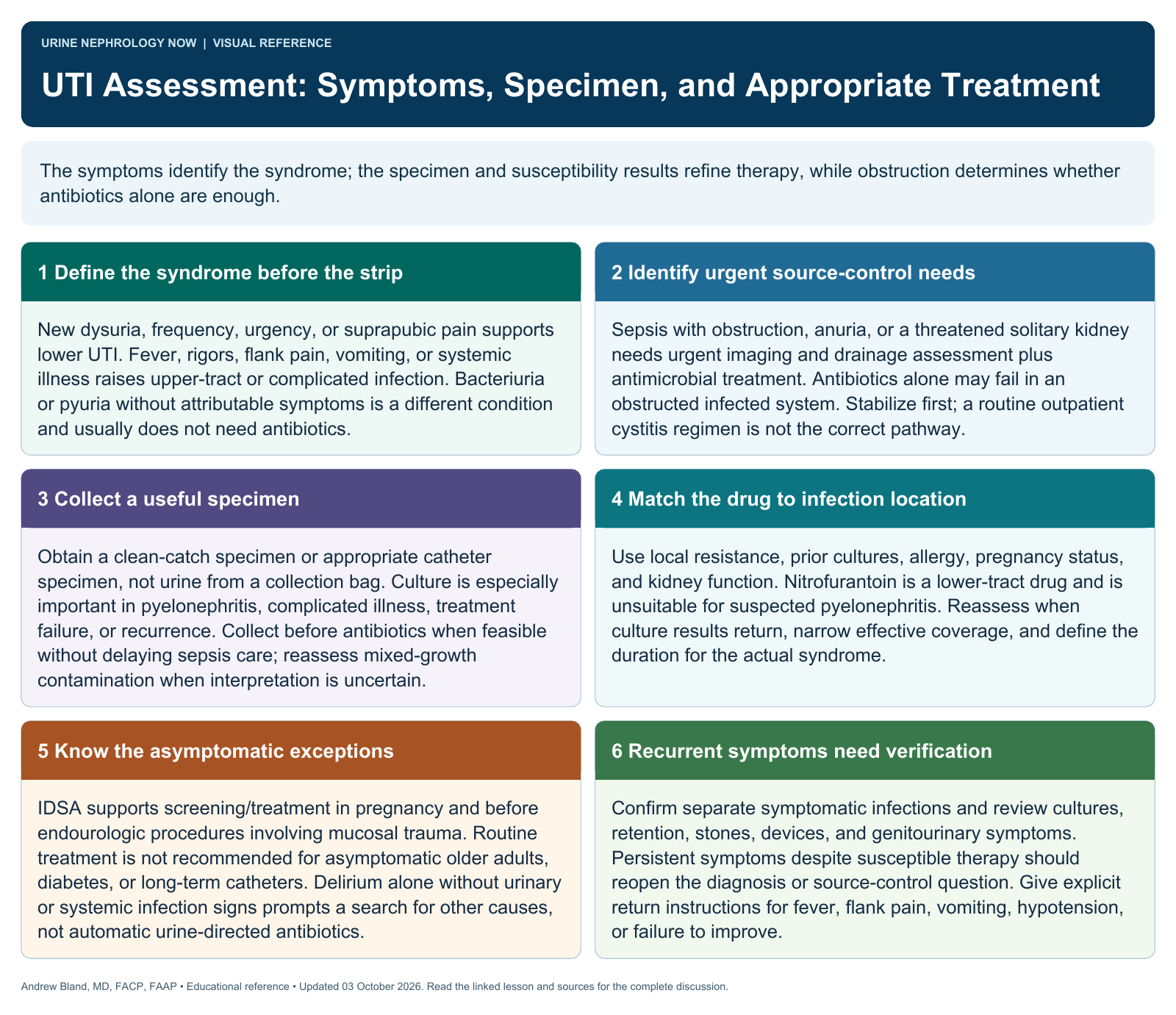
Text version
Bacteria do not always mean infection
Bacteriuria and pyuria can occur without a symptomatic urinary infection. Clinical symptoms and context distinguish infection from colonization or contamination, while certain situations require specific screening or treatment approaches.
Recognize the syndrome and urgency
Dysuria, frequency, suprapubic symptoms, fever, flank pain, or systemic illness suggest different levels of involvement. Suspected sepsis or infected obstruction requires urgent assessment rather than an uncomplicated outpatient cystitis pathway.
Collect and interpret responsibly
Use an appropriate specimen and assess contamination, recent antibiotics, catheter status, and the need for culture. Dipstick markers support the assessment but neither a positive result nor a negative nitrite settles the diagnosis alone.
Treat the actual infection
Select therapy using site and severity, local resistance, culture when indicated, allergy history, kidney function, and current guidance. Adjust treatment after results and avoid unnecessarily broad or prolonged antibiotics.
Know the asymptomatic exceptions
Do not routinely treat asymptomatic bacteriuria outside evidence-supported indications, such as selected pregnancy or urologic-procedure contexts. A nonspecific symptom in an older adult still needs a broad clinical assessment rather than automatic attribution to the urine.
Prevent recurrence with a rationale
Confirm true recurrent infection and evaluate relevant anatomic, behavioral, hormonal, or device factors. Discuss preventive strategies by evidence, risks, and patient preferences rather than using an unvalidated calculator to prescribe a universal prevention package.
Continue learning
This graphic summarizes a topic. The full educational pages provide the broader discussion and references.