Visual summary
The symptoms identify the syndrome; the specimen and susceptibility results refine therapy, while obstruction determines whether antibiotics alone are enough.
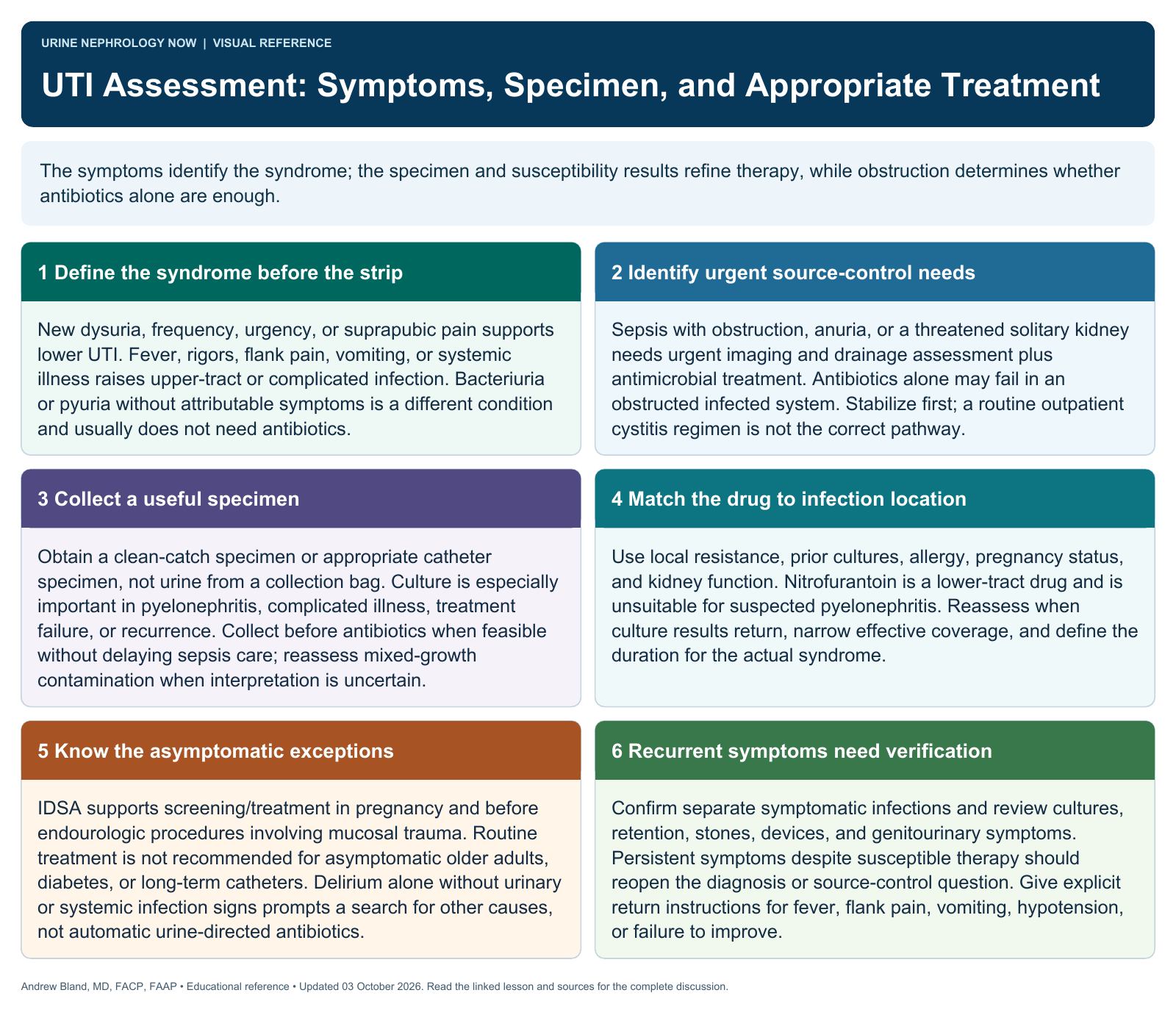
Text version
Define the syndrome before the strip
New dysuria, frequency, urgency, or suprapubic pain supports lower UTI. Fever, rigors, flank pain, vomiting, or systemic illness raises upper-tract or complicated infection. Bacteriuria or pyuria without attributable symptoms is a different condition and usually does not need antibiotics.
Identify urgent source-control needs
Sepsis with obstruction, anuria, or a threatened solitary kidney needs urgent imaging and drainage assessment plus antimicrobial treatment. Antibiotics alone may fail in an obstructed infected system. Stabilize first; a routine outpatient cystitis regimen is not the correct pathway.
Collect a useful specimen
Obtain a clean-catch specimen or appropriate catheter specimen, not urine from a collection bag. Culture is especially important in pyelonephritis, complicated illness, treatment failure, or recurrence. Collect before antibiotics when feasible without delaying sepsis care; reassess mixed-growth contamination when interpretation is uncertain.
Match the drug to infection location
Use local resistance, prior cultures, allergy, pregnancy status, and kidney function. Nitrofurantoin is a lower-tract drug and is unsuitable for suspected pyelonephritis. Reassess when culture results return, narrow effective coverage, and define the duration for the actual syndrome.
Know the asymptomatic exceptions
IDSA supports screening/treatment in pregnancy and before endourologic procedures involving mucosal trauma. Routine treatment is not recommended for asymptomatic older adults, diabetes, or long-term catheters. Delirium alone without urinary or systemic infection signs prompts a search for other causes, not automatic urine-directed antibiotics.
Recurrent symptoms need verification
Confirm separate symptomatic infections and review cultures, retention, stones, devices, and genitourinary symptoms. Persistent symptoms despite susceptible therapy should reopen the diagnosis or source-control question. Give explicit return instructions for fever, flank pain, vomiting, hypotension, or failure to improve.