Visual summary
Start KRT for a clinical need, deliver it safely, and continually reassess whether the kidneys can resume the work.
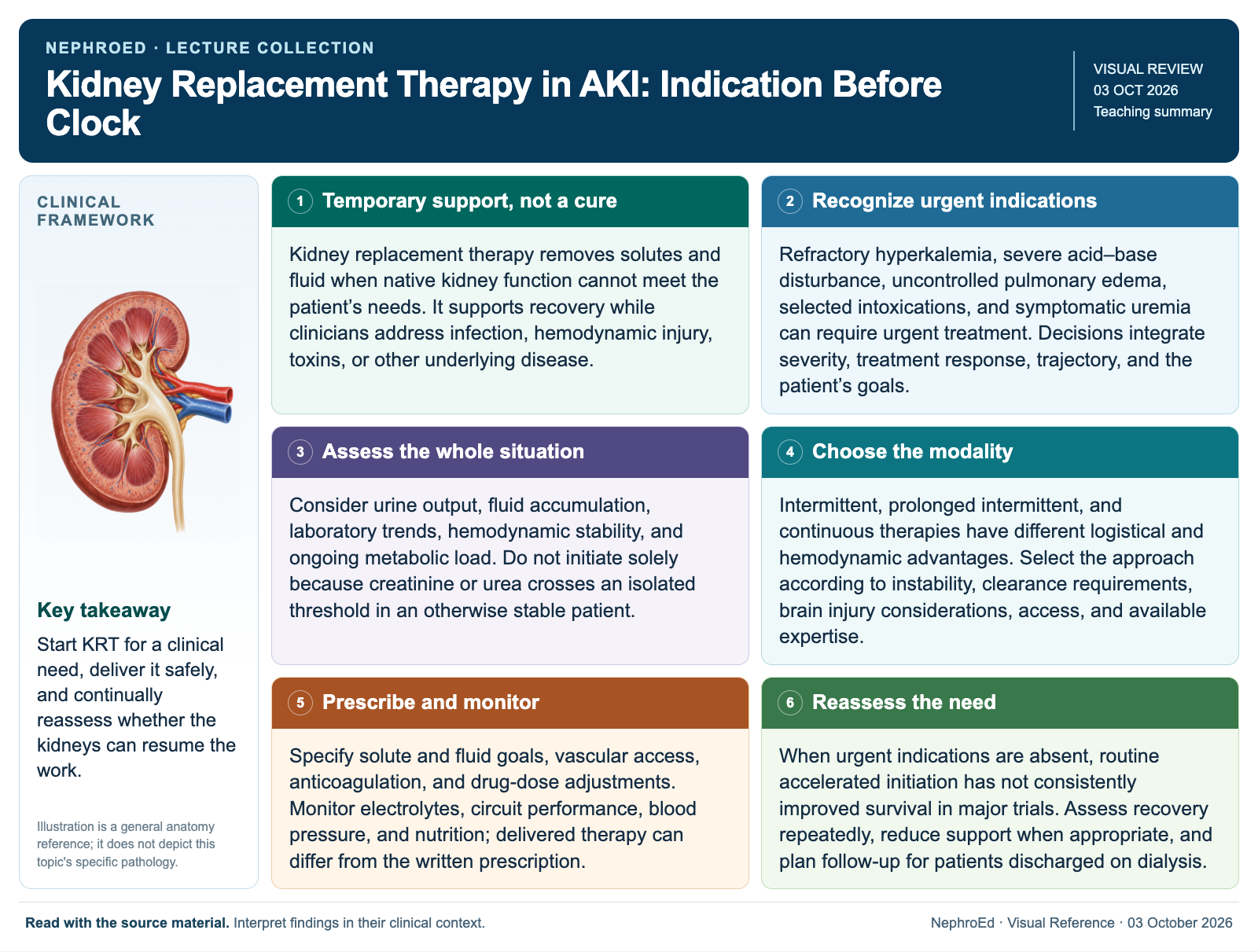
Text version
Temporary support, not a cure
Kidney replacement therapy removes solutes and fluid when native kidney function cannot meet the patient’s needs. It supports recovery while clinicians address infection, hemodynamic injury, toxins, or other underlying disease.
Recognize urgent indications
Refractory hyperkalemia, severe acid–base disturbance, uncontrolled pulmonary edema, selected intoxications, and symptomatic uremia can require urgent treatment. Decisions integrate severity, treatment response, trajectory, and the patient’s goals.
Assess the whole situation
Consider urine output, fluid accumulation, laboratory trends, hemodynamic stability, and ongoing metabolic load. Do not initiate solely because creatinine or urea crosses an isolated threshold in an otherwise stable patient.
Choose the modality
Intermittent, prolonged intermittent, and continuous therapies have different logistical and hemodynamic advantages. Select the approach according to instability, clearance requirements, brain injury considerations, access, and available expertise.
Prescribe and monitor
Specify solute and fluid goals, vascular access, anticoagulation, and drug-dose adjustments. Monitor electrolytes, circuit performance, blood pressure, and nutrition; delivered therapy can differ from the written prescription.
Reassess the need
When urgent indications are absent, routine accelerated initiation has not consistently improved survival in major trials. Assess recovery repeatedly, reduce support when appropriate, and plan follow-up for patients discharged on dialysis.
Continue learning
This graphic summarizes a topic. The full educational pages provide the broader discussion and references.