Visual summary
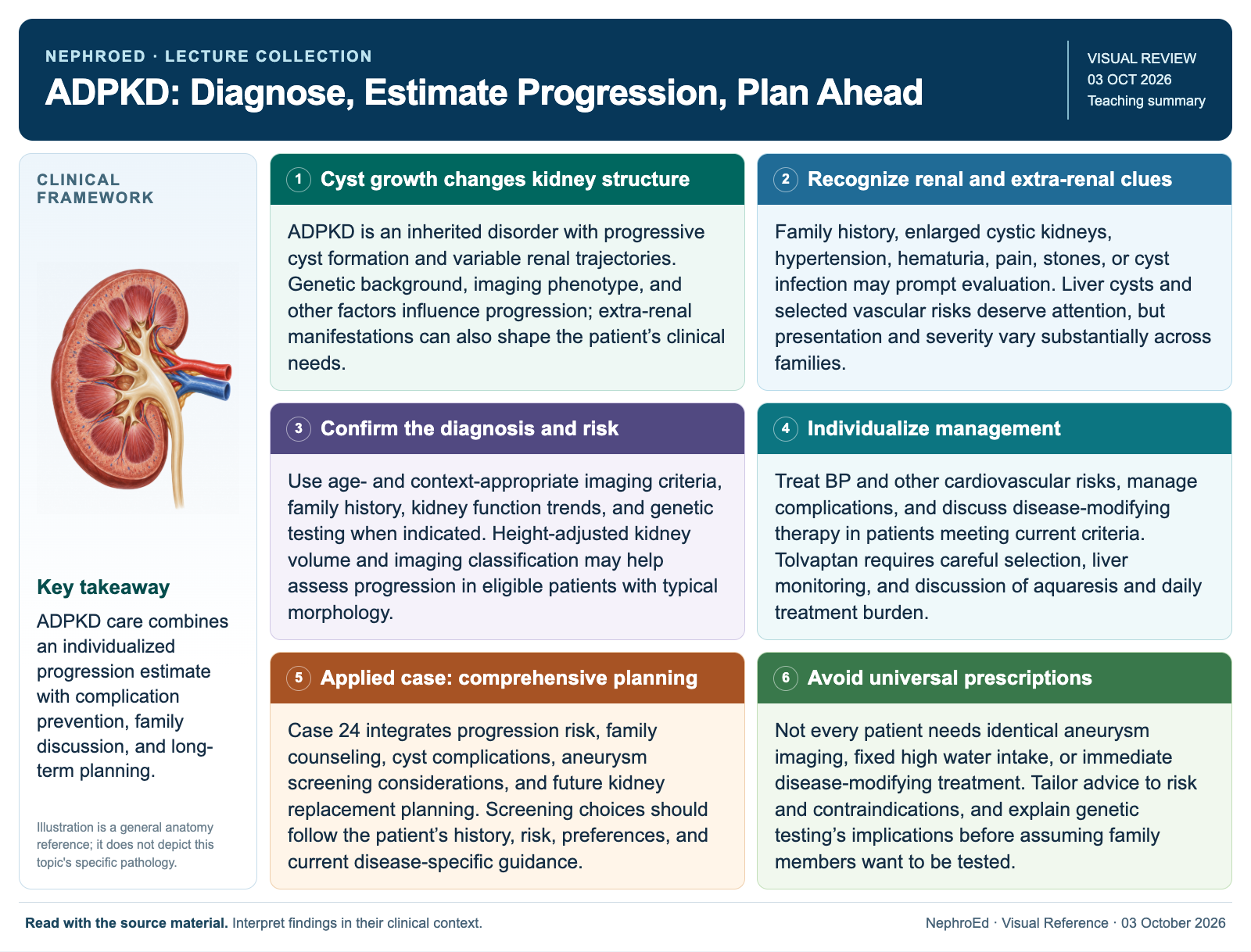
ADPKD care combines an individualized progression estimate with complication prevention, family discussion, and long-term planning.
Text version
Cyst growth changes kidney structure
ADPKD is an inherited disorder with progressive cyst formation and variable renal trajectories. Genetic background, imaging phenotype, and other factors influence progression; extra-renal manifestations can also shape the patient’s clinical needs.
Recognize renal and extra-renal clues
Family history, enlarged cystic kidneys, hypertension, hematuria, pain, stones, or cyst infection may prompt evaluation. Liver cysts and selected vascular risks deserve attention, but presentation and severity vary substantially across families.
Confirm the diagnosis and risk
Use age- and context-appropriate imaging criteria, family history, kidney function trends, and genetic testing when indicated. Height-adjusted kidney volume and imaging classification may help assess progression in eligible patients with typical morphology.
Individualize management
Treat BP and other cardiovascular risks, manage complications, and discuss disease-modifying therapy in patients meeting current criteria. Tolvaptan requires careful selection, liver monitoring, and discussion of aquaresis and daily treatment burden.
Applied case: comprehensive planning
Case 24 integrates progression risk, family counseling, cyst complications, aneurysm screening considerations, and future kidney replacement planning. Screening choices should follow the patient’s history, risk, preferences, and current disease-specific guidance.
Avoid universal prescriptions
Not every patient needs identical aneurysm imaging, fixed high water intake, or immediate disease-modifying treatment. Tailor advice to risk and contraindications, and explain genetic testing’s implications before assuming family members want to be tested.
Continue learning
This graphic summarizes a topic. The full educational pages provide the broader discussion and references.