Visual summary
ADPKD treatment decisions require both a diagnosis and a progression estimate; preserved eGFR does not exclude substantial structural disease.
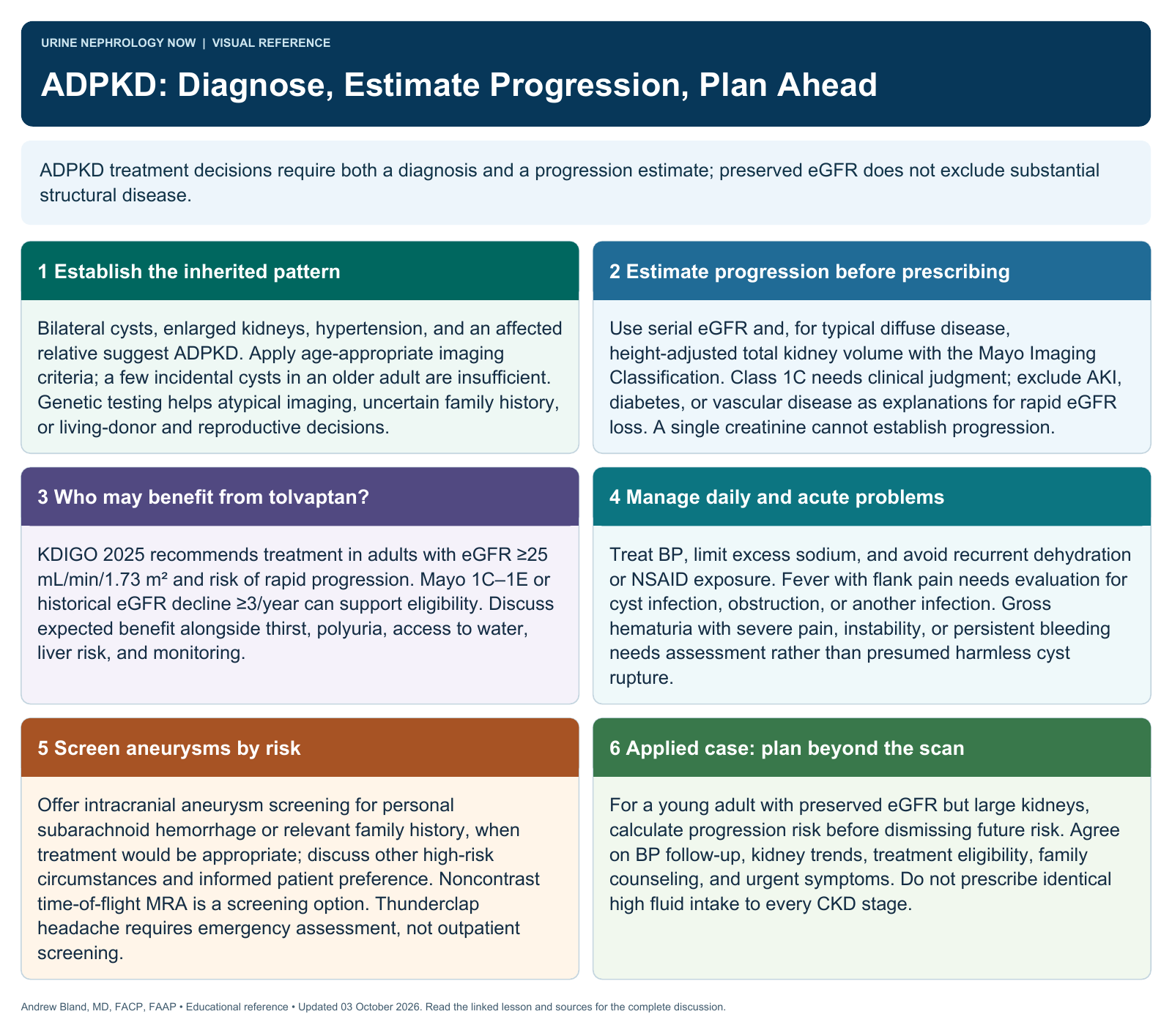
Text version
Establish the inherited pattern
Bilateral cysts, enlarged kidneys, hypertension, and an affected relative suggest ADPKD. Apply age-appropriate imaging criteria; a few incidental cysts in an older adult are insufficient. Genetic testing helps atypical imaging, uncertain family history, or living-donor and reproductive decisions.
Estimate progression before prescribing
Use serial eGFR and, for typical diffuse disease, height-adjusted total kidney volume with the Mayo Imaging Classification. Class 1C needs clinical judgment; exclude AKI, diabetes, or vascular disease as explanations for rapid eGFR loss. A single creatinine cannot establish progression.
Who may benefit from tolvaptan?
KDIGO 2025 recommends treatment in adults with eGFR ≥25 mL/min/1.73 m² and risk of rapid progression. Mayo 1C–1E or historical eGFR decline ≥3/year can support eligibility. Discuss expected benefit alongside thirst, polyuria, access to water, liver risk, and monitoring.
Manage daily and acute problems
Treat BP, limit excess sodium, and avoid recurrent dehydration or NSAID exposure. Fever with flank pain needs evaluation for cyst infection, obstruction, or another infection. Gross hematuria with severe pain, instability, or persistent bleeding needs assessment rather than presumed harmless cyst rupture.
Screen aneurysms by risk
Offer intracranial aneurysm screening for personal subarachnoid hemorrhage or relevant family history, when treatment would be appropriate; discuss other high-risk circumstances and informed patient preference. Noncontrast time-of-flight MRA is a screening option. Thunderclap headache requires emergency assessment, not outpatient screening.
Applied case: plan beyond the scan
For a young adult with preserved eGFR but large kidneys, calculate progression risk before dismissing future risk. Agree on BP follow-up, kidney trends, treatment eligibility, family counseling, and urgent symptoms. Do not prescribe identical high fluid intake to every CKD stage.