Visual summary
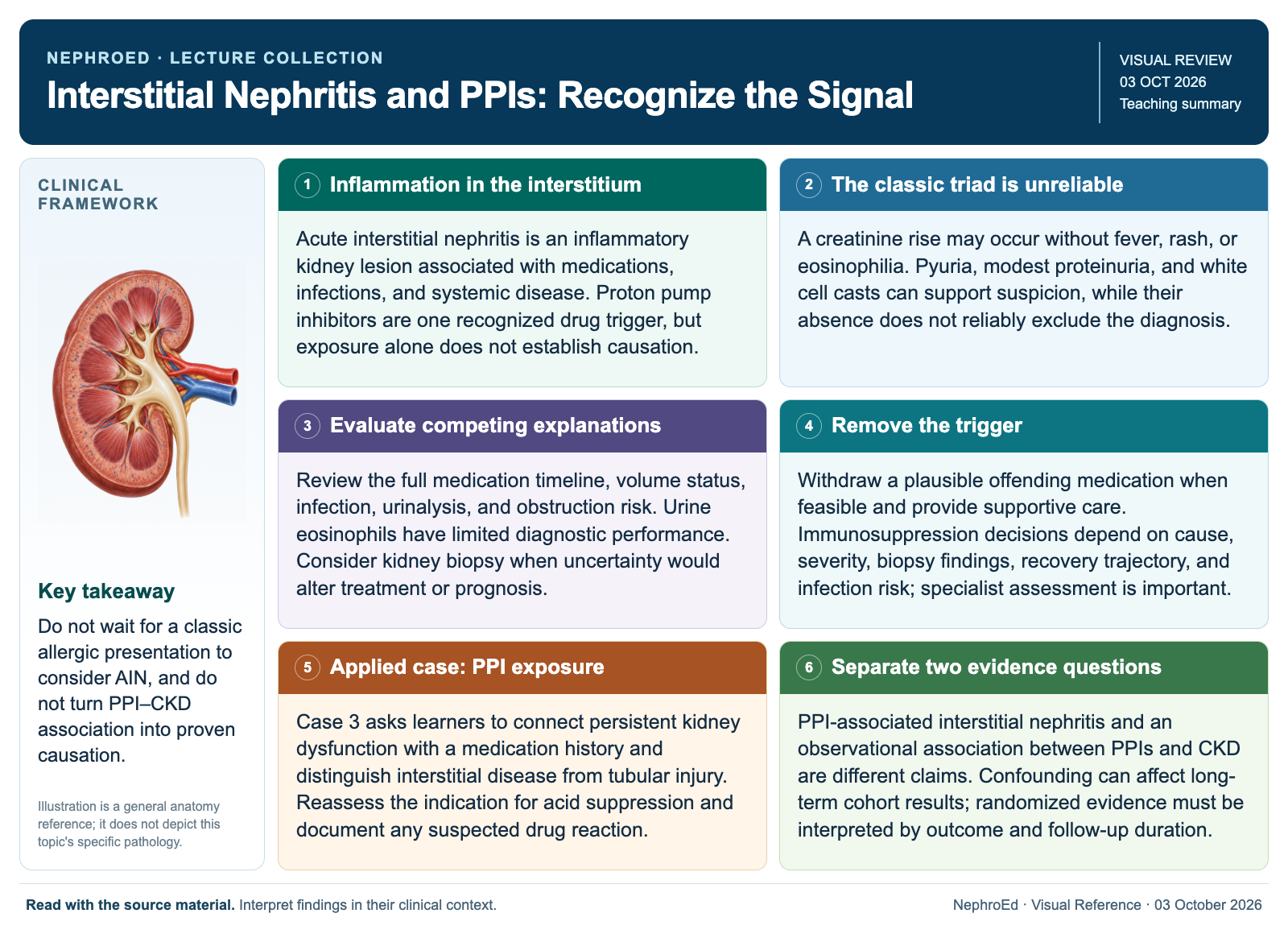
Do not wait for a classic allergic presentation to consider AIN, and do not turn PPI–CKD association into proven causation.
Text version
Inflammation in the interstitium
Acute interstitial nephritis is an inflammatory kidney lesion associated with medications, infections, and systemic disease. Proton pump inhibitors are one recognized drug trigger, but exposure alone does not establish causation.
The classic triad is unreliable
A creatinine rise may occur without fever, rash, or eosinophilia. Pyuria, modest proteinuria, and white cell casts can support suspicion, while their absence does not reliably exclude the diagnosis.
Evaluate competing explanations
Review the full medication timeline, volume status, infection, urinalysis, and obstruction risk. Urine eosinophils have limited diagnostic performance. Consider kidney biopsy when uncertainty would alter treatment or prognosis.
Remove the trigger
Withdraw a plausible offending medication when feasible and provide supportive care. Immunosuppression decisions depend on cause, severity, biopsy findings, recovery trajectory, and infection risk; specialist assessment is important.
Applied case: PPI exposure
Case 3 asks learners to connect persistent kidney dysfunction with a medication history and distinguish interstitial disease from tubular injury. Reassess the indication for acid suppression and document any suspected drug reaction.
Separate two evidence questions
PPI-associated interstitial nephritis and an observational association between PPIs and CKD are different claims. Confounding can affect long-term cohort results; randomized evidence must be interpreted by outcome and follow-up duration.
Continue learning
This graphic summarizes a topic. The full educational pages provide the broader discussion and references.