Visual summary
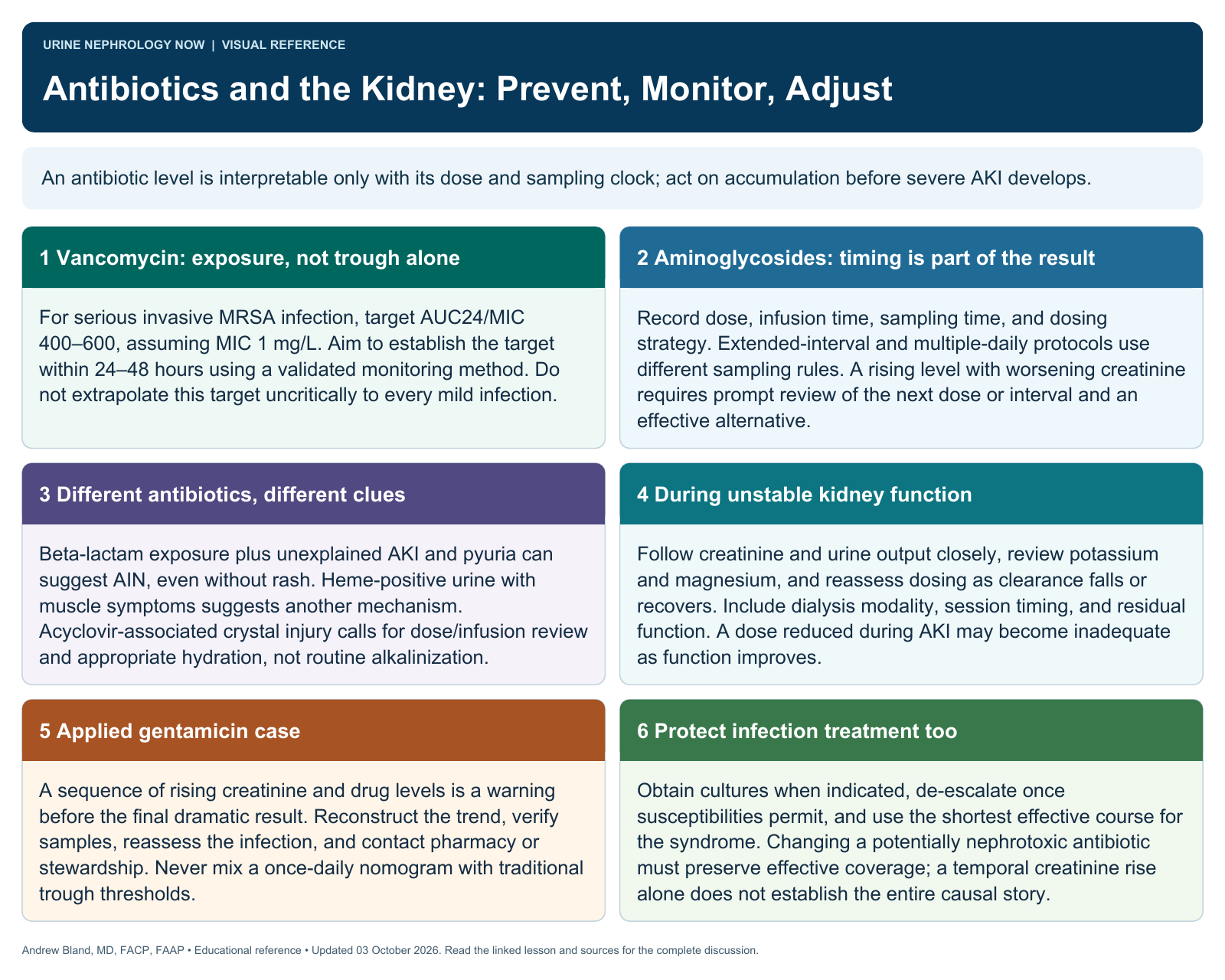
Antibiotic safety requires effective infection treatment plus exposure-aware dosing and prompt response to changing kidney function.
Text version
Match drug to injury
Aminoglycosides accumulate in proximal tubular cells; vancomycin exposure can contribute to tubular injury. Beta-lactams may cause interstitial nephritis, while selected antimicrobials can crystallize in the urinary tract.
Recognize risk amplification
CKD, changing kidney function, dehydration, critical illness, prolonged exposure, and concurrent nephrotoxins increase concern. A necessary antibiotic should be chosen for the infection while actively reducing avoidable renal risk.
Monitor what matters
Follow creatinine, urine output, electrolytes, and indicated drug concentrations. Vancomycin exposure targets and aminoglycoside sampling depend on the indication and dosing method; sampling time is essential to interpretation.
Optimize treatment
Use an evidence-based dosing strategy, appropriate interval, and shortest effective duration. Recalculate the plan during AKI recovery and dialysis transitions, and involve antimicrobial stewardship or pharmacy when uncertainty is substantial.
Applied case: aminoglycoside injury
Case 2 links a rising creatinine to gentamicin exposure and a failed monitoring plan. The teaching task is to reconstruct dose and sample timing, identify accumulation, and select effective alternative therapy.
Avoid false certainty
A creatinine increase with a drug combination may not always equal structural injury. Do not infer an individual patient’s risk from an unvalidated calculator, fixed onset window, or molecular charge ranking alone.
Continue learning
This graphic summarizes a topic. The full educational pages provide the broader discussion and references.