Visual summary
The goal is a useful diagnosis with a proportionate kidney-protection plan, guided by the actual patient and procedure.
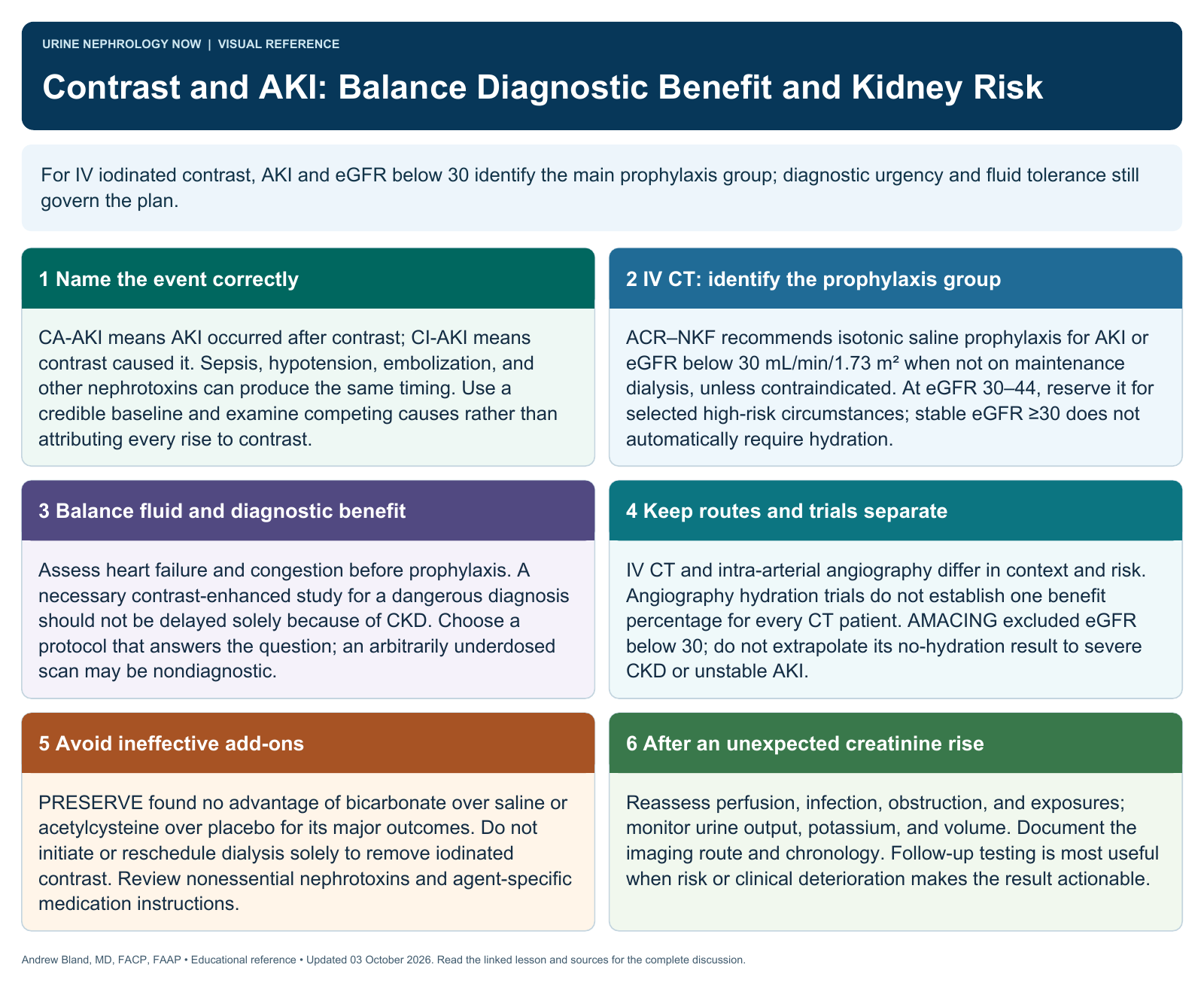
Text version
Association is not causation
Contrast-associated AKI describes kidney deterioration after contrast exposure; contrast-induced AKI attributes causation. Concurrent illness, hemodynamic changes, and other nephrotoxins may explain some events occurring after imaging or angiography.
Identify higher-risk contexts
Assess current AKI, kidney function, volume status, procedural route, and the clinical urgency of imaging. An elective outpatient scan and unstable intra-arterial intervention do not share the same risk profile.
Plan useful imaging
Discuss the diagnostic question with radiology and use an appropriate protocol. Consider alternatives when they answer the question comparably; avoid delaying essential diagnosis solely because a historical risk estimate sounds alarming.
Prevent avoidable injury
Individualize isotonic fluid prophylaxis for patients in whom it is indicated and safe. Review nephrotoxins and medication-specific guidance. Minimize unnecessary repeat exposure while preserving adequate diagnostic image quality.
Applied case: a high-risk procedure
Case 8 teaches preprocedure assessment and prevention planning. Interpret risk scores only in the population and procedure for which they were validated; communicate the benefits and uncertainties of the planned test.
Know what evidence supports
Routine acetylcysteine and bicarbonate superiority should not be promised. Metformin concerns relate to accumulation during serious renal dysfunction, not direct nephrotoxicity. Recheck kidney function when clinically indicated after exposure.
Continue learning
This graphic summarizes a topic. The full educational pages provide the broader discussion and references.