Visual summary
Protect the heart, redistribute potassium, then remove the body load
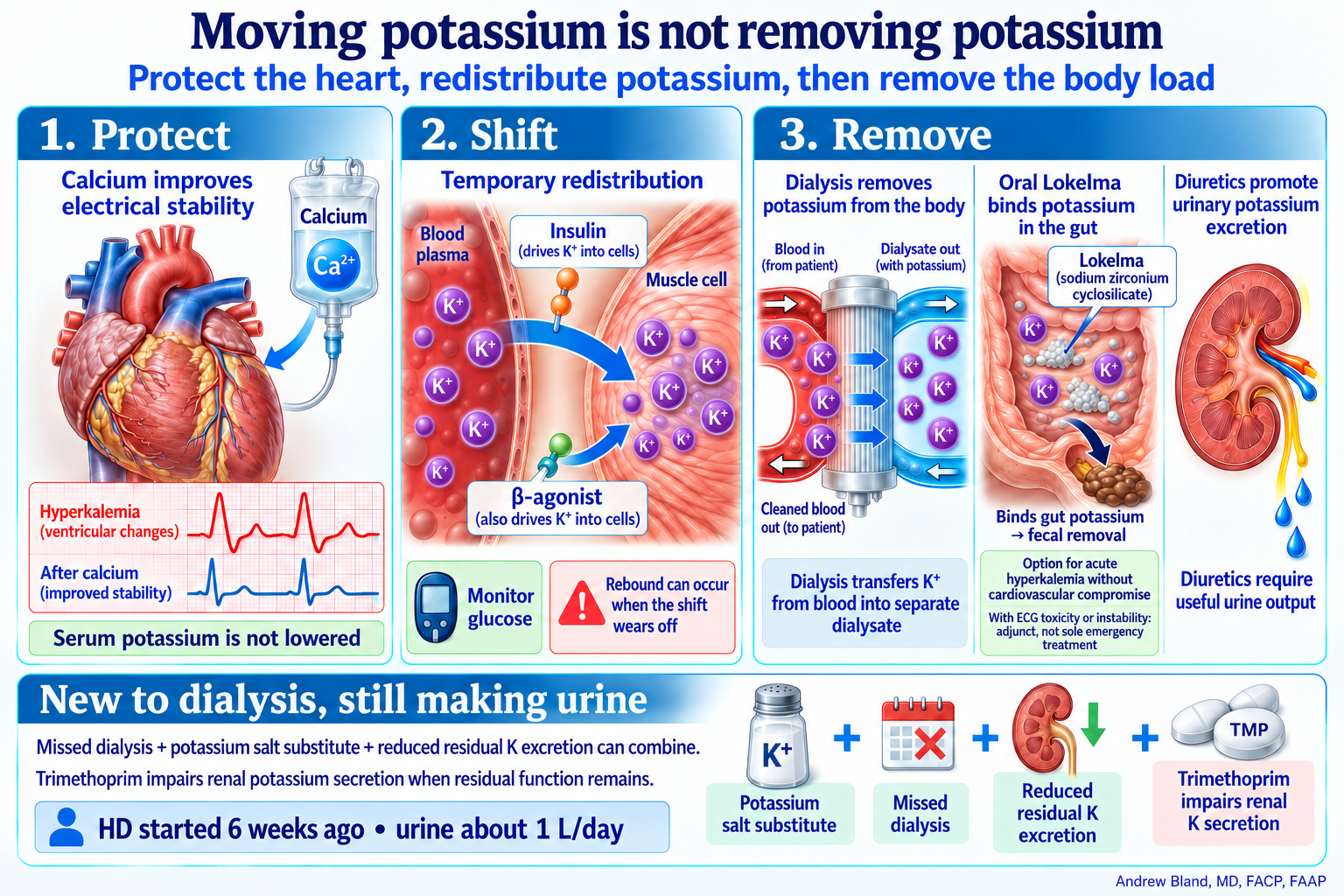
Protect the heart, redistribute potassium, then remove the body load
Text version
Protect and shift
Calcium treats cardiac membrane instability; it does not reduce potassium concentration or body stores. Insulin and beta agonists redistribute potassium into cells. Follow glucose after insulin and reassess potassium and the ECG because redistribution wears off.
Remove: dialysis, gut and urine
Dialysis transfers potassium from blood into dialysate. Lokelma (sodium zirconium cyclosilicate) binds potassium in the gastrointestinal tract for fecal elimination. It is an option for acute hyperkalemia without cardiovascular compromise. With ECG toxicity or instability, use it as an adjunct while definitive treatment is arranged; it is not sole emergency rescue. Loop diuretics can add urinary potassium and fluid removal when useful residual function remains.
Apply it to Case 1
HD began six weeks ago and urine output remains about 1 L/day. Trimethoprim can therefore impair residual renal potassium secretion; missed dialysis and a potassium salt substitute add risk. Urine volume does not quantify potassium clearance. Potassium 7.3 with a wide QRS and pulmonary edema requires calcium, shifting therapy and urgent HD. Lokelma can be given during the wait; a possible loop response must not delay the run.
Why can the potassium fall after insulin while the dialysis indication remains?
The potassium has moved into cells, not left the body. Rebound and the ongoing volume overload still matter. A gut binder can contribute to removal while HD is arranged but does not replace the emergency measures in this case.
Cases and related lectures
The linked case and lecture content provide the teaching sequence and patient data.