Visual summary
Demonstrate inadequate response, identify the mechanism, and intensify treatment while tracking both decongestion and safety.
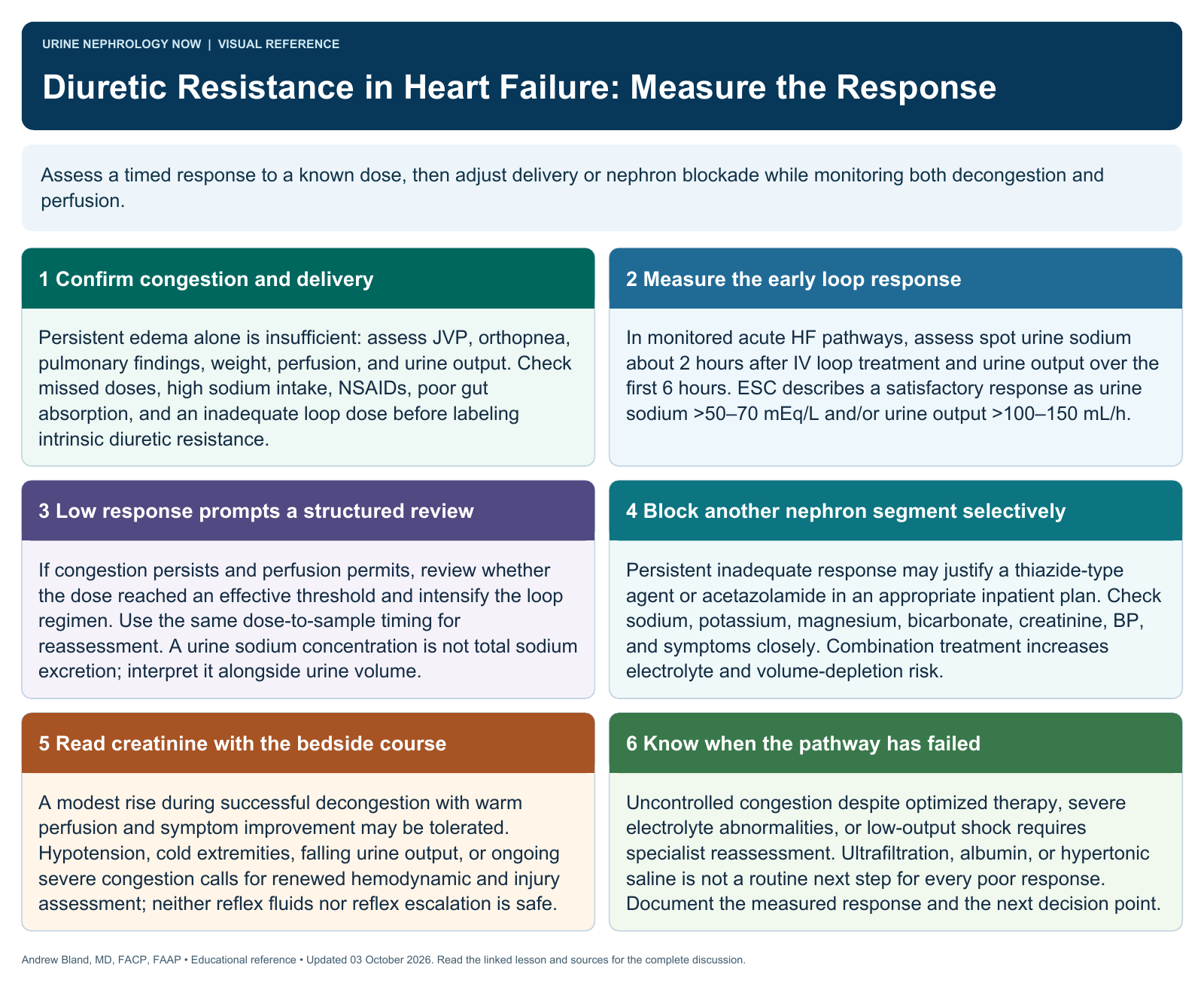
Text version
Delivery and adaptation matter
Reduced renal perfusion, venous congestion, impaired oral absorption, nephron adaptation, and inadequate diuretic exposure can limit natriuresis. Apparent resistance may also reflect sodium intake, missed doses, or interacting drugs.
Recognize residual congestion
Assess dyspnea, orthopnea, edema, weight trajectory, jugular venous pressure, and the broader examination. Confirm that symptoms represent congestion rather than another process before escalating diuresis or attributing treatment failure to the kidney.
Measure the early effect
Follow urine output and clinical response after a loop diuretic; spot urine sodium can help in selected protocols. Interpret timing, dose, kidney function, and prior treatment before deciding whether the response is inadequate.
Escalate with a rationale
Optimize loop delivery and dose when indicated, then consider sequential nephron blockade with careful surveillance. Monitor sodium, potassium, magnesium, bicarbonate, creatinine, blood pressure, and symptoms after medication changes.
Applied case: severe congestion
Case 25 asks learners to assess loop response and choose the next step. Distinguish a sodium concentration from total sodium excretion, investigate adherence and drug interactions, and reassess decongestion after each intervention.
Avoid rescuing a number
A modest creatinine rise during effective decongestion differs from worsening perfusion or progressive injury. Albumin, hypertonic saline, bicarbonate, ultrafiltration, and advanced cardiac therapies require specific indications rather than routine addition for “resistance.”
Continue learning
This graphic summarizes a topic. The full educational pages provide the broader discussion and references.