Visual summary
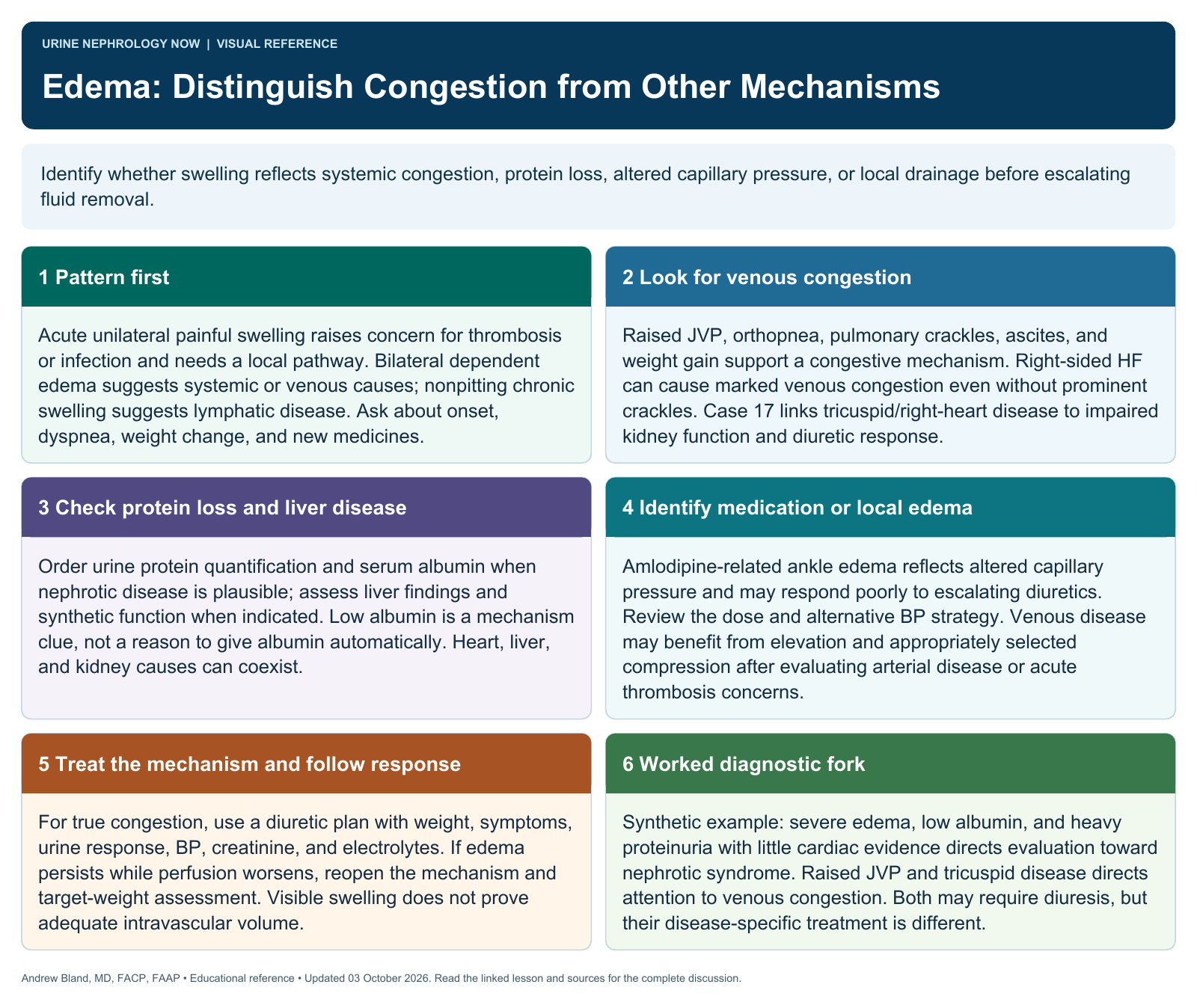
Find the edema mechanism first; effective treatment depends on whether the problem is systemic congestion, protein loss, or local circulation.
Text version
Fluid distribution has many drivers
Capillary hydrostatic pressure, plasma proteins, vascular permeability, lymphatic drainage, and renal sodium handling determine edema. Peripheral swelling does not automatically mean excess circulating volume or a need for more diuretic.
Recognize the pattern
Determine whether edema is unilateral or bilateral, acute or chronic, painful or painless, and associated with dyspnea, ascites, weight change, or urinary findings. Medication-related and venous edema can resemble systemic fluid overload.
Evaluate likely causes
Assess cardiac and liver disease, kidney function, albuminuria, serum albumin, medications, and venous or lymphatic abnormalities. Use echocardiography, ultrasound, or other imaging when the examination and history indicate a specific diagnostic question.
Treat the underlying process
Congestion may require diuretics and treatment of heart disease; local venous or lymphatic disease may need a different approach. Review edema-causing drugs and avoid indiscriminate fluid removal in patients with reduced effective circulating volume.
Applied case: right heart failure
Case 17 links elevated venous pressure, tricuspid disease, congestion, and poor diuretic response. Assess both right-sided hemodynamics and kidney function, and coordinate decongestion with management of the underlying cardiac or pulmonary condition.
Use a sound mental model
Venous congestion can impair kidney function, but edema is not simply fluid trapped on a literal conveyor belt to the kidney. Albumin infusions are not a routine remedy for every low albumin value.
Continue learning
This graphic summarizes a topic. The full educational pages provide the broader discussion and references.