Visual summary
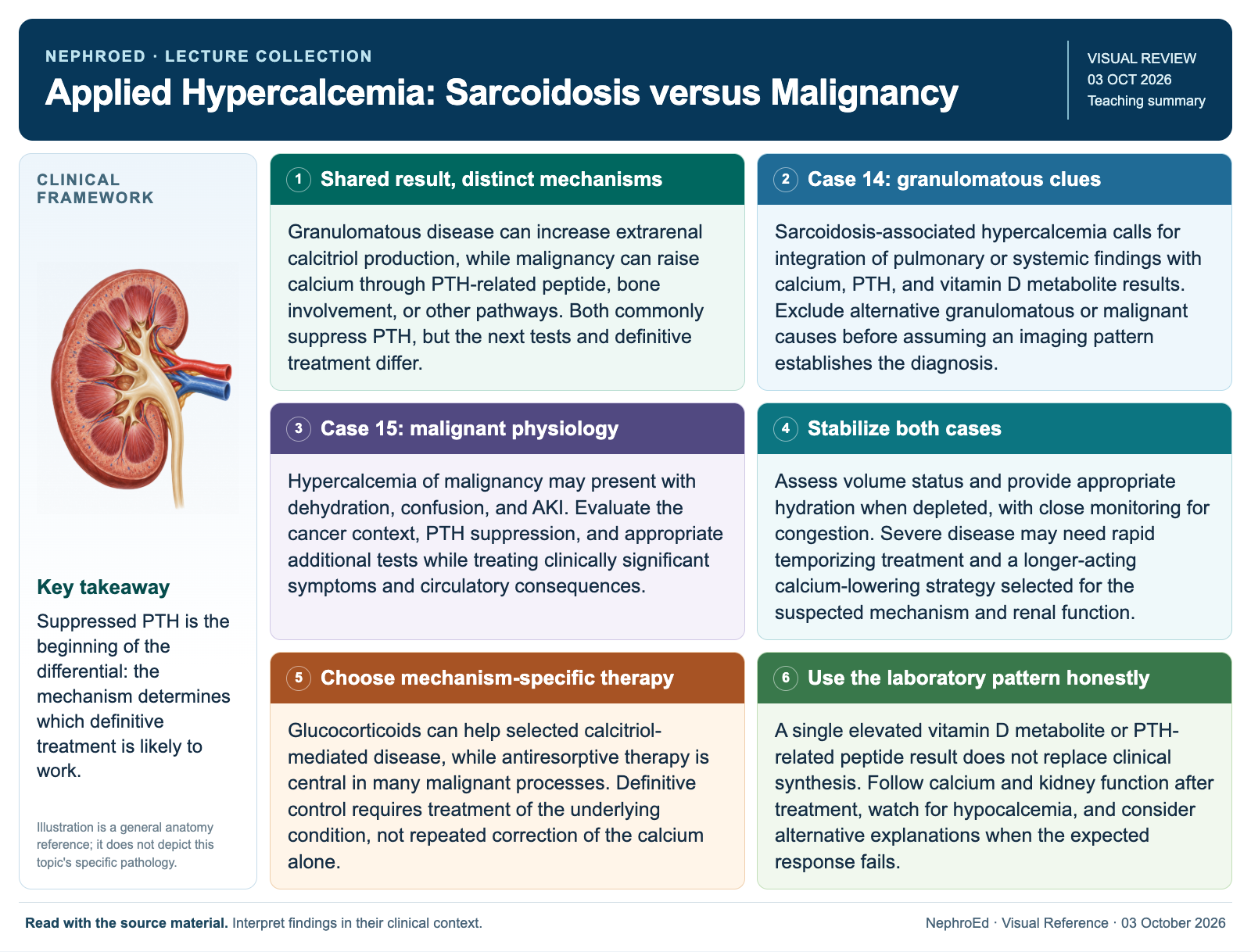
Suppressed PTH is the beginning of the differential: the mechanism determines which definitive treatment is likely to work.
Text version
Shared result, distinct mechanisms
Granulomatous disease can increase extrarenal calcitriol production, while malignancy can raise calcium through PTH-related peptide, bone involvement, or other pathways. Both commonly suppress PTH, but the next tests and definitive treatment differ.
Case 14: granulomatous clues
Sarcoidosis-associated hypercalcemia calls for integration of pulmonary or systemic findings with calcium, PTH, and vitamin D metabolite results. Exclude alternative granulomatous or malignant causes before assuming an imaging pattern establishes the diagnosis.
Case 15: malignant physiology
Hypercalcemia of malignancy may present with dehydration, confusion, and AKI. Evaluate the cancer context, PTH suppression, and appropriate additional tests while treating clinically significant symptoms and circulatory consequences.
Stabilize both cases
Assess volume status and provide appropriate hydration when depleted, with close monitoring for congestion. Severe disease may need rapid temporizing treatment and a longer-acting calcium-lowering strategy selected for the suspected mechanism and renal function.
Choose mechanism-specific therapy
Glucocorticoids can help selected calcitriol-mediated disease, while antiresorptive therapy is central in many malignant processes. Definitive control requires treatment of the underlying condition, not repeated correction of the calcium alone.
Use the laboratory pattern honestly
A single elevated vitamin D metabolite or PTH-related peptide result does not replace clinical synthesis. Follow calcium and kidney function after treatment, watch for hypocalcemia, and consider alternative explanations when the expected response fails.
Continue learning
This graphic summarizes a topic. The full educational pages provide the broader discussion and references.