Visual summary
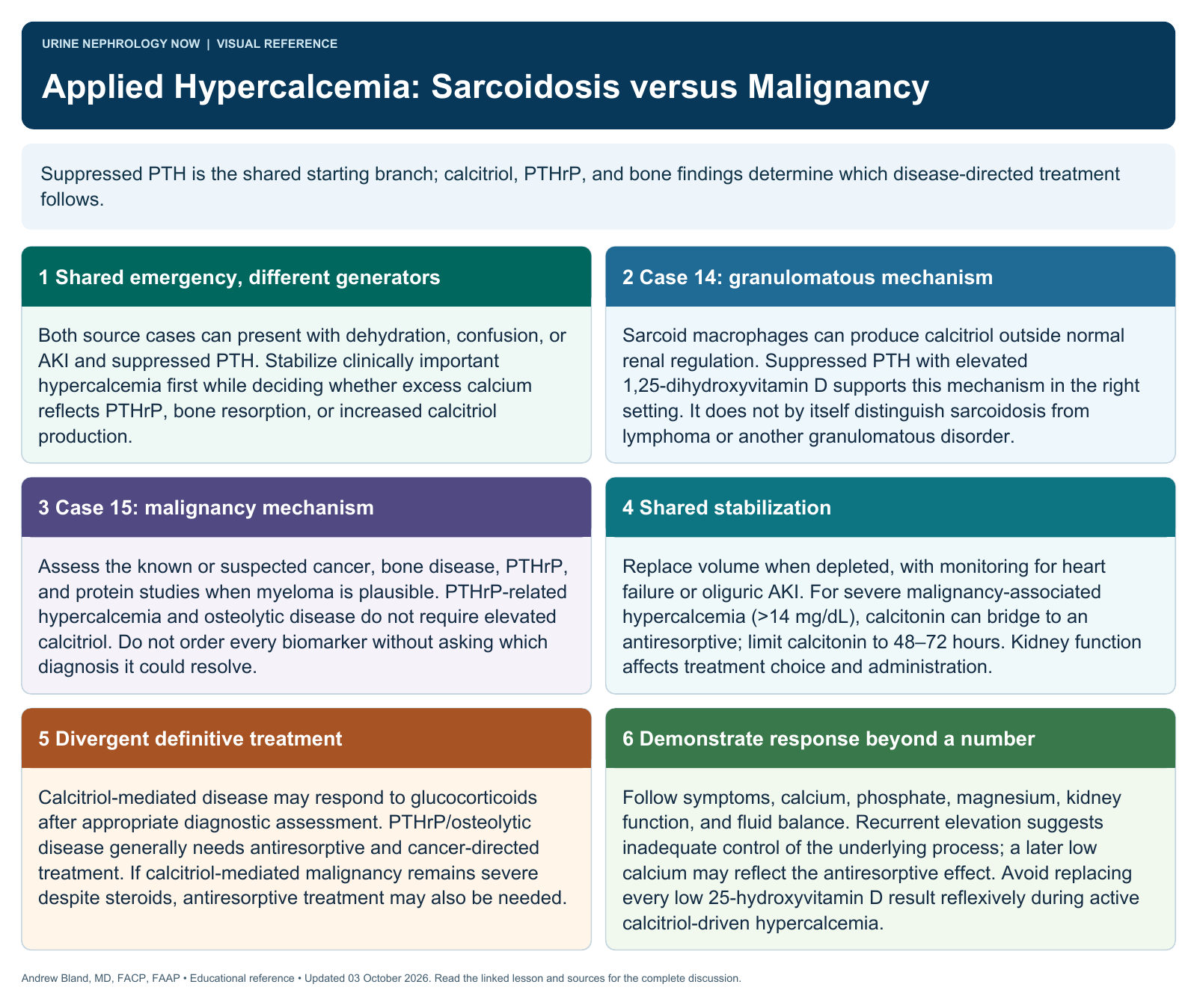
Suppressed PTH is the shared starting branch; calcitriol, PTHrP, and bone findings determine which disease-directed treatment follows.
Text version
Shared emergency, different generators
Both source cases can present with dehydration, confusion, or AKI and suppressed PTH. Stabilize clinically important hypercalcemia first while deciding whether excess calcium reflects PTHrP, bone resorption, or increased calcitriol production.
Case 14: granulomatous mechanism
Sarcoid macrophages can produce calcitriol outside normal renal regulation. Suppressed PTH with elevated 1,25-dihydroxyvitamin D supports this mechanism in the right setting. It does not by itself distinguish sarcoidosis from lymphoma or another granulomatous disorder.
Case 15: malignancy mechanism
Assess the known or suspected cancer, bone disease, PTHrP, and protein studies when myeloma is plausible. PTHrP-related hypercalcemia and osteolytic disease do not require elevated calcitriol. Do not order every biomarker without asking which diagnosis it could resolve.
Shared stabilization
Replace volume when depleted, with monitoring for heart failure or oliguric AKI. For severe malignancy-associated hypercalcemia (>14 mg/dL), calcitonin can bridge to an antiresorptive; limit calcitonin to 48–72 hours. Kidney function affects treatment choice and administration.
Divergent definitive treatment
Calcitriol-mediated disease may respond to glucocorticoids after appropriate diagnostic assessment. PTHrP/osteolytic disease generally needs antiresorptive and cancer-directed treatment. If calcitriol-mediated malignancy remains severe despite steroids, antiresorptive treatment may also be needed.
Demonstrate response beyond a number
Follow symptoms, calcium, phosphate, magnesium, kidney function, and fluid balance. Recurrent elevation suggests inadequate control of the underlying process; a later low calcium may reflect the antiresorptive effect. Avoid replacing every low 25-hydroxyvitamin D result reflexively during active calcitriol-driven hypercalcemia.