Visual summary
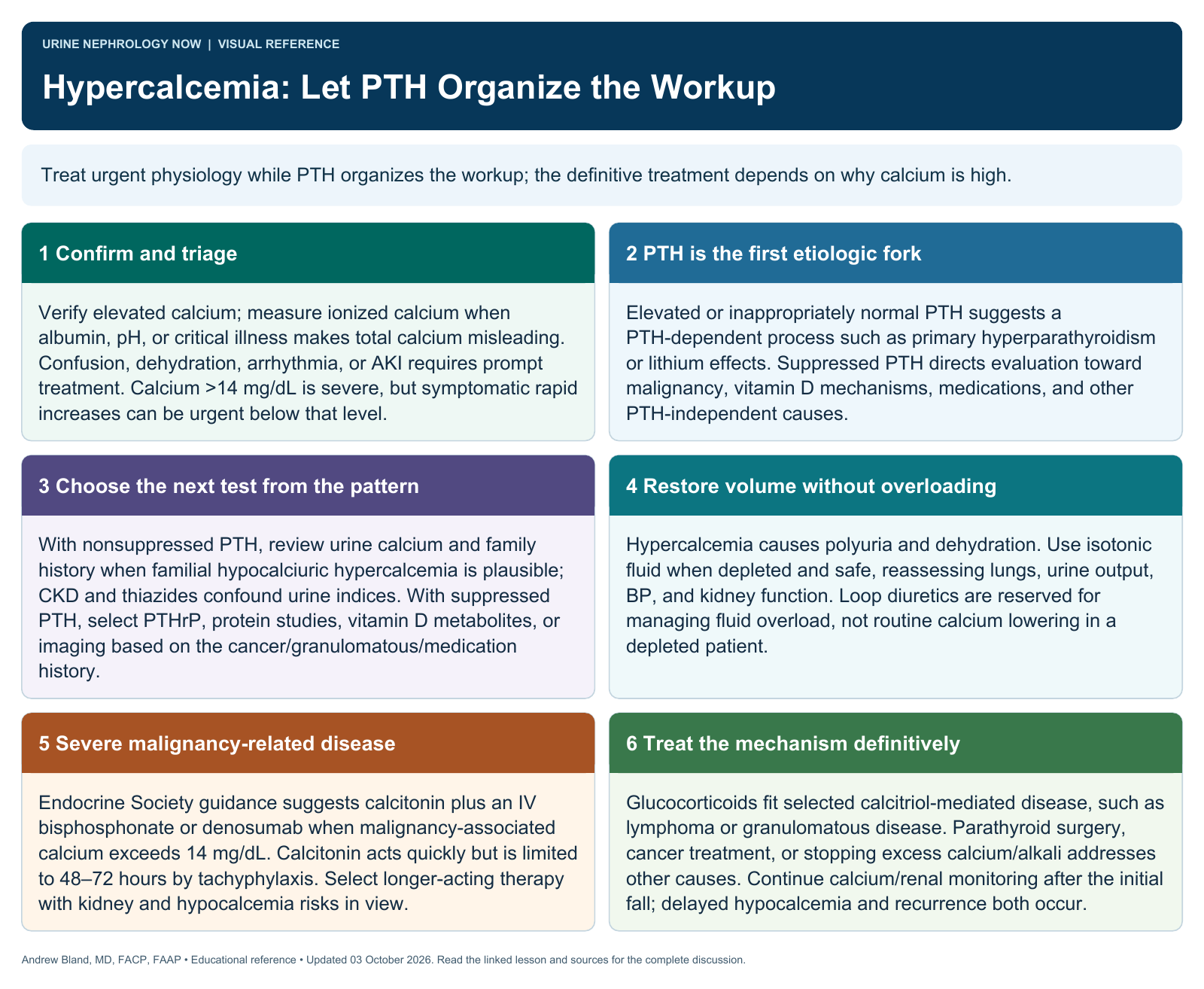
Treat urgent physiology while PTH organizes the workup; the definitive treatment depends on why calcium is high.
Text version
Confirm and triage
Verify elevated calcium; measure ionized calcium when albumin, pH, or critical illness makes total calcium misleading. Confusion, dehydration, arrhythmia, or AKI requires prompt treatment. Calcium >14 mg/dL is severe, but symptomatic rapid increases can be urgent below that level.
PTH is the first etiologic fork
Elevated or inappropriately normal PTH suggests a PTH-dependent process such as primary hyperparathyroidism or lithium effects. Suppressed PTH directs evaluation toward malignancy, vitamin D mechanisms, medications, and other PTH-independent causes.
Choose the next test from the pattern
With nonsuppressed PTH, review urine calcium and family history when familial hypocalciuric hypercalcemia is plausible; CKD and thiazides confound urine indices. With suppressed PTH, select PTHrP, protein studies, vitamin D metabolites, or imaging based on the cancer/granulomatous/medication history.
Restore volume without overloading
Hypercalcemia causes polyuria and dehydration. Use isotonic fluid when depleted and safe, reassessing lungs, urine output, BP, and kidney function. Loop diuretics are reserved for managing fluid overload, not routine calcium lowering in a depleted patient.
Severe malignancy-related disease
Endocrine Society guidance suggests calcitonin plus an IV bisphosphonate or denosumab when malignancy-associated calcium exceeds 14 mg/dL. Calcitonin acts quickly but is limited to 48–72 hours by tachyphylaxis. Select longer-acting therapy with kidney and hypocalcemia risks in view.
Treat the mechanism definitively
Glucocorticoids fit selected calcitriol-mediated disease, such as lymphoma or granulomatous disease. Parathyroid surgery, cancer treatment, or stopping excess calcium/alkali addresses other causes. Continue calcium/renal monitoring after the initial fall; delayed hypocalcemia and recurrence both occur.